


Table of Contents
- Quick Comparison: Top Immune Support Supplements
- Healthy Living Proteins Multi Collagen Peptides & Colostrum
- Vitamins for Immune System: Essential Nutrients That Matter
- How Immune Support Supplements Work
- Immune System Supplement Side Effects and Safety
- Third-Party Tested Supplements: Why Quality Matters
- How to Choose the Right Immune Support Supplement
- Conclusion
Last Updated: August 7, 2026
Quick Comparison: Top Immune Support Supplements
The best immune support supplements deliver comprehensive nutrition with clinically studied ingredients rather than relying on single nutrients. This guide breaks down the top immune support supplements available in 2026, comparing formulations, pricing, and what matters when choosing between options.
Quick Picks:
- Best Overall: Healthy Living Proteins Multi Collagen Peptides & Colostrum, comprehensive immune support with superior absorption
- Best for Targeted Vitamins: MegaFood Daily Immune Support, whole-food formula with essential micronutrients
- Best Budget Option: NOW Foods Immune Renew, affordable mushroom-based immune support
- Best for Probiotics: Culturelle Immune Defense, clinically studied strains supporting gut-immune connection
| Supplement | Starting Price | Key Ingredients | Best For | Standout Feature |
|---|---|---|---|---|
| Healthy Living Proteins Multi Collagen Peptides & Colostrum | $49.99 | All 5 collagen types, colostrum, probiotics, vitamin C | Comprehensive immune and gut support | Hydrolyzed for superior absorption |
| MegaFood Daily Immune Support | $27.99 | Vitamin C, D3, zinc, astragalus | Whole-food immune nutrition | Fermented zinc bisglycinate |
| Thorne Research Immuno-Complex | $38.00 | Vitamin C, D3, zinc, botanical blend | Science-backed comprehensive support | Supports innate and adaptive immunity |
| NOW Foods Immune Renew | $14.99 | 8 medicinal mushrooms, astragalus | Budget-conscious mushroom support | Beta-glucan-rich formula |
| Culturelle Immune Defense | $15-$20 | Lactobacillus rhamnosus GG, vitamin C, D, zinc | Gut-immune connection support | 10 billion CFU clinically studied probiotic |
Healthy Living Proteins Multi Collagen Peptides & Colostrum
Healthy Living Proteins combines all five collagen types with grass-fed colostrum, probiotics, and vitamin C in a formula designed for superior absorption. The hydrolyzed collagen peptides cross the intestinal barrier efficiently, delivering bioavailable amino acids your immune system needs.


Colostrum contains immunoglobulins (particularly IgG) and growth factors that support cellular defense and inflammation response. The probiotic blend strengthens the gut barrier, where approximately 70% of immune system activity occurs. This addresses the gut-immune connection that many single-nutrient supplements miss.
The product is unflavored and mixes easily into water, coffee, or smoothies. At $49.99 for 38 servings, the cost per serving is reasonable for a multi-component formula. Healthy Living Proteins backs this with a 30-day money-back guarantee.
If you have a sensitive stomach, start with half a serving to assess tolerance. The probiotics and colostrum can shift digestive function initially, though this typically settles within a few days.

Vitamins for Immune System: Essential Nutrients That Matter
Your immune system depends on specific micronutrients. The most critical are vitamin C, vitamin D3, and zinc, each playing a distinct role in cellular immunity.
Vitamin C supports white blood cell production and function while protecting immune cells from oxidative stress. The recommended daily allowance is 75-90 mg for adults; immune formulas typically provide 100-200 mg per serving, which is safe and appropriate.
Vitamin D3 regulates immune cell differentiation and reduces excessive inflammation response. Most people don't get enough D3 from food alone. According to research, many Americans have suboptimal serum levels. A daily intake of 1,000-4,000 IU is typical for immune support.
Zinc is essential for immune cell activation and antibody production. The recommended daily allowance is 8-11 mg for adults. Zinc picolinate has better bioavailability than other zinc compounds.
MegaFood Daily Immune Support delivers these three nutrients in one tablet: 90 mg vitamin C, 15 mcg vitamin D3, and 6 mg fermented zinc bisglycinate. The formula also includes astragalus root, used in traditional medicine for immune support and stress resilience.
How Immune Support Supplements Work
Immune support supplements work through several mechanisms depending on their ingredients.
Micronutrient replenishment enables specific immune functions: vitamin C supports white blood cell production, vitamin D3 regulates immune cell differentiation, and zinc enables antibody synthesis. Supplementation restores normal function when dietary intake is insufficient.
Botanical extracts and medicinal mushrooms operate through immune modulation. Compounds like beta-glucans from mushrooms interact with immune receptors, priming your system for faster response. Astragalus and elderberry contain polysaccharides that support immune cell activation.
Probiotics strengthen immunity through the gut barrier. Beneficial bacteria produce short-chain fatty acids and metabolites that reduce intestinal permeability and support the gut-associated lymphoid tissue (GALT), a major immune component. A healthy barrier supports balanced immune response.
Collagen and colostrum support immunity through tissue integrity and growth factors. Collagen provides structural support for the intestinal lining and skin barrier, both critical defense surfaces. Colostrum contains immunoglobulins and growth factors that directly support immune cell proliferation and mucosal immunity.
The most effective formulas combine multiple mechanisms, addressing micronutrient gaps, gut barrier function, and direct immune cell support simultaneously.
Immune System Supplement Side Effects and Safety
Most immune support supplements are well tolerated when taken as directed. However, certain ingredients warrant attention, particularly if you take medications or have specific health conditions.
Vitamin D3 is fat-soluble and accumulates in your body. Very high doses (over 10,000 IU daily for extended periods) can cause hypercalcemia. For immune support, 1,000-4,000 IU daily is safe and effective.
Zinc in excess can interfere with copper absorption. Doses above 40 mg daily warrant medical supervision. Most immune formulas provide 5-15 mg, which is safe for long-term use.
Probiotics are generally safe but can cause temporary digestive changes, bloating, gas, or mild cramping, as your microbiome shifts. These effects typically resolve within 3-5 days. If you have a compromised immune system, consult your healthcare provider before starting probiotics.
Herbal ingredients like astragalus and elderberry are low-risk but can interact with certain medications. Astragalus may complicate autoimmune conditions; elderberry may interact with anticoagulants. Discuss new supplements with your healthcare provider if you take prescription medications.
Take supplements 2-3 hours apart from medications when possible, and inform your healthcare provider of all supplements you use.
Third-Party Tested Supplements: Why Quality Matters
Not all supplements are created equal. Third-party testing provides independent verification that what's on the label is actually in the bottle and that contaminants are absent.
Third-party testing typically includes:
- Potency verification: Confirming each ingredient is present at the stated amount
- Contaminant screening: Testing for heavy metals, microbial pathogens, and pesticides
- Identity confirmation: Verifying ingredients are what the label claims
- Stability testing: Ensuring the product maintains potency through its shelf life
According to the FDA's guidance on dietary supplement quality assurance, manufacturers are responsible for ensuring supplement quality, but third-party testing provides additional accountability. Organizations like NSF International, USP, and ConsumerLab conduct these independent audits.
A supplement claiming 1,000 mg of vitamin C but containing only 600 mg won't deliver expected immune support. Contaminants like lead or cadmium can damage the systems you're trying to support. Quality assurance through third-party testing ensures you're getting what you paid for.
When comparing immune support supplements, look for third-party testing certifications on the label or manufacturer's website. This factor often correlates with better clinical outcomes and customer satisfaction.
How to Choose the Right Immune Support Supplement
Selecting the right immune support supplement depends on your specific needs, lifestyle, and health goals.
Identify your primary goal. Are you supporting baseline immunity year-round? Addressing a specific micronutrient gap? Supporting gut health alongside immunity? Your answer shapes which formula makes sense. If gut health is your priority, Healthy Living Proteins Multi Collagen Peptides & Colostrum is ideal. If you need straightforward vitamin and mineral support, MegaFood Daily Immune Support delivers the essentials efficiently.
Assess your dietary intake. If you eat a varied diet with plenty of citrus, leafy greens, and seafood, you may already get adequate vitamin C and zinc. A formula emphasizing ingredients you don't typically consume, like colostrum, probiotics, or medicinal mushrooms, fills real gaps.
Consider format and convenience. Gummies are palatable but often contain added sugars. Tablets are convenient but may require multiple pills daily. Powders mix into beverages and allow flexible dosing but require preparation. Your lifestyle determines which format you'll actually use consistently.
Evaluate bioavailability. Hydrolyzed collagen peptides have superior bioavailability compared to whole collagen. Fermented zinc bisglycinate absorbs better than zinc oxide. Probiotics with delayed-release capsules survive stomach acid more effectively. Higher bioavailability means better results at lower doses.
Check for third-party testing. Verify the supplement carries certification from NSF, USP, or ConsumerLab. This eliminates a significant portion of lower-quality options.
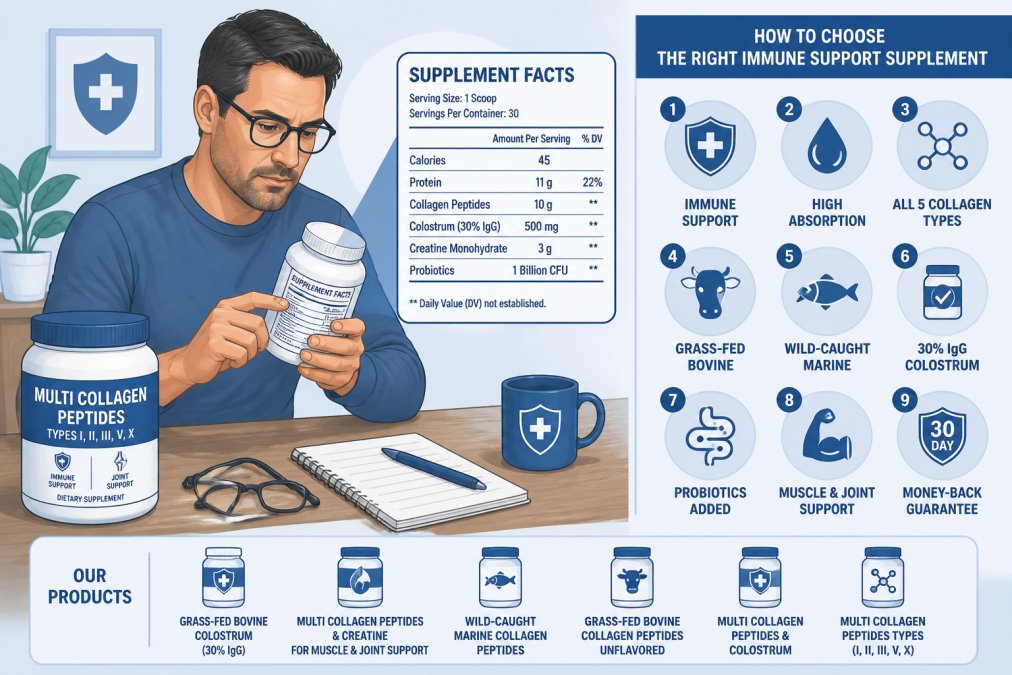
Start with a trial period. Most reputable brands offer money-back guarantees. Use this window to assess how the supplement affects your energy, digestion, and overall wellness. Expect to notice changes over 4-8 weeks rather than days.
Budget strategically. Immune support supplements range from $15 to $50+ monthly. A $50 formula addressing multiple mechanisms may deliver better value than three separate $15 supplements.
Choosing the right immune support supplement means matching the formula to your health priorities, dietary gaps, and lifestyle. Healthy Living Proteins Multi Collagen Peptides & Colostrum stands out as a comprehensive option addressing immune function, gut health, and tissue support simultaneously through hydrolyzed collagen, colostrum, probiotics, and vitamin C. The 30-day money-back guarantee removes the risk of trying it, and the formula's focus on bioavailability ensures results from every serving. For adults seeking year-round immune resilience, this formula delivers steady, everyday immune support backed by thoughtful ingredient selection and superior absorption science. Get started with Healthy Living Proteins and experience the difference that comprehensive protein replenishment makes for your everyday vitality.
Frequently Asked Questions
What vitamins for immune system support are most important?
Vitamin C, Vitamin D3, and Zinc are the three most researched vitamins for immune system function. Vitamin C supports white blood cell activity and antioxidant defense. Vitamin D3 regulates immune cell activation and helps coordinate immune responses. Zinc enables immune cell proliferation and pathogen defense. Many immune support supplements combine these three with botanical extracts like elderberry or astragalus for synergistic effects. Dosage matters: typical recommendations range from 1,000-2,000 mg daily for Vitamin C, 1,000-4,000 IU for Vitamin D3, and 8-11 mg for Zinc.
Do immune support supplements really work?
Clinical evidence shows mixed but promising results. Vitamin C reduces cold duration by 8-14% in people under physical stress. Zinc lozenges shorten cold symptoms by 24-48 hours when taken within 24 hours of onset. Vitamin D3 supplementation lowers respiratory infection risk, particularly in people with deficiency. Probiotics show measurable effects on gut immunity where 70% of immune cells reside. Results depend on baseline micronutrient status, dosage, timing, and individual factors like age and stress levels. Immune support supplements work best as preventive tools rather than acute treatments.
What immune system supplement side effects should I watch for?
Most immune support supplements are well-tolerated at recommended doses. Common mild side effects include digestive upset, nausea, or headaches, especially with high-dose Vitamin C. Zinc supplements exceeding 40 mg daily may cause copper deficiency over time. Probiotics can cause temporary bloating or gas as gut flora adjusts. Herbal ingredients like elderberry or echinacea rarely cause reactions but may interact with immunosuppressant medications. Individuals with autoimmune conditions should consult a healthcare provider before starting immune-boosting supplements, as some ingredients may trigger immune modulation that worsens symptoms.
Are third-party tested supplements worth the extra cost?
Yes. Third-party testing verifies that a supplement contains the labeled ingredients at the stated potency and is free from contaminants like heavy metals or microbial pathogens. Independent labs like NSF International, ConsumerLab, and USP test for label accuracy and quality assurance. Studies show 1 in 4 supplements contain unlisted allergens or fail to meet label claims. Third-party tested supplements typically cost 10-20% more but eliminate the risk of buying ineffective or contaminated products. Look for certifications on the label: NSF Certified, USP Verified, or ConsumerLab Approved.
How long does it take to see results from immune support supplements?
Timeline varies by ingredient and health status. Vitamin D3 and Zinc begin supporting immune cell activation within days but require consistent dosing for 4-8 weeks to optimize serum levels and cellular defense. Probiotics need 2-4 weeks to establish beneficial gut flora and measurably improve immune signaling. Herbal extracts like elderberry or astragalus show effects within 1-2 weeks of daily use. Most people notice improved resilience to seasonal challenges after 30 days of consistent supplementation. Individual results depend on baseline micronutrient status, diet, sleep, and stress levels. Healthy Living Proteins offers a 30-day money-back guarantee so you can assess results risk-free.
This article was written using GrandRanker