


Table of Contents
- Collagen vs Colostrum for Joints: Quick Comparison
- What Is Hydrolyzed Collagen and How It Supports Joint Health
- What Is Bovine Colostrum and Its Role in Joint Recovery
- Collagen and Probiotics for Bloating: Supporting Gut-Joint Connection
- How to Stack Collagen and Colostrum for Maximum Joint Support
- Collagen vs Colostrum: Which Should You Choose for Your Joints
- Conclusion
Last Updated: August 24, 2026
Collagen vs Colostrum for Joints: Quick Comparison
When dealing with joint stiffness or mobility issues, choosing between collagen and colostrum can feel overwhelming. Both support connective tissue health, but they work through different mechanisms. Collagen directly rebuilds joint cartilage and synovial fluid, while colostrum reduces systemic inflammation and supports the gut-joint axis. Many people see better results stacking both together.
| Aspect | Hydrolyzed Collagen | Bovine Colostrum |
|---|---|---|
| Primary Function | Structural repair of cartilage and connective tissue | Immune modulation and gut barrier support |
| Key Components | Amino acids (proline, glycine, hydroxyproline) | Immunoglobulins (IgG), growth factors, lactoferrin |
| Best For | Joint mobility, cartilage synthesis | Inflammation reduction, immune function |
| Typical Dosage | 10-15g daily | 5-10g daily |
| Timeline to Results | 4-8 weeks | 2-4 weeks |
| Works Best With | Vitamin C, joint-specific probiotics | Hydrolyzed collagen, digestive enzymes |
What Is Hydrolyzed Collagen and How It Supports Joint Health
Hydrolyzed collagen is collagen broken down into smaller peptide chains through enzymatic hydrolysis, making it bioavailable for absorption and use. Your digestive system absorbs these amino acids and transports them to joints, tendons, and cartilage where they're needed.

Proline and glycine make up roughly 50% of collagen's amino acid composition and are essential for cartilage synthesis and connective tissue integrity (peer-reviewed research). Hydroxyproline stabilizes the collagen triple helix structure that gives cartilage its strength. Without adequate collagen, cartilage thins, synovial fluid becomes less effective, and you feel stiffness and reduced mobility.

Many people notice joint stiffness improves after 4-8 weeks of consistent collagen use as the body actively rebuilds cartilage matrix (peer-reviewed research). The Grass-Fed Bovine Collagen Peptides Unflavored from Healthy Living Proteins delivers 11g of hydrolyzed collagen per serving, sourced from grass-fed, pasture-raised cattle with full supply-chain traceability.

Collagen alone doesn't address the inflammatory environment that accelerates joint degradation. You're rebuilding structure, but if systemic inflammation is high, you're fighting an uphill battle. This is where the gut-joint axis becomes critical.
What Is Bovine Colostrum and Its Role in Joint Recovery
Bovine colostrum is the nutrient-dense first milk cows produce after calving. It's packed with immunoglobulins (particularly IgG), growth factors, and lactoferrin, compounds that regulate immune response and support the gut barrier. While often associated with immune function, its real power for joint health lies in reducing systemic inflammation through gut healing.
The Molecular Mechanism: Growth Factors vs. Structural Amino Acids
Unlike collagen, which provides raw amino acid building blocks, colostrum operates through bioactive peptides and growth factors that signal cells to enter a repair state.
Insulin-like Growth Factor-1 (IGF-1) binds to receptors on chondrocytes (cartilage cells) and fibroblasts, triggering protein synthesis and cell proliferation. IGF-1 tells your cartilage cells to build rather than break down, stimulating proteoglycan and collagen synthesis within the cartilage matrix, fundamentally different from collagen's mechanism.
Immunoglobulins (IgG, IgA, IgM) make up 70-80% of colostrum's protein content (peer-reviewed research). IgG binds to pathogenic antigens and bacterial lipopolysaccharides (LPS) in the gut, preventing them from crossing the intestinal barrier. When LPS enters the bloodstream, it triggers systemic inflammation that accelerates cartilage degradation through increased matrix metalloproteinase (MMP) activity. By blocking LPS translocation, colostrum's IgG directly reduces the inflammatory signal driving joint breakdown.
Lactoferrin sequesters iron in the gut, starving harmful bacteria while supporting beneficial species like Bifidobacterium and Lactobacillus. A healthy microbiota produces short-chain fatty acids (butyrate, propionate, acetate) that nourish intestinal epithelial cells and reinforce tight junctions, reducing systemic inflammation more effectively than any single anti-inflammatory compound.
Proline-rich polypeptides (PRPs) modulate T-cell and B-cell function, shifting immune response from a pro-inflammatory Th1/Th17 state toward a more tolerant Th2/Treg state, critical for autoimmune-driven joint conditions.
The Gut-Joint Axis: Why Colostrum's Mechanism Matters for Joints
A compromised gut barrier allows bacterial lipopolysaccharides (LPS) to cross into the bloodstream, triggering chronic low-grade inflammation. This inflammatory state accelerates cartilage breakdown and slows tissue repair. Colostrum seals the gut barrier and modulates immune response so your body stops attacking its own connective tissue.
When intestinal tight junctions weaken, LPS molecules pass through and bind TLR4 on immune cells, triggering release of TNF-α, IL-6, and IL-1β, cytokines that activate MMPs in cartilage, degrading the collagen matrix and proteoglycans. Colostrum's IgG and lactoferrin prevent this cascade by keeping LPS in the gut lumen.
Timeline and Practical Differences
People typically feel colostrum's effects faster than collagen, often within 2-4 weeks, noticing reduced bloating, more stable energy, and less joint-related inflammation. This reflects the mechanism: colostrum's growth factors work on existing cells immediately, while collagen requires weeks of consistent amino acid delivery before cartilage density meaningfully increases. However, colostrum alone won't rebuild existing cartilage structural damage.
The Grass-Fed Bovine Colostrum (30% IgG) delivers potent immunoglobulin G per serving. At 170 servings per pouch, it's a cost-effective way to get consistent colostrum support.

Collagen and Probiotics for Bloating: Supporting Gut-Joint Connection
The gut-joint axis connects digestive health and joint inflammation. When your gut barrier is compromised, systemic inflammation spikes and joint pain often follows. Adding probiotics to collagen creates a synergistic effect neither achieves alone.
Hydrolyzed collagen provides amino acids your gut lining needs to repair itself. Glutamine is the preferred fuel source for intestinal epithelial cells, helping them rebuild tight junctions and reduce intestinal permeability. Probiotics create an environment where beneficial bacteria thrive, producing short-chain fatty acids (butyrate especially) that nourish the gut lining and reduce inflammation.
Many people report bloating decreases significantly within 2-3 weeks when combining collagen with probiotics. The Multi Collagen Peptides w/ Colostrum from Healthy Living Proteins includes both probiotics and colostrum alongside 11g of multi-type collagen per serving, stacking these three approaches in one formula.
Probiotics alone won't fix bloating. They work best when you're also providing structural support (collagen) and immune modulation (colostrum) that allows your gut to actually heal.
How to Stack Collagen and Colostrum for Maximum Joint Support
Stacking collagen and colostrum means taking both supplements together to address joint health from multiple angles. Collagen rebuilds structure, colostrum reduces inflammation, and together they create an environment where joints recover.
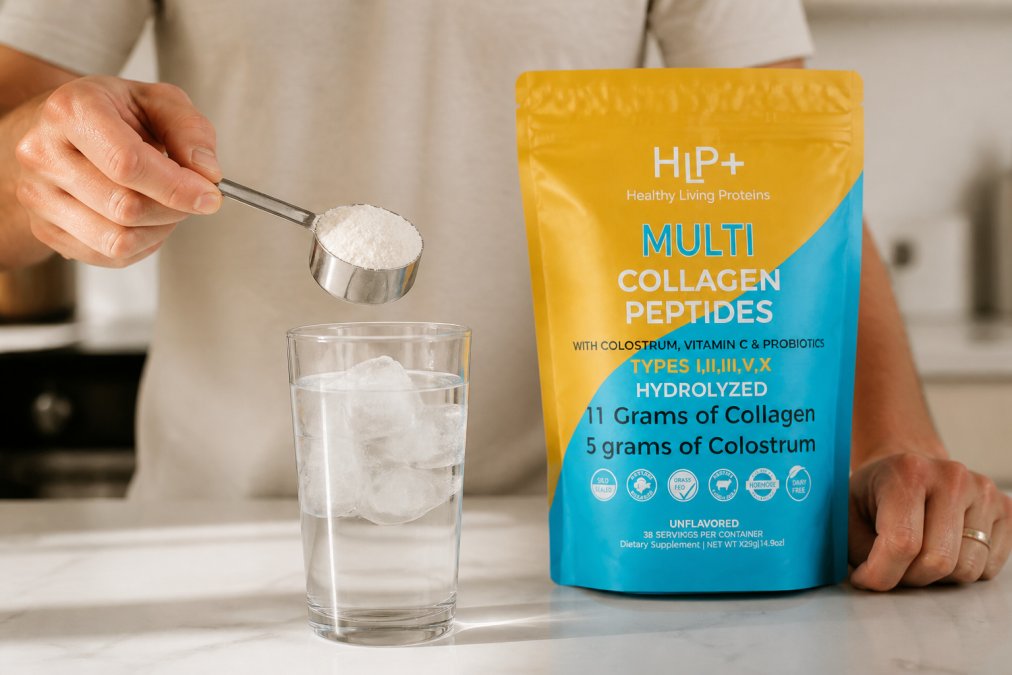
Effective Protocol:
- Morning: 11g hydrolyzed collagen + 5g bovine colostrum + 250mg vitamin C (essential for collagen cross-linking)
- Timing: Take on an empty stomach or with a light meal for optimal amino acid absorption
- Duration: Minimum 8 weeks for meaningful changes in joint mobility and stiffness
- Additional support: Add a joint-specific probiotic blend if you have digestive sensitivity
The Multi Collagen Peptides w/ Colostrum from Healthy Living Proteins delivers 11g of all five collagen types, 5g of grass-fed colostrum, vitamin C, and probiotics in a single scoop at $49.99, the most efficient way to stack these ingredients.
Taking collagen and colostrum together maximizes bioavailability because colostrum's immune factors create a less inflammatory digestive environment, allowing collagen peptides to absorb more effectively. Expect results in 4-8 weeks minimum, cartilage synthesis takes time.
Collagen vs Colostrum: Which Should You Choose for Your Joints
The answer depends on your specific joint pathology and whether you have contraindications favoring one supplement. Most people benefit from both.
Decision Framework by Joint Pathology
Osteoarthritis (OA) and Wear-and-Tear Damage
If you have diagnosed osteoarthritis or noticeable cartilage thinning, collagen is your priority. OA is fundamentally a structural problem where cartilage matrix degrades faster than it's synthesized. Hydrolyzed collagen directly addresses this by providing amino acids your body needs to synthesize new cartilage matrix. Colostrum plays a supporting role by reducing systemic inflammation that accelerates OA progression. Start with 10-15g hydrolyzed collagen daily, and add colostrum (5-10g daily) after 4 weeks if inflammation remains high.
Athletic Recovery and Tendon/Ligament Stress
If your joint stress comes from high-impact activity or strength training, collagen is essential. Athletes experience microtrauma requiring constant repair. Collagen provides structural amino acids needed to maintain connective tissue integrity under load. Colostrum accelerates recovery by reducing post-exercise inflammation.
The optimal stack for athletes: 11g collagen + 5g colostrum daily, with an additional 5g collagen dose on high-training days.
Autoimmune-Driven Joint Conditions
If you have an autoimmune condition affecting your joints, colostrum should be your priority. Autoimmune joint disease is driven by immune dysregulation where T-cells and B-cells attack synovial tissue and cartilage. Colostrum's proline-rich polypeptides and immunoglobulins help rebalance immune response from pro-inflammatory toward more tolerant states. Start with 10g colostrum daily, add collagen after 2-3 weeks. Consult your rheumatologist before adding supplements, as some immunoglobulins can interact with biologic medications.
General Inflammation and Metabolic Joint Stress
If your joint pain is driven by systemic inflammation, colostrum is your entry point. Once inflammation is controlled (typically 4-6 weeks), add collagen to rebuild structural damage.
Contraindications and Side Effects
Collagen Contraindications:
- Gout: Collagen is high in glycine and proline, amino acids that can increase uric acid production. If you have gout, collagen may trigger flares. Colostrum is safer.
- Digestive Sensitivity: Some experience bloating or constipation when starting collagen. Start with 5g daily and increase gradually over 2 weeks. Take with vitamin C and adequate water.
- Allergies: Collagen is derived from animal sources. People with beef or fish allergies should verify the source on the label.
- Medication Interactions: High glycine content may potentiate sedative effects with benzodiazepines or sleep aids.
Colostrum Contraindications:
- Dairy Sensitivity and Lactose Intolerance: Bovine colostrum contains lactose. Test with a small dose (2-3g) first if lactose-sensitive.
- Casein Allergy: Colostrum contains casein protein, which can trigger allergic reactions distinct from lactose intolerance.
- Immune Dysregulation: People with severe immunosuppression should consult their doctor before use.
- Histamine Sensitivity: Colostrum contains elevated histamine levels. Collagen is lower in histamine and may be better tolerated.
- Digestive Upset: Some experience mild nausea or loose stools when starting colostrum. Taking with food reduces this effect.
Stacking Considerations:
- If you have dairy sensitivity, start with collagen alone for 2 weeks, then introduce colostrum at 2-3g.
- If you have gout, prioritize colostrum and limit collagen to 5g daily or less.
- If you're on immunosuppressant medications, consult your doctor before stacking both.
- If you have histamine sensitivity, test collagen first before adding colostrum.
Choosing Your Starting Point
Choose collagen if:
- You have noticeable joint stiffness, reduced range of motion, or diagnosed osteoarthritis
- You're an athlete or have high physical demands on your joints
- You have gout or histamine sensitivity
- You have a casein allergy or severe dairy sensitivity
Choose colostrum if:
- You have chronic systemic inflammation
- You have digestive issues like bloating or IBS
- You're recovering from injury and need faster immune modulation
- You have an autoimmune condition affecting your joints
- You have gout
Stack both if:
- You want comprehensive joint support addressing structure, inflammation, and gut health
- You're over 40 and want to prevent age-related joint degradation
- You have both joint pain and digestive sensitivity
- You have no contraindications to either supplement
Quality and Bioavailability: What to Look For
For Collagen:
- Hydrolyzed (not gelatin): Hydrolyzed collagen has a molecular weight of 2,000-5,000 Daltons, small enough to cross the intestinal barrier.
- Grass-fed and pasture-raised: Better amino acid profile and lower inflammatory marker content than grain-fed sources.
- Third-party tested: Look for NSF Certified for Sport, USP, or ConsumerLab verification.
- Type diversity: Multi-type collagen (Types I, II, III, V, X) supports skin, joints, gut, and bone.
For Colostrum:
- IgG concentration: Look for at least 25-30% IgG by weight.
- Grass-fed source: Superior nutrient density.
- Lyophilized (freeze-dried): Preserves heat-sensitive growth factors like IGF-1 and lactoferrin.
- Third-party tested: Verify for heavy metals, pathogens, and label accuracy.
- Lactose content: Confirm lactose-reduced or lactose-free if sensitive.
The Multi Collagen Peptides w/ Colostrum from Healthy Living Proteins combines both supplements with probiotics and vitamin C in one formula, eliminating guesswork. It uses grass-fed, hydrolyzed collagen with 30% IgG colostrum, meeting all quality markers.
Frequently Asked Questions
Q: Can I take collagen and colostrum together for joint support?
A: Yes, collagen and colostrum work synergistically for joint health. Hydrolyzed collagen provides amino acids like proline and glycine that rebuild cartilage and connective tissue, while bovine colostrum delivers growth factors and immunoglobulins that reduce systemic inflammation and support tissue repair. Taking both together creates a complementary effect: collagen addresses structural integrity while colostrum modulates immune response and accelerates healing. Many users report better results when stacking both rather than taking either alone.
Q: Is hydrolyzed collagen better than colostrum for joint pain?
A: Both serve different purposes for joint pain. Hydrolyzed collagen is superior for rebuilding cartilage and synovial fluid due to its amino acid profile and high bioavailability. Colostrum excels at reducing inflammatory responses and supporting tissue repair through growth factors and lactoferrin. For chronic joint stiffness, collagen works faster; for acute inflammation and immune-driven pain, colostrum provides quicker relief. The best approach depends on your specific issue: choose collagen for structural joint support, colostrum for inflammation-related discomfort.
Q: How long does it take to see results from collagen and colostrum for joints?
A: Most users notice improved joint mobility within 3-4 weeks of consistent use, though individual timelines vary. Collagen requires time to accumulate in connective tissue and stimulate cartilage synthesis, while colostrum's anti-inflammatory effects may appear slightly faster. Full structural benefits typically emerge after 8-12 weeks of daily supplementation. Consistency matters more than dosage: taking your supplement daily provides steady anabolic signaling and tissue repair. If you don't notice improvement after 30 days, our money-back guarantee covers your investment.
Q: What makes hydrolyzed collagen better for absorption than regular collagen?
A: Hydrolyzed collagen is broken down into smaller peptide chains (collagen peptides), dramatically increasing bioavailability compared to whole collagen molecules. Your digestive system can absorb these peptides directly into the bloodstream, where they reach joint tissue more efficiently. The hydrolysis process reduces molecular weight from 300,000+ Daltons to 2,000-5,000 Daltons, enabling rapid assimilation. This superior absorption means you need smaller doses to achieve the same effect as unhydrolyzed collagen, making hydrolyzed forms the scientifically preferred choice for joint support.
Q: Does colostrum help with inflammation in the joints?
A: Yes. Bovine colostrum contains immunoglobulins (IgG) and lactoferrin that modulate immune response and reduce systemic inflammation, a root cause of joint stiffness and discomfort. Colostrum works by supporting a healthy gut barrier (the gut-joint axis), which prevents inflammatory cytokines from entering circulation. When gut permeability improves, overall inflammation decreases, reducing joint pain and improving mobility. This immune-modulating effect makes colostrum particularly valuable for those with inflammatory joint conditions seeking natural anti-inflammatory support alongside structural support from collagen.
This article was written using GrandRanker