


Table of Contents
- Why Scalp Health Determines Your Hair Growth Potential
- 7 Signs of Scalp Inflammation You Should Not Ignore
-
Your Scalp Care Routine for Hair Growth: Step-by-Step
- Step 1: Pre-Wash Detangling and Brushing
- Step 2: Cleansing Without Stripping Your Moisture Barrier
- Step 3: Targeted Exfoliation, How Often and Which Method
- Step 4: Scalp Massage for Circulation and Nutrient Delivery
- Step 5: Conditioning and Sealing
- Step 6: Post-Wash Scalp Treatment
- Building Your Weekly Schedule
- Collagen Benefits for Hair Follicles and the Hair Growth Cycle
- What You Eat Affects Your Scalp Microbiome and Sebum Production
- Environmental Stressors and Product Buildup: What to Fix Today
- Your Scalp Health Action Plan: Supplements, Habits, and Patience
- Conclusion
- Frequently Asked Questions
Last Updated: September 7, 2026
Why Scalp Health Determines Your Hair Growth Potential
Scalp health is the foundation upon which every strand of hair is built, and improving it is the single most effective lever you can pull for growth. The hair follicle sits inside the scalp, and the condition of that skin directly controls the hair growth cycle, including the anagen phase where hair actually lengthens. When the scalp is inflamed, clogged, or dehydrated, follicles struggle to produce strong hair, leading to reduced hair density over time.
Most people chase hair growth with topical serums and expensive shampoos while ignoring the environment those follicles live in. That approach is backwards. Addressing the root cause, which is the scalp itself, can deliver noticeable results. Below, we will show you exactly how to improve scalp health for hair growth with a routine you can start today.
The scalp is skin, and it behaves like the skin on your face. It produces sebum, hosts a delicate scalp microbiome, and maintains a moisture barrier that keeps irritants out. When that barrier is compromised, you get inflammation, itchiness, and shedding. The five strategies we cover here can help build a healthier foundation for fuller, stronger hair.
7 Signs of Scalp Inflammation You Should Not Ignore
Inflammation is the silent killer of hair growth potential, and most people do not recognize it until significant thinning has occurred. Scalp inflammation disrupts the hair growth cycle and can shorten the anagen phase, forcing follicles into premature rest. The seven warning signs include persistent itching, visible redness, flaking beyond mild dandruff, tenderness when brushing, a feeling of tightness, increased shedding in the shower, and bumps or sensitivity along the hairline.
A common mistake is dismissing these symptoms as "just a dry scalp" and reaching for a stronger shampoo. In practice, this means you may be worsening the problem by stripping the moisture barrier further. If you notice several of these signs, especially tenderness or bumps, it is worth consulting a dermatologist for an accurate diagnosis rather than guessing.
Your Scalp Care Routine for Hair Growth: Step-by-Step
A consistent scalp care routine for hair growth is not complicated, but it does require the right order of operations and the patience to stick with it for several months. The hair growth cycle is slow, and you will not see new growth overnight. What you will see within weeks is less shedding, less itch, and a calmer scalp.
Step 1: Pre-Wash Detangling and Brushing
Before your scalp ever touches water, spend two minutes brushing your hair from root to tip. This loosens surface debris, distributes your scalp's natural sebum down the hair shaft, and reduces the tangling that leads to breakage during washing. Use a wide-tooth comb or a boar-bristle brush, and always start at the ends, working your way up to the roots to avoid snapping wet or dry hair.
Step 2: Cleansing Without Stripping Your Moisture Barrier
Choose a shampoo formulated without sulfates (sodium lauryl sulfate, sodium laureth sulfate) and without harsh drying alcohols. Look for gentle surfactants like sodium cocoyl isethionate or cocamidopropyl betaine, which clean without disrupting the acid mantle. Harsh detergents strip away protective oils, which triggers the scalp to overproduce sebum to compensate, creating a vicious cycle of oiliness and irritation.
Wash frequency depends on your scalp type, but most adults do well washing two to three times per week. If you have an oily scalp, daily washing with a very gentle formula is acceptable; if you have a dry or sensitive scalp, once or twice per week may be sufficient. The key is to listen to your scalp, if it feels tight or itchy after washing, your shampoo is too stripping or you are washing too often.
Step 3: Targeted Exfoliation, How Often and Which Method
Scalp exfoliation removes dead skin cells, excess sebum, and product buildup that block follicles. Once per week is sufficient for most people; those with very oily scalps or heavy product use may benefit from twice weekly, while those with sensitive skin should start at every other week.
Choose between two methods:
- Physical exfoliation: Use a scalp scrub with fine, dissolvable granules (like jojoba beads or sugar) and massage gently in circular motions for 60 to 90 seconds. Avoid scrubs with crushed walnut shells or apricot pits, which can create micro-tears in the skin.
- Chemical exfoliation: A leave-on scalp treatment containing salicylic acid (0.5% to 2%) or glycolic acid (5% to 7%) dissolves the intercellular glue that holds dead skin cells together. Apply directly to the scalp in sections, leave on for 5 to 10 minutes, then rinse thoroughly.
Never scrub hard enough to cause pain, as this damages the skin and increases trans-epidermal water loss. If you have active sores, open wounds, or a diagnosed skin condition like psoriasis, skip exfoliation and consult a dermatologist first.
Step 4: Scalp Massage for Circulation and Nutrient Delivery
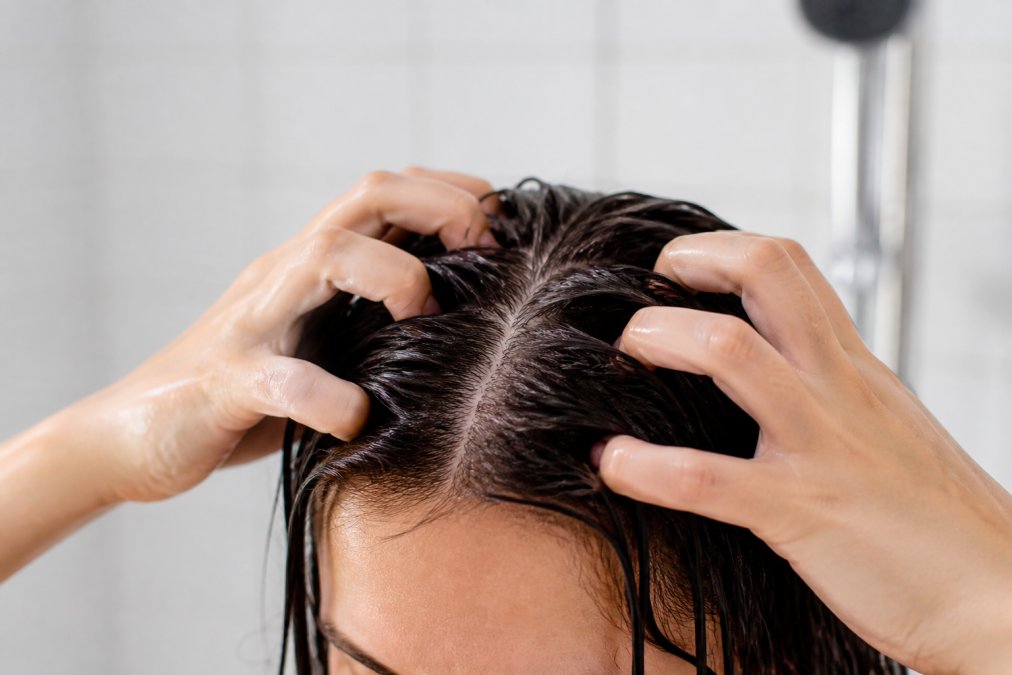
Scalp massage is one of the most underrated tools for improving circulation and delivering oxygen and nutrients to the follicle. Use your fingertips, not your nails, and apply firm pressure in small circles for five minutes daily. This stimulates blood flow, which supports the nutrient absorption your follicles need to produce thick hair.
For a more targeted approach, use a silicone scalp massager or a manual scalp brush with soft silicone bristles. These tools help lift dead skin and stimulate the scalp without the friction of fingernails. A 2016 study published in Eplasty found that daily four-minute scalp massages over 24 weeks led to thicker hair in participants, likely due to increased blood flow and mechanical stretching of follicle cells.
Step 5: Conditioning and Sealing
After cleansing and exfoliating, apply conditioner primarily to the mid-lengths and ends of your hair, not directly to the scalp. Heavy conditioners and masks can leave residue on the scalp that contributes to buildup. If you have a dry scalp, you may use a lightweight, non-comedogenic conditioner on the scalp as well, but most people should keep conditioners off the roots.
Step 6: Post-Wash Scalp Treatment
Once or twice per week, after washing and while the scalp is still slightly damp, apply a targeted scalp serum or tonic. Look for ingredients like niacinamide (vitamin B3), which supports the skin barrier and reduces inflammation, or caffeine, which has been shown in vitro to stimulate hair follicle activity. Apply a few drops directly to parted sections of the scalp and massage in gently.
Building Your Weekly Schedule
Here is how these steps fit into a realistic weekly rhythm:
| Day | Routine |
|---|---|
| Monday | Pre-wash brush, gentle cleanse, condition mid-lengths |
| Tuesday | Dry brush or comb, no wash |
| Wednesday | Pre-wash brush, gentle cleanse, scalp serum |
| Thursday | Dry brush or comb, no wash |
| Friday | Pre-wash brush, gentle cleanse, condition mid-lengths |
| Saturday | Scalp exfoliation (physical or chemical), then gentle cleanse |
| Sunday | Rest day, no manipulation, let the scalp breathe |
This structure gives your scalp consistent care without over-washing or over-exfoliating. Adjust the frequency based on your scalp type and how your skin responds over the first two weeks.
Collagen Benefits for Hair Follicles and the Hair Growth Cycle
Collagen benefits for hair follicles are substantial, and this is where supplementation enters the picture. Collagen is the most abundant protein in the body, and it provides the structural building blocks for the hair shaft itself. As we age, natural collagen production declines, which contributes to thinner hair and slower growth.
The hair follicle requires specific amino acids, particularly proline and glycine, which are abundant in hydrolyzed collagen. These amino acids support the keratin structure of hair and help maintain the integrity of the follicle during the anagen phase. Many dermatologists acknowledge that adequate protein intake is essential for hair growth, and collagen is a source of protein.
For those looking to supplement, the National Institutes of Health overview on collagen supplements notes that while research is ongoing, collagen peptides are generally well-tolerated. Healthy Living Proteins offers a Multi Collagen Peptides w/ Colostrum formula containing all five collagen types, which supports not only hair but also gut health, a key player in nutrient absorption.

What You Eat Affects Your Scalp Microbiome and Sebum Production
Diet is the most overlooked factor in scalp health, yet everything you eat shows up in your skin and hair. The scalp microbiome thrives on a diverse, nutrient-rich diet, while a diet high in processed foods and refined sugar promotes inflammation and imbalances sebum production.
Omega-3 fatty acids, found in fatty fish and flaxseed, are powerful anti-inflammatories that calm the scalp. Antioxidants from colorful fruits and vegetables protect follicles from oxidative stress. Zinc and biotin are frequently cited for their role in supporting hair structure, and deficiencies in these nutrients are linked to increased shedding.
Environmental Stressors and Product Buildup: What to Fix Today
Most scalp care advice stops at sun protection, but your scalp faces a far more constant assault from the environment you live in every day. Beyond the sun, which most people know damages skin, several environmental stressors attack your scalp daily. Understanding each one, and how to counteract it, is the difference between a scalp that merely survives and one that thrives.
Hard Water: The Mineral Film You Cannot See
Hard water, which is high in dissolved calcium and magnesium, leaves mineral deposits on the hair shaft and scalp that cause dryness, irritation, and a dull, brittle feel to hair. Over time, these minerals bind to the hair cuticle, making it harder for moisturizing ingredients to penetrate and for shampoos to lather effectively.
How to identify it: If your showerheads and faucets develop white scale, or if your soap doesn't lather well, you likely have hard water. Many municipal water suppliers publish annual water quality reports online, check yours for hardness levels above 7 grains per gallon.
What to fix today: Install a shower head filter containing vitamin C or KDF media, which neutralizes chlorine and reduces mineral content. For an immediate fix, do a monthly chelating treatment with a shampoo containing EDTA (ethylenediaminetetraacetic acid), which binds to minerals and lifts them off the hair and scalp.
Air Pollution: Invisible Particulate Matter
Air pollution particles, including PM2.5 (particulate matter smaller than 2.5 micrometers), settle on the scalp and contribute to inflammation and oxidative stress. A 2019 study in the Journal of Investigative Dermatology found that exposure to particulate matter increased the expression of inflammatory markers in skin cells and disrupted the hair follicle cycle. These particles are small enough to penetrate the skin barrier and accumulate in hair follicles.
How to identify it: If you live in an urban area or near a major roadway, your scalp is exposed daily. You cannot see these particles, but they accumulate in the sebum on your scalp.
What to fix today: Wash your hair more frequently if you are exposed to high pollution days, even a quick water rinse helps remove surface particles. Use a shampoo containing activated charcoal or clay once per week to draw out impurities. Consider wearing a hat or scarf when spending extended time outdoors in high-traffic areas.
Humidity and Heat: The Sebum Amplifier
High humidity causes the scalp's sebaceous glands to become more active, leading to oilier scalps, clogged follicles, and increased risk of fungal overgrowth like Malassezia, which is associated with dandruff. Heat and humidity also create an environment where bacteria thrive, potentially worsening scalp acne or folliculitis.
How to identify it: If your scalp feels greasier by midday during summer months or in humid climates, humidity is your trigger.
What to fix today: Use a lightweight, oil-free scalp toner containing witch hazel or salicylic acid on high-humidity days to control excess oil. Avoid heavy oils and butters during humid seasons, they trap heat and moisture against the scalp.
Product Buildup: The Silent Suffocator
Product buildup is equally damaging. Silicones (dimethicone, cyclopentasiloxane), waxes, and heavy conditioners coat the hair and scalp, suffocating follicles. This buildup traps bacteria and dead skin, leading to clogged pores and hindered growth. Dry shampoo, in particular, is a major culprit, while it absorbs oil temporarily, its starch and clay particles accumulate on the scalp and mix with sebum to form a cement-like residue.
How to identify it: If your hair feels heavy, looks dull despite conditioning, or your scalp feels itchy and congested even after washing, you likely have buildup.
What to fix today: A scalp detox using a clarifying treatment once monthly can reset the environment. Look for a clarifying shampoo with apple cider vinegar or salicylic acid. Apply to a dry scalp, massage for two minutes, then add water and lather. Follow with a gentle, sulfate-free shampoo to rebalance.
Post-Styling Recovery: The Missing Step
If you use dry shampoo, gels, pomades, or heat styling tools regularly, your scalp needs a dedicated recovery protocol. These products leave residues that standard shampoos do not fully remove, and heat styling dehydrates the scalp and disrupts its barrier.
What to fix today: Once per week, do a double-cleanse: first with a gentle cleansing oil or balm to break down oil-based residues, then with your regular sulfate-free shampoo. Follow with a hydrating scalp mask containing aloe vera or panthenol to replenish moisture lost to heat styling.
The Hard Water and Pollution Checklist
| Stressor | Sign | Immediate Fix | Long-Term Fix |
|---|---|---|---|
| Hard water | White scale on fixtures, poor lather | Chelating shampoo monthly | Shower filter with KDF media |
| Air pollution | Urban living, visible dust | Weekly charcoal shampoo | Wash after high-pollution days |
| Humidity | Midday oiliness | Oil-free scalp toner | Adjust product weight seasonally |
| Product buildup | Heavy, dull hair | Clarifying shampoo monthly | Double-cleanse weekly |
| Heat styling | Dry, tight scalp | Hydrating scalp mask | Reduce heat frequency, use lower settings |
If you live in a hard water area, consider a shower filter. If you style your hair daily, incorporate a post-styling recovery routine that includes a gentle cleanse to remove residue. These small fixes, as noted in guidance from the American Academy of Dermatology on scalp care, can have a significant impact on long-term scalp comfort and hair retention.
Your Scalp Health Action Plan: Supplements, Habits, and Patience
Consistency beats intensity when it comes to scalp health, and results require a minimum of three to six months of dedicated effort. Here is a realistic action plan that combines the strategies above into a manageable weekly structure:
| Action | Frequency | Expected Impact |
|---|---|---|
| Gentle sulfate-free cleanse | 2-3 times per week | Maintains moisture barrier, reduces irritation |
| Scalp exfoliation | 1 time per week | Removes buildup, unclogs follicles |
| Scalp massage with oils | 5 minutes daily | Boosts circulation, supports nutrient delivery |
| Collagen supplementation | Daily | Provides amino acid building blocks for keratin |
| Balanced diet with omega-3s | Daily | Reduces inflammation, regulates sebum |
| Clarifying detox treatment | 1 time per month | Resets scalp from product and hard water buildup |
Supplements can fill the gaps that diet and topical care miss. The Harvard T.H. Chan School of Public Health discussion on protein and hair health emphasizes that adequate protein is foundational for hair structure. A high-quality collagen powder is an efficient way to ensure you are getting those specific amino acids daily.
Conclusion
Developing a scalp care routine for hair growth is not about buying the most expensive products; it is about understanding the biology of your skin and working with it consistently. You now have the knowledge to identify inflammation, cleanse properly, exfoliate weekly, massage daily, and support your body nutritionally.
The hardest part is patience, because hair grows slowly and results take time. But the reward is not just thicker hair; it is a healthier, more comfortable scalp that supports your overall confidence.
Healthy Living Proteins is here to support your journey with science-backed supplements designed for real absorption. Our Multi Collagen Peptides w/ Colostrum delivers all five collagen types alongside probiotics to support the gut-scalp connection, and every purchase is backed by a 30-day money-back guarantee. Get started with Healthy Living Proteins and give your hair the foundation it deserves.
Frequently Asked Questions
What are the signs of an unhealthy scalp?
Common signs include persistent itchiness, flaking beyond normal dandruff, redness, tenderness, a burning sensation, and visible product buildup. If your scalp feels tight or your hair sheds more than usual during washing, these can point to inflammation or a disrupted moisture barrier. Excess oil production can also signal your scalp is overcompensating for dryness. Catching these signs early matters: chronic scalp inflammation can shorten the anagen phase of the hair growth cycle, which reduces hair density over time.
How to stimulate your scalp for hair growth?
Daily scalp massage is the most direct method. Use your fingertips, not nails, and apply firm circular pressure for 5 minutes, focusing on the crown and temples. This boosts circulation, which supports nutrient absorption at the follicle. You can add a few drops of a lightweight oil if your scalp is dry, but avoid heavy products that cause buildup. For an extra step, use a silicone scalp massager in the shower while your conditioner sits. Consistency matters more than intensity.
Can diet and supplements impact scalp health?
Yes. Your scalp produces sebum and builds new hair cells from the nutrients you consume. Omega-3 fatty acids help manage inflammation, while antioxidants protect follicles from environmental stressors. Collagen supplementation supports hair follicles because collagen provides the amino acids glycine and proline, which are building blocks for keratin. Look for a hydrolyzed multi-collagen powder with all five collagen types for broader support.
How often should you exfoliate your scalp?
Once per week is the right starting point for most people. If you use heavy styling products or have visible flaking, you can try twice weekly. Those with sensitive scalps or active inflammation should start with every other week and monitor for irritation. Use a gentle salicylic acid or enzyme-based scrub. Always follow with a moisturizing conditioner to restore the moisture barrier after exfoliation.