


Table of Contents
- Understanding Skin Elasticity and Why It Declines
- Step 1: Boost Collagen Production From Within
- Step 2: Eat Foods That Improve Skin Elasticity
- Step 3: Use the Best Vitamins for Skin Elasticity
- Step 4: Protect Your Skin From Sun Damage
- Step 5: Does Facial Massage Improve Elasticity?
- Step 6: Optimize Hydration and Sleep Habits
- Step 7: Manage Stress and Support Skin Health Long-Term
Last Updated: August 5, 2026
Understanding Skin Elasticity and Why It Declines
Skin elasticity is your skin's ability to stretch and return to its original shape, depending on two critical proteins: collagen and elastin. Collagen provides structure and firmness, while elastin fibers allow your skin to bounce back after movement or expression.
Around age 25, your body produces roughly 1% less collagen annually. Elastin fibers also break down over time, especially with sun damage, stress, and poor lifestyle habits. By your 40s and 50s, fine lines deepen, skin sags, and that firm appearance fades.
At Healthy Living Proteins, we've worked with thousands of customers noticing these changes. The good news: you don't need expensive procedures. Natural approaches that boost collagen production, protect existing elastin, and support skin health from within actually work. The key is understanding that improving skin elasticity naturally requires a multi-angle strategy: sun protection, diet, hydration, sleep, stress management, and targeted supplementation combined create real, measurable changes in skin firmness.
Step 1: Boost Collagen Production From Within
Collagen production happens in your skin's dermis layer, where fibroblasts manufacture new collagen fibers. This process slows with age, creating a deficit between breakdown and production.
The most direct way to boost collagen is through hydrolyzed collagen peptides, collagen broken down into absorbable pieces. When consumed, your digestive system breaks them into amino acids (glycine, proline, hydroxyproline) that signal fibroblasts to ramp up collagen synthesis. Research shows collagen peptides stimulate your body's own collagen-making machinery, which is why supplementation works better than diet alone.
Type I collagen is most abundant in skin and provides structural support; Type III works alongside it for elasticity. Multi Collagen Peptides Types (I, II, III, V, X) from Healthy Living Proteins delivers all five types in hydrolyzed form, ensuring comprehensive collagen support.

Take collagen consistently, ideally daily, for at least 8-12 weeks before expecting visible changes. Some report improvements within 4-6 weeks, but meaningful elasticity gains typically require longer commitment.
Step 2: Eat Foods That Improve Skin Elasticity
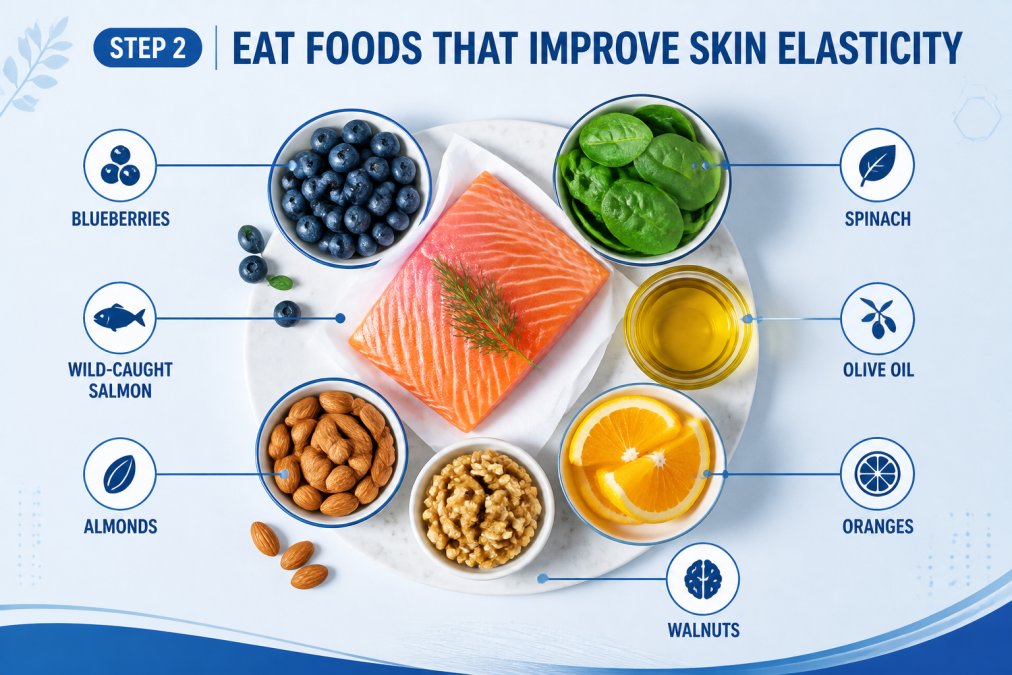
Foods that improve skin elasticity fall into three categories: collagen-rich sources, antioxidant powerhouses, and foods supporting protein synthesis.
Collagen-rich foods include bone broth, salmon with skin, sardines, and chicken skin. Bone broth is particularly useful because long simmering partially breaks collagen down, making it easier to absorb.
Antioxidant-rich foods protect existing collagen and elastin from free radical damage. Berries contain anthocyanins that fight oxidative stress. Leafy greens provide lutein and zeaxanthin. Citrus fruits deliver vitamin C for collagen cross-linking. Dark chocolate with 70% cacao or higher contains polyphenols that improve skin blood flow.
Foods supporting protein synthesis include eggs (complete protein), nuts and seeds (zinc), and legumes (plant-based protein). The Mediterranean diet, heavy on olive oil, fish, vegetables, and nuts, covers all three categories simultaneously.
Avoid foods that accelerate skin aging. High-sugar diets trigger glycation, where sugar binds to collagen and elastin, making them stiff. Refined carbohydrates and processed foods promote inflammation that breaks down collagen. Alcohol dehydrates skin and impairs collagen synthesis.
Step 3: Use the Best Vitamins for Skin Elasticity
Three vitamins stand out as non-negotiable: vitamin C, retinol, and vitamin E.
Vitamin C is critical, your body cannot synthesize collagen without it. It stabilizes and cross-links collagen molecules, making them stronger and more elastic. Topical vitamin C serums boost collagen production in the dermis. Most people need 500-1000mg daily for meaningful skin benefits.
Retinol (vitamin A) increases cellular turnover and stimulates fibroblasts to produce more collagen. It's one of the few ingredients with strong clinical evidence for reducing fine lines and improving skin texture. Start with low concentrations (0.25-0.5%) and increase gradually.
Vitamin E is a fat-soluble antioxidant that protects cell membranes from oxidative stress and works synergistically with vitamin C.
Hyaluronic acid, while not a vitamin, is a humectant that holds water in the dermis, plumping skin and making fine lines less visible. It also supports fibroblast function and collagen synthesis.
Peptides are short chains of amino acids that signal skin cells to produce more collagen. When you use Multi Collagen Peptides & Colostrum from Healthy Living Proteins, you're getting peptides systemically, which supports topical efforts.

The best vitamins for skin elasticity work together: vitamin C boosts collagen synthesis, retinol accelerates cell turnover to reveal new collagen, vitamin E protects it from oxidative damage, and hyaluronic acid keeps it hydrated.
Step 4: Protect Your Skin From Sun Damage
Sun damage is the single biggest accelerator of skin aging. UV radiation breaks down collagen and elastin directly through photoaging and generates free radicals that oxidatively stress skin cells.
Daily sunscreen is non-negotiable. Use SPF 30 minimum, SPF 50+ for extended outdoor time. Broad-spectrum protection blocks both UVA (aging) and UVB (burning) rays. Apply 15 minutes before sun exposure and reapply every two hours or after swimming.
Physical (mineral) sunscreens using zinc oxide or titanium dioxide reflect UV rays. Chemical sunscreens absorb UV energy and convert it to heat. Both work; choose based on skin sensitivity.
Beyond sunscreen, wear protective clothing when possible. Long-sleeved UV-blocking shirts, wide-brimmed hats, and sunglasses reduce sun exposure. Seek shade during peak UV hours (10am-4pm).
Existing sun damage can be partially reversed. Antioxidants like vitamin C and resveratrol help repair oxidative damage. Retinol stimulates collagen remodeling, gradually improving sun-damaged skin texture over months of consistent use.
Step 5: Does Facial Massage Improve Elasticity?
Facial massage can improve skin elasticity by improving circulation. Gentle, consistent massage increases blood flow to facial skin, delivering more oxygen and nutrients to fibroblasts and skin cells. Better nutrient delivery supports collagen synthesis and cellular turnover. Massage also reduces muscle tension in the face, which restricts blood flow and contributes to expression lines and sagging.
Use gentle, upward strokes following the natural contours of your face. Massage the jawline, cheeks, forehead, and neck for 5-10 minutes daily using your fingertips or a jade roller. Avoid harsh downward strokes or excessive pressure.
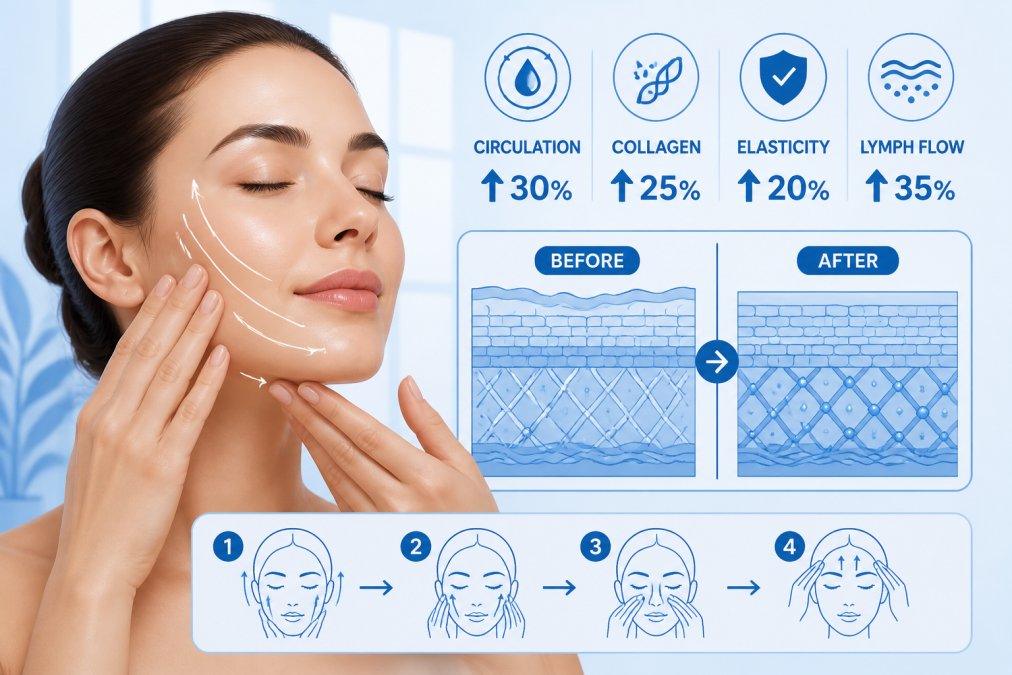
Facial massage alone doesn't improve elasticity significantly. It's a supporting tool that improves circulation and reduces tension, supporting the effects of collagen supplementation, sun protection, and topical treatments. Combined with these strategies, massage contributes to overall skin health.
Step 6: Optimize Hydration and Sleep Habits
Hydration and sleep directly impact skin elasticity. Drinking adequate water keeps skin cells plump and supports collagen synthesis. Dehydrated skin appears dull, thin, and more wrinkled. Most adults need 8-10 glasses of water daily.
External hydration means using moisturizers and hydrating serums. Hyaluronic acid serums draw water into the dermis. Moisturizers with ceramides and peptides seal in hydration and support skin barrier function, which prevents transepidermal water loss.
Sleep is when your body does most repair work. During deep sleep, growth hormone peaks, blood flow to skin increases, and collagen synthesis accelerates. Chronic sleep deprivation suppresses growth hormone, impairs collagen production, and increases cortisol, which breaks down collagen. Most adults need 7-9 hours nightly.
Sleep position matters. Sleeping on your back prevents sleep creases. Side and stomach sleepers develop deeper creases that can become permanent expression lines over time.
Step 7: Manage Stress and Support Skin Health Long-Term
Chronic stress accelerates skin aging. Stress triggers cortisol release, which breaks down collagen and impairs skin barrier function. It also increases inflammation, which damages elastin fibers.
Stress management directly supports skin elasticity. Meditation, yoga, deep breathing, and regular exercise all reduce cortisol and improve skin health. Even 20-30 minutes of moderate exercise most days reduces stress markers and improves skin blood flow.
Sleep quality directly correlates with stress resilience. Well-rested people handle stress better and have lower baseline cortisol.
Consistency matters more than perfection. A sustainable approach might include:
- Taking a collagen supplement daily (5 minutes)
- Eating one antioxidant-rich meal daily (20 minutes)
- Applying sunscreen and a retinol serum (5 minutes)
- Doing gentle facial massage 3-4 times weekly (10 minutes)
- Sleeping 7-9 hours nightly
- Managing stress through your preferred method (30 minutes)
Over 6-12 months, these habits compound into visible improvements in skin firmness, texture, and elasticity. Many people see meaningful changes within 8-12 weeks of consistent supplementation combined with sun protection and improved sleep.
Multi Collagen Peptides & Colostrum from Healthy Living Proteins combines all five collagen types with colostrum, probiotics, and vitamin C. This addresses multiple pathways simultaneously: collagen synthesis, gut health (which impacts nutrient absorption and skin inflammation), and immune function. Many customers report noticing improvements in skin smoothness and firmness within 6-8 weeks.
The 30-day money-back guarantee means you can try the formula risk-free. Most people need at least 8-12 weeks to see meaningful elasticity changes, so many customers continue beyond the initial trial period.
| Strategy | Timeline | Key Mechanism | Best Combined With |
|---|---|---|---|
| Collagen supplementation | 8-12 weeks | Provides amino acids; signals fibroblasts to produce new collagen | Vitamin C; sun protection |
| Sun protection | Immediate (prevention); 12+ weeks (repair) | Prevents photoaging; allows existing collagen to remain intact | Antioxidants; retinol for repair |
| Dietary antioxidants | 8-12 weeks | Reduces oxidative stress; supports collagen stability | Collagen supplementation |
| Retinol topical | 4-8 weeks | Accelerates cell turnover; stimulates collagen production | Vitamin C; moisturizer; sunscreen |
| Sleep optimization | Immediate (physiological); 4-8 weeks (visible) | Increases growth hormone; accelerates collagen synthesis | Stress management; hydration |
| Facial massage | Ongoing (circulation); 8-12 weeks (cumulative) | Improves blood flow; reduces muscle tension | Collagen supplementation; moisturizer |
Improving skin elasticity naturally is achievable at any age when you understand the mechanisms and commit to consistent action. The combination of collagen supplementation, sun protection, dietary support, topical treatments, and lifestyle optimization creates real, measurable improvements in skin firmness and appearance. Start with collagen peptides and sun protection, these two changes alone deliver significant results. Within 12 weeks, most people notice their skin looks firmer, more hydrated, and visibly younger. Get started with Multi Collagen Peptides & Colostrum from Healthy Living Proteins and experience the difference that comprehensive collagen support delivers for your skin, hair, and overall vitality.
Frequently Asked Questions
Can you regain elasticity in your skin naturally?
Yes. While you cannot fully reverse all signs of aging, you can improve skin elasticity through consistent effort. Boosting collagen production, protecting against UV damage, and maintaining hydration help restore firmness and suppleness. Results typically appear within 4-8 weeks of sustained effort. Collagen supplements combined with topical retinoids and antioxidants accelerate visible improvements in skin texture and elasticity.
How long does it take to see results when improving skin elasticity naturally?
Most people notice initial improvements in skin hydration and texture within 2-3 weeks. More significant changes in elasticity, firmness, and reduction of fine lines typically appear after 4-8 weeks of consistent effort. Collagen peptides and dietary changes work best over 8-12 weeks. Results vary based on age, genetics, sun exposure history, and how consistently you follow these steps.
What's the fastest way to improve skin elasticity?
A multi-pronged approach works fastest: take hydrolyzed collagen peptides (which absorb quickly), eat antioxidant-rich foods, use retinol topically, apply SPF daily, and stay hydrated. Collagen supplements like those containing all five collagen types plus supporting nutrients show noticeable results within 4-6 weeks when combined with sun protection and a nutrient-dense diet.
Does drinking water alone improve skin elasticity?
Hydration is necessary but not sufficient on its own. Drinking adequate water supports skin barrier function and cellular turnover, but improving elasticity requires collagen production, antioxidant protection, and vitamin intake. Water helps deliver nutrients to skin cells and removes toxins, but you also need dietary protein, vitamin C, zinc, and protection from UV damage and oxidative stress for real elasticity gains.
This article was written using GrandRanker