


Table of Contents
- The Real Reason Most People See No Results
- Why Your Body Can't Use the Collagen You're Taking
- Reason 1: You're Buying the Wrong Type of Collagen
- Reason 2: The Hydrolysis and Molecular Weight Problem
- Reason 3: Your Dosage Is Too Low
- Reason 4: You're Missing the Nutrients That Make Collagen Work
- Reason 5: Unrealistic Timelines and Expectations
- Signs Collagen Is Working (and What to Track)
- Frequently Asked Questions
Last Updated: September 8, 2026
Millions of people take collagen every morning, yet a large portion stop after a few months because they see no change in their skin, joints, or nails. Collagen supplements fail when they are not absorbed, not dosed, or not supported by the nutrients your body needs to actually use them. In this guide from Healthy Living Proteins, we break down the seven real reasons your powder is not delivering results, and what to change starting tomorrow.
The uncomfortable truth is that collagen is a protein, and your body does not absorb proteins whole.
The Real Reason Most People See No Results
The most common reason collagen supplements fail is that people expect them to work like a drug when they actually work like food. When you swallow it, your digestive tract treats it exactly like the protein in chicken breast or eggs: it gets broken down into amino acids and small peptides before it ever reaches your bloodstream.
Collagen supplementation is a process of providing raw building materials, not delivering finished collagen to your skin. Your body dismantles the peptides and ships the components to wherever they are needed most, which is often not your skin.
This is why the National Institutes of Health's Office of Dietary Supplements notes that the body prioritizes where dietary protein goes based on demand. If you are not sleeping well, eating poorly, or under physical stress, those amino acids will be used for energy or tissue repair before they ever reach your dermis.
Why Your Body Can't Use the Collagen You're Taking
Your digestive system splits collagen into dipeptides and tripeptides, small enough to cross the intestinal barrier. This is a good thing for safety, but it means the "collagen" you absorbed is no longer intact collagen.
These peptides travel through the bloodstream and may stimulate fibroblasts, the cells responsible for collagen synthesis. The science here is about signaling, not direct replacement. If your body is deficient in co-factors like vitamin C, the peptides have nothing to work with.
A common mistake is taking collagen while ignoring overall dietary protein intake. If you are already low on total protein, your body will cannibalize those collagen peptides for basic metabolic needs rather than skin elasticity.

Reason 1: You're Buying the Wrong Type of Collagen
Not all collagen is the same, and buying the wrong type is one of the fastest ways to waste money. Type I supports skin, hair, and nails; Type II is primarily found in cartilage and joints; Type III supports skin and blood vessels; Type V and Type X play supporting roles in tissue structure.
Most cheap supplements contain only Type I and Type III. If you are dealing with joint stiffness, a Type I-only powder will not help much because your cartilage needs Type II.
A full-spectrum product that includes all five types, like the Multi Collagen Peptides Types (I, II, III, V, X) from Healthy Living Proteins, covers skin, joints, and gut simultaneously. Single-type products are cheaper for a reason: they only address one part of the puzzle.
Reason 2: The Hydrolysis and Molecular Weight Problem
The term "hydrolyzed" on a label is not marketing fluff; it is the difference between absorption and waste. Enzymatic hydrolysis breaks long collagen chains into smaller peptide fragments so your digestive tract can process them efficiently.
Collagen peptides that are not fully hydrolyzed have a higher molecular weight, leading to poor absorption and, for some people, digestive discomfort. The goal is a product broken down into low molecular weight peptides, typically under 3,000 daltons, which research suggests allows for better systemic absorption.

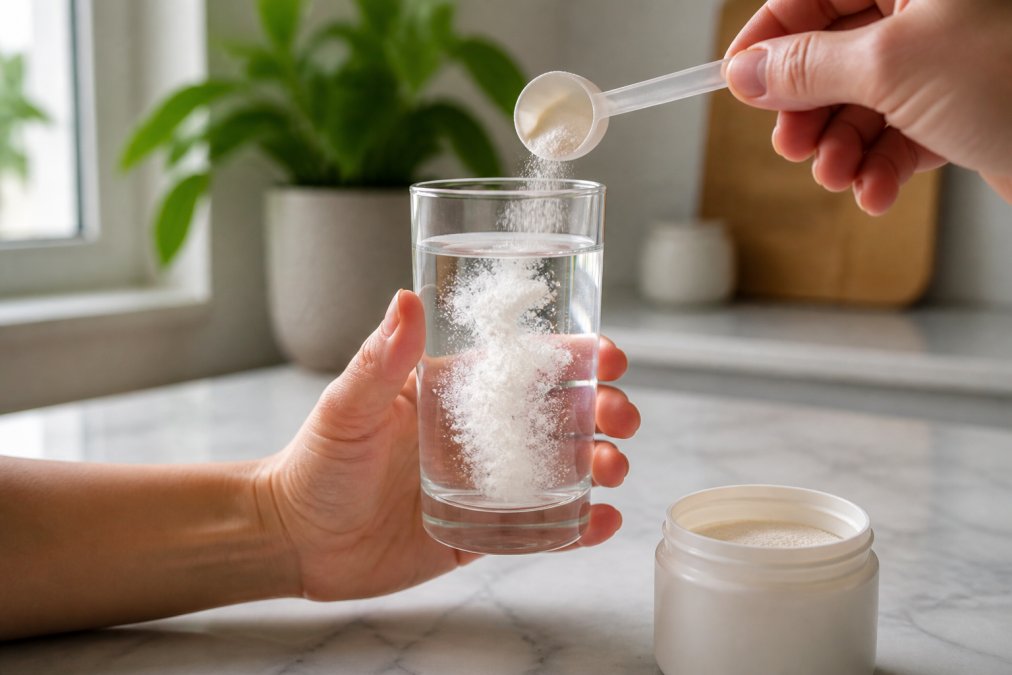
If your powder clumps in liquid or has a gritty texture, that is a sign the hydrolysis process was incomplete. Quality brands invest in enzymatic hydrolysis to ensure the powder dissolves cleanly and the peptides are small enough for your body to use.
Reason 3: Your Dosage Is Too Low
Clinical research on collagen efficacy typically uses doses between 10 and 15 grams per day (PubMed). Many retail products contain only 2.5 to 5 grams per serving, which is often not enough to trigger a noticeable response.
Check your label carefully. If your serving size is one scoop and that scoop contains 5 grams, you are likely underdosing by half. Take two scoops per day, or switch to a product that delivers a higher dose per serving.
For reference, a product like the Multi Collagen Peptides w/ Colostrum delivers 11 grams of collagen per serving, putting you in the clinically studied range with a single scoop. Consistency over months is easier when you are not measuring out multiple scoops every morning.
Reason 4: You're Missing the Nutrients That Make Collagen Work
Collagen is not a standalone ingredient. It is a structural protein that your body must assemble from raw materials, and that assembly line requires specific co-factors. If you are deficient in these, the collagen peptides you consume will be broken down for energy or excreted, not woven into new tissue.
The Vitamin C Linchpin
The most critical co-factor is vitamin C. The enzymes prolyl hydroxylase and lysyl hydroxylase, which stabilize the collagen triple helix, require vitamin C as a co-substrate. Without it, the reaction stalls, and your body produces unstable collagen that is rapidly degraded. Most practitioners find that a daily intake of at least 200 mg of vitamin C, ideally taken alongside your collagen dose, is necessary. Some premium formulas include it, but if yours does not, you need to add it separately.
The Trace Mineral Team: Zinc and Copper
Beyond vitamin C, zinc and copper are essential for the cross-linking of collagen fibers. Zinc is a co-factor for matrix metalloproteinases and lysyl oxidase; copper is the primary mineral in lysyl oxidase itself. A deficiency in either results in weak, brittle collagen. The RDA for zinc is 11 mg for men and 8 mg for women, while copper needs are around 900 mcg per day. High-dose zinc can deplete copper over time, so a balanced approach is necessary.
The Amino Acid Pool Problem
Your body does not earmark collagen peptides exclusively for skin and joints. Once digested, they enter the 'amino acid pool' in your bloodstream, and your body prioritizes where to send them based on immediate needs. If you are recovering from a workout, fighting an infection, or not eating enough total protein, those collagen-specific amino acids, glycine, proline, and hydroxyproline, will be diverted to muscle repair or immune function before they ever reach your dermis. Ensure your total daily protein intake is adequate (typically 1.2 to 2.0 grams per kilogram of body weight for active adults) so the collagen peptides are not cannibalized for basic metabolic needs.
The Gut Health Connection
If your gut lining is compromised, due to chronic stress, poor diet, or overuse of NSAIDs, the peptides may not be absorbed efficiently. Colostrum contains growth factors like IGF-1 and TGF-beta, which support intestinal lining integrity, and probiotics help maintain a balanced microbiome linked to nutrient absorption. A formula that combines collagen with these gut-supporting ingredients, such as the Multi Collagen Peptides w/ Colostrum, addresses this upstream issue.
Reason 5: Unrealistic Timelines and Expectations
The most common reason collagen 'fails' is not biology, it is a mismatch between marketing promises and physiological reality. Collagen synthesis is a slow, multi-step process, and your skin's structural turnover is measured in months, not days.
The Cellular Timeline
When you ingest hydrolyzed collagen, the peptides are absorbed within 1 to 2 hours. However, that is just the delivery. The fibroblasts in your dermis must then receive the signaling peptides, upregulate collagen production, and begin laying down new fibers. This process is not instantaneous. A 2024 review in the journal Nutrients A 2024 review in the journal Nutrients on collagen peptide supplementation found that most positive trials lasted a minimum of 8 weeks, with longer trials showing more pronounced benefits. The review noted that skin elasticity improvements were consistently observed only after 12 weeks of daily supplementation. This is not a placebo effect; it is the time required for your body to synthesize and remodel structural proteins.
A Realistic Week-by-Week Expectation
Here is what you should actually expect, based on the physiology of collagen turnover:
- Weeks 1-2: No visible skin changes. You may notice better digestion or improved sleep, but this is likely from the glycine content, which has a calming effect on the nervous system. Do not mistake this for collagen synthesis.
- Weeks 3-4: Nail growth may accelerate, and nails may feel harder. This is because nails have a faster growth cycle than skin. If you see no change here, it is a sign your dosage or absorption may be off.
- Weeks 5-8: Joint discomfort may begin to ease, particularly in weight-bearing joints like knees. This is often the first subjective improvement people report, likely due to the anti-inflammatory effects of specific collagen peptides.
- Weeks 9-12: Skin hydration may improve. This is measurable via corneometry, but you may not see it in the mirror. Your skin may feel less tight after washing.
- Months 3-6: Skin elasticity and firmness changes become visible. Wrinkle depth reduction, if it occurs, is typically seen at the 6-month mark. This is the point where most clinical trials show the most significant differences from placebo.
The 'Amino Acid Pool' Reality Check
Even with a perfect timeline, results are not guaranteed if your body is prioritizing other needs. Your body does not have a dedicated 'skin first' policy. If you are chronically sleep-deprived, under high stress, or not consuming enough total protein, the amino acids from collagen will be shunted to more immediate needs, like cortisol regulation or muscle repair, before they reach your dermis. A person may take collagen for 12 weeks, see no skin change, and conclude it is a scam when their body was using the glycine and proline for higher-priority functions like liver detoxification or gut repair.
The Placebo Effect and Its Opposite
The placebo effect cuts both ways. People who expect immediate results often report feeling better in the first week, while people who expect nothing often miss subtle improvements. To avoid this, track objective markers: take a weekly photo in consistent lighting, measure nail growth, and keep a joint discomfort journal.
The Cost-Benefit Question
Finally, consider the cost. At roughly $1 to $2 per day for a clinically effective 10-gram dose, a 3-month trial costs between $90 and $180. If you are not willing to commit to that timeline and budget, you are better off not starting at all. The evidence is clear: collagen works, but it works on a schedule that no amount of marketing can accelerate.
Signs Collagen Is Working (and What to Track)
You cannot judge collagen efficacy by looking in the mirror every day. Track specific markers over time to know if the supplement is working.
The first sign is often your nails, which may become harder and less prone to splitting within 4 to 6 weeks. The second sign is joint comfort during movement. The third sign, and the one that takes longest, is skin hydration and elasticity.
Take a photo of your face, hands, and nails in consistent lighting once a week. Keep a simple journal of joint discomfort levels during specific activities like climbing stairs or getting out of bed.
Signs collagen is working include faster nail growth, reduced hair shedding in the shower, and skin that feels tighter when you pinch it. If you see none of these after 12 weeks of consistent, correctly dosed supplementation, evaluate the quality and type of collagen you are taking, not abandon the concept entirely.
Getting collagen supplements fail to work for you usually comes down to correctable errors in type, dose, and patience. Healthy Living Proteins formulates its collagen with all five types, hydrolyzed peptides for absorption, and the vitamin C and probiotics needed for your body to actually use the building blocks. Backed by a 30-day money-back guarantee and trusted by over 15,000 customers, it is the straightforward fix for a supplement routine that is not delivering.
Frequently Asked Questions
Why is my collagen supplement not working?
Most often it comes down to one of four issues: you're taking a non-hydrolyzed form your body can't absorb well, your dosage is below the 10-11 grams per day that studies use, you're missing co-factors like vitamin C, or you haven't given it enough time. Collagen supplements typically need 8-12 weeks of consistent daily use before visible changes appear in skin, hair, or joints. If you're past that window with no change, check your product's molecular weight and ingredient list first.
What are the 5 signs that collagen is working?
Signs collagen is working typically appear gradually. You may notice stronger nails that stop splitting, less visible hair shedding, improved skin hydration that shows up as fewer dry patches, reduced joint stiffness especially in the morning, and smoother skin texture around the eyes. These changes usually start between weeks 4 and 8, with more noticeable effects by week 12. Track one specific change, like nail strength or morning joint discomfort, rather than looking for dramatic overnight differences.
How long does it take to see results from collagen supplements?
Clinical trials typically run 8 to 12 weeks, and that matches what most users report. Skin hydration and elasticity improvements usually appear around 8 weeks. Joint comfort and mobility often take slightly longer, around 12 weeks. Hair and nail changes can take 3 to 4 months because these tissues grow slowly. Consistency matters more than dosage: taking collagen daily for 90 days produces far better results than taking double the amount for two weeks and quitting.
Does the type of collagen supplement matter for absorption?
Yes, and this is where many collagen supplements fail. Collagen must be hydrolyzed into peptides through enzymatic hydrolysis before your body can absorb it. Look for 'hydrolyzed collagen' or 'collagen peptides' on the label. Whole collagen or collagen in capsules that aren't hydrolyzed has larger molecules that are harder to digest. The best collagen supplement will also state its source types, like Type I and III from bovine or Type II from chicken, since different types support different tissues.