


Table of Contents
- What Is Hydrolyzed Collagen and How Does It Differ From Native Collagen?
- The Enzymatic Hydrolysis Process: Breaking Down Collagen for Absorption
- Molecular Weight and Bioavailability: Why Smaller Peptides Work Better
- How Your Digestive System Absorbs Collagen Peptides
- Collagen Supplement Dosage and Absorption Thresholds
- Co-Factors That Enhance Collagen Absorption and Synthesis
- Why Individual Metabolism Affects How Well You Absorb Collagen
- Hydrolyzed Collagen vs. Native Collagen: A Direct Comparison
Last Updated: August 6, 2026
What Is Hydrolyzed Collagen and How Does It Differ From Native Collagen?
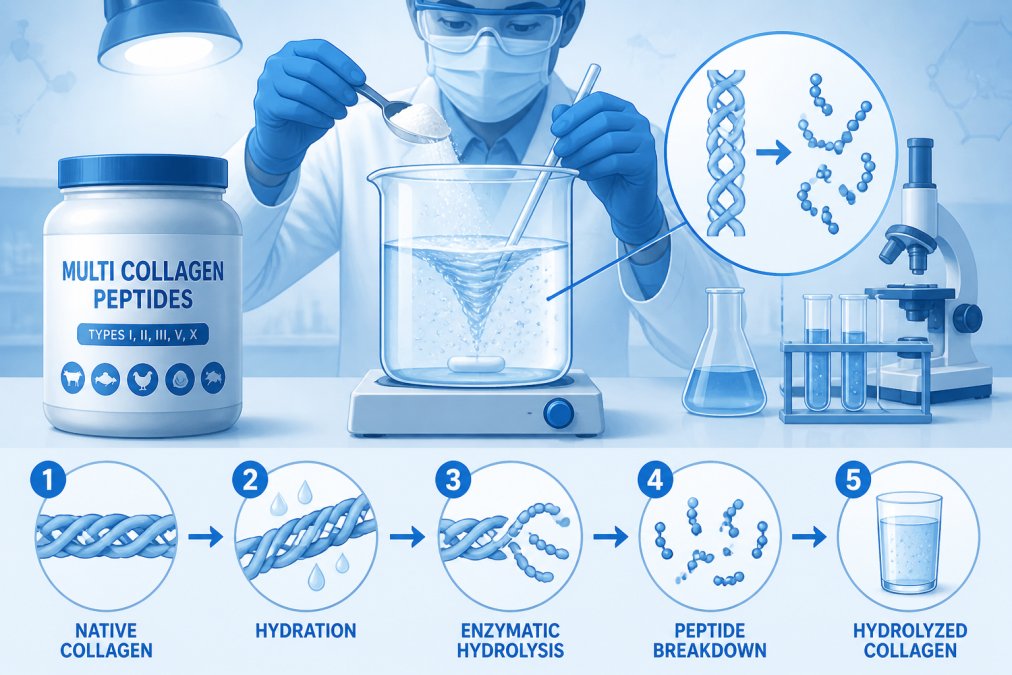
Hydrolyzed collagen is native collagen broken down through enzymatic hydrolysis into smaller peptide chains, dramatically improving absorption and bioavailability. Native collagen exists as a large triple-helix protein structure that your digestive system struggles to break apart efficiently.
The difference comes down to molecular size. Native collagen molecules are too large for your intestinal walls to absorb directly, most passes through your digestive tract unabsorbed. Hydrolyzed collagen has been pre-broken into peptides small enough for your intestines to recognize and transport into your bloodstream.
Hydrolysis also creates bioactive peptides, specifically di-peptides and tri-peptides, that trigger collagen synthesis in your skin, joints, and connective tissue far more effectively than larger, unbroken protein molecules.
At Healthy Living Proteins, we use hydrolyzed collagen exclusively because the science is unambiguous: hydrolyzed collagen absorbs better and produces the visible results our customers report.
The Enzymatic Hydrolysis Process: Breaking Down Collagen for Absorption
Enzymatic hydrolysis transforms native collagen into absorbable peptides through a carefully controlled process. Raw collagen material, typically sourced from grass-fed bovine or wild-caught marine sources, is exposed to specific enzymes (usually protease enzymes) that break peptide bonds between amino acids.

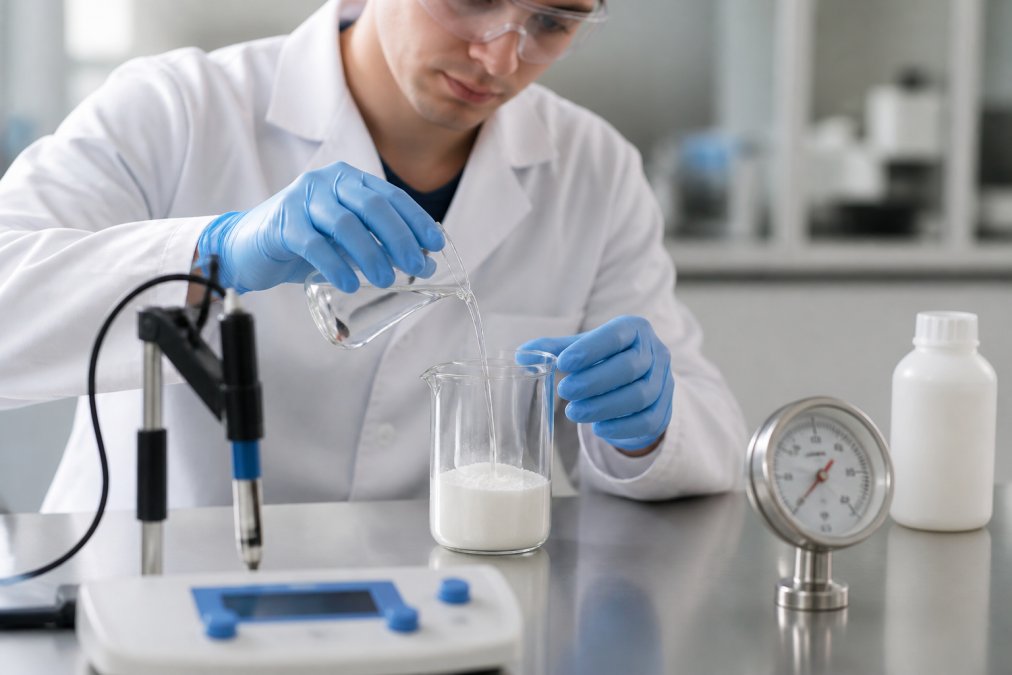
The process is controlled by temperature, pH, and enzyme concentration. Too aggressive, and you destroy the bioactive properties of the peptides. Too gentle, and the collagen doesn't break down enough for absorption. Manufacturing quality determines whether collagen actually absorbs well.
Proper hydrolysis produces a collagen hydrolysate with peptides typically ranging from 2,000 to 5,000 daltons in molecular weight, the sweet spot for intestinal absorption. Peptides smaller than this may be too fragmented to trigger collagen synthesis. Peptides larger than this face absorption barriers.
The hydrolysis process creates a specific ratio of di-peptides and tri-peptides, two- and three-amino-acid chains that are the most bioactive forms collagen can take. They're small enough to cross your intestinal barrier intact, but large enough to signal your body to synthesize new collagen.
Molecular Weight and Bioavailability: Why Smaller Peptides Work Better
Molecular weight is the primary factor determining whether hydrolyzed collagen absorbs better than other protein sources. Bioavailability, the percentage of what you consume that actually gets absorbed, is directly tied to peptide size.
Collagen peptides are measured in daltons. Most hydrolyzed collagen supplements range from 2,000 to 5,000 daltons, the optimal range where peptides are small enough to cross the intestinal epithelium but large enough to retain bioactive signaling properties.

Peptides under 1,000 daltons absorb quickly but are often too fragmented to trigger collagen synthesis. Peptides over 5,000 daltons face absorption barriers. The 2,000 to 5,000 dalton range is where bioavailability peaks, your intestines transport the peptides efficiently, and your body's collagen-synthesis pathways recognize them as relevant building blocks.
Di-Peptides and Tri-Peptides: The Building Blocks Your Body Uses
Di-peptides and tri-peptides are the most bioactive components of hydrolyzed collagen. Your body is best equipped to absorb and use these small chains.
These peptides cross your intestinal barrier through specific transport proteins called peptide transporters. Once absorbed, they act as signaling molecules that tell your fibroblasts (collagen-producing cells) to increase collagen synthesis.
The most abundant di-peptide in collagen is glycine-proline. The most abundant tri-peptide is glycine-proline-hydroxyproline. These specific chains drive collagen synthesis in your skin, joints, and connective tissue. Supplements that list di-peptide and tri-peptide content understand the science; those listing only total protein content are guessing.
How Your Digestive System Absorbs Collagen Peptides
Your digestive system treats collagen peptides differently than other proteins. When you consume hydrolyzed collagen, it reaches your small intestine largely intact, unlike most proteins, which get broken down further by stomach acid and digestive enzymes.
Absorption happens through active transport mechanisms. Your intestinal cells have peptide transporters that recognize di-peptides and tri-peptides and pull them across the intestinal wall into your bloodstream. This energy-dependent process prioritizes absorbing these peptides because they're recognized as valuable building blocks.
Once in your bloodstream, hydrolyzed collagen peptides circulate to target tissues. Your skin, joints, gut lining, and connective tissue all have receptors for these peptides. When they arrive, they signal collagen-producing cells to increase synthesis. The entire absorption process takes 30 minutes to 2 hours, depending on what else you've eaten and your digestive efficiency.
Your gut lining is made partially of collagen. When you consume hydrolyzed collagen, some is preferentially absorbed by your intestinal walls themselves, which is why many people report improved digestive comfort after starting collagen supplementation.
Collagen Supplement Dosage and Absorption Thresholds
Most clinical research suggests an effective dose is 10 grams of hydrolyzed collagen peptides per day. Some studies show benefits at 5 grams, but results are less consistent. Doses above 20 grams per day don't produce additional benefits, your body can only synthesize collagen at a certain rate.
Timing also affects absorption. Taking collagen with vitamin C, glycine, and proline enhances synthesis rates. Consistency matters more than dose: 10 grams daily for 30 days produces better results than 20 grams for 15 days.
Individual factors affect the absorption threshold. Your age, digestive health, and current collagen status all influence how much collagen you need to see results. Someone with severe joint damage may need higher doses than someone with mild stiffness.
Co-Factors That Enhance Collagen Absorption and Synthesis
Hydrolyzed collagen doesn't work in isolation. Your body requires specific co-factors to absorb collagen peptides efficiently and convert them into new collagen tissue.
Vitamin C is the most critical co-factor. It's required for the hydroxylation of proline and lysine, the chemical modification that stabilizes the collagen triple helix. Without adequate vitamin C, your body can absorb collagen peptides but can't assemble them into functional collagen tissue.
Glycine and proline are amino acids that your body preferentially uses for collagen synthesis. Copper and zinc are mineral co-factors for collagen cross-linking enzymes that stabilize collagen tissue. Lysine is critical for collagen cross-linking and stabilization.
The synergy matters. Hydrolyzed collagen plus vitamin C produces better results than either alone. Premium formulations include multiple co-factors because they're biological necessities for collagen synthesis.
Why Individual Metabolism Affects How Well You Absorb Collagen
Not everyone absorbs hydrolyzed collagen at the same rate. Individual metabolic differences mean some people see dramatic results in 30 days, while others need 90 days.
Age is the primary factor. People over 40 have lower baseline collagen synthesis rates. Someone at 28 might see skin improvements in 4 weeks; someone at 55 might need 12 weeks.
Digestive health affects absorption directly. People with compromised gut health absorb fewer collagen peptides because their intestinal barrier is compromised. Collagen itself helps heal the gut lining, so these people often see dramatic improvements as their gut heals.
Hormonal status, stress, and sleep quality all influence collagen synthesis rates. Chronic stress elevates cortisol, which suppresses collagen synthesis. Poor sleep reduces growth hormone, required for tissue repair. Someone with severe skin damage or joint degeneration has more "catching up" to do than someone with mild aging signs.
Setting expectations based on your individual factors, age, digestive health, stress, sleep, and current condition, helps you stay consistent long enough to see results.
Hydrolyzed Collagen vs. Native Collagen: A Direct Comparison
The difference between hydrolyzed and native collagen comes down to absorption and efficacy.
| Characteristic | Hydrolyzed Collagen | Native Collagen |
|---|---|---|
| Molecular Weight | 2,000-5,000 daltons | 300,000+ daltons |
| Absorption Rate | 90%+ bioavailability | 10-20% bioavailability |
| Time to Absorption | 30 min - 2 hours | 4-6+ hours (if absorbed) |
| Collagen Synthesis Trigger | Yes (di/tri-peptides) | No (too large) |
| Digestive Burden | Minimal | High |
| Visible Results Timeline | 4-12 weeks | 12+ weeks or no results |
| Cost per Effective Dose | Moderate | High (due to low efficacy) |
Hydrolyzed collagen absorbs better because it's already broken into peptide sizes your intestines evolved to transport. Native collagen also creates a higher digestive burden, causing bloating or discomfort in sensitive stomachs.
Healthy Living Proteins uses only hydrolyzed collagen in all formulations. Our Marine Collagen Peptides, Grass-Fed Bovine Collagen Peptides, and Multi Collagen Peptides products all use enzymatically hydrolyzed collagen with molecular weights optimized for absorption. We include all five collagen types (I, II, III, IV, and V) because different tissues benefit from different types. This comprehensive approach is why customers report results across multiple areas, skin, hair, nails, joints, and digestion.

The science of why hydrolyzed collagen absorbs better comes down to molecular size, peptide structure, and your body's evolved mechanisms for transporting small chains of amino acids. When you understand this science, you understand why consistency and dosage matter, why co-factors enhance results, and why individual metabolic differences affect your timeline.
If you're considering collagen supplementation, hydrolyzed collagen is the only form shown to produce measurable results. Start with 10 grams daily, pair it with vitamin C and adequate sleep, and give yourself 30-90 days depending on your age and current condition.
Healthy Living Proteins' Multi Collagen Peptides & Colostrum formula combines all five collagen types with probiotics and colostrum to optimize both absorption and digestive health. With our 30-day money-back guarantee, you can test whether hydrolyzed collagen works for you with zero financial risk. Get started with Healthy Living Proteins and experience why over 15,000 customers have made collagen supplementation part of their daily routine.
Frequently Asked Questions
What is the difference between hydrolyzed collagen and regular collagen powder?
Hydrolyzed collagen has been broken down into smaller peptide chains (typically 2,000-5,000 daltons) through enzymatic hydrolysis, making it easier for your digestive tract to absorb. Regular collagen retains its triple-helix structure and much larger molecular weight, which your body struggles to break down. This means hydrolyzed collagen reaches your bloodstream faster and more efficiently, delivering amino acids where your body needs them for skin, joints, and connective tissue repair.
How long does hydrolyzed collagen take to be absorbed and show results?
Hydrolyzed collagen peptides are typically absorbed within 30 minutes to 2 hours of ingestion, entering your bloodstream rapidly. However, visible results depend on your individual metabolism and consistent dosage. Most users report noticing improvements in skin hydration, hair thickness, and joint comfort within 4-12 weeks of daily supplementation. Results vary based on age, diet, lifestyle, and whether you're consuming adequate co-factors like vitamin C and amino acids that support collagen synthesis.
Does hydrolyzed collagen actually work for skin, hair, and joint health?
Clinical research supports that hydrolyzed collagen supplementation improves skin elasticity, hydration, and reduces joint discomfort when taken consistently. The smaller peptide chains in hydrolyzed collagen are bio-accessible, meaning your intestinal absorption is significantly higher than with native collagen. Your body uses the amino acids (especially glycine, proline, and hydroxyproline) to rebuild connective tissue, support protein synthesis, and strengthen hair and nails. Results are most noticeable with consistent daily intake and adequate supporting nutrients.
What dosage of hydrolyzed collagen should I take for optimal absorption?
Most clinical studies showing benefits used daily doses between 8-15 grams of hydrolyzed collagen peptides. However, absorption depends on your body weight, age, and metabolic rate. Taking your supplement with vitamin C, amino acids, and adequate water enhances absorption and collagen synthesis. Starting with 10 grams daily mixed into liquid is a practical approach. Consistency matters more than exceeding the dose, as your body can only synthesize a certain amount of new collagen per day regardless of intake.
This article was written using GrandRanker