


Table of Contents
- Understanding Digestive Discomfort and Its Causes
- Natural Remedies for Bloating and Gas Relief
- Home Remedies for Upset Stomach
- Foods That Help Digestion Naturally
- How to Improve Digestion Naturally Beyond Remedies
- Safety, Interactions, and When to Seek Medical Care
- Frequently Asked Questions
Last Updated: October 6, 2026
Understanding Digestive Discomfort and Its Causes
Digestive discomfort affects millions of adults, and the causes are often straightforward. Small dietary shifts and 5 natural remedies for digestive discomfort can transform how you feel. (Source: National Institutes of Health (NIH) fact sheet on ginger)
Common triggers include eating too fast, adding fiber too quickly, stress, insufficient water, and gut bacteria imbalances. Understanding your personal triggers is the first step toward relief.
Natural Remedies for Bloating and Gas Relief
Bloating and gas usually come from one of three places: swallowed air, fermentation of undigested carbohydrates in the colon, or a gut moving too slowly or too fast. Matching remedy to symptom matters more than taking all of them at once.
Peppermint and fennel target cramping and trapped gas, ginger targets slow stomach emptying and nausea, and digestive enzymes target fermentation after a specific meal.
Ginger for Digestive Support
Ginger is one of the better-studied kitchen remedies for upper digestive complaints (pubmed.ncbi.nlm.nih.gov). Its active compounds, gingerols and shogaols, appear to speed gastric emptying, the mechanism most often linked to its effect on bloating and nausea.
Practical ways to use it:
- Fresh ginger tea: Simmer 1 to 2 teaspoons of freshly grated or thinly sliced ginger in 8 ounces of hot water for 10 minutes. Strain and sip after meals.
- Ginger powder: About 1/4 to 1/2 teaspoon stirred into warm water or tea. Powder is more concentrated than fresh, so start at the low end.
- Chews or capsules: Check the label for actual ginger content rather than total capsule weight.
- Cooking: Grated ginger in soups, stir-fries, and rice dishes adds the same compounds in smaller amounts.
Most people notice an effect within 30 to 60 minutes of a cup of tea. Ginger is generally well tolerated, but high doses can cause heartburn.
Peppermint and Fennel for Cramping
Peppermint and fennel are the two remedies most often reached for when the problem is cramping or trapped gas.
Peppermint contains menthol, which relaxes the smooth muscle of the intestinal wall, the antispasmodic effect studied for irritable bowel-type cramping.
- Peppermint tea: Steep 1 to 2 teaspoons of dried leaves in hot water, covered, for 5 to 10 minutes. Covering the cup keeps the volatile oils from escaping.
- Enteric-coated peppermint oil capsules: These are designed to release in the intestine rather than the stomach, which is why they are the form most often used in cramping research. Follow the product label.
Fennel has a long history of use for bloating, and its oils are thought to relax intestinal muscle much like peppermint.
- Fennel tea: Lightly crush 1 to 2 teaspoons of fennel seeds, steep in hot water for 10 minutes, and strain.
- Chewing seeds: A small pinch of seeds chewed after a meal is a common traditional practice.
Both are generally safe for most adults in food and tea amounts.
How Strong Is the Evidence?
- Ginger: The most consistent evidence among the three, particularly for nausea and speeding gastric emptying. Most studies are small, and results vary by dose and form.
- Peppermint: Reasonable evidence for cramping and irritable bowel-type symptoms, especially with enteric-coated oil. Tea is widely used but less directly studied.
- Fennel: Mostly traditional use and small studies. Low-risk and worth trying, but do not expect the same consistency as peppermint.
None of these treats an underlying condition. If bloating is new, severe, or persistent, the cause, not another remedy, is the answer.
Home Remedies for Upset Stomach
"Upset stomach" is a catch-all, and the right home remedy depends on which version you have. Nausea, indigestion, and reflux respond to different things, and a remedy that helps one can worsen another. Before reaching for anything, name the symptom.
Herbal Teas and Warm Liquids
Warm liquids relax the stomach, encourage it to empty, and replace fluids if you have been vomiting. Cold drinks can trigger cramping in a sensitive stomach; warm ones tend to soothe.
Match the tea to the symptom:
- Ginger tea: The best-supported option for nausea. Simmer 1 to 2 teaspoons of fresh grated ginger in hot water for 10 minutes.
- Chamomile tea: Mildly calming and often used for a nervous, churning stomach. Steep 1 teaspoon of dried flowers for 5 minutes.
- Peppermint tea: Helpful for cramping, but skip it if you have reflux, it can relax the valve at the top of the stomach and make acid worse.
- Slippery elm: Traditionally used to coat and soothe the digestive tract. Mix the powder into warm water.
- Licorice root: Soothing for some, but it can raise blood pressure and lower potassium with regular use. Avoid it if you have hypertension or take diuretics, and do not use it long-term.
Sip slowly, a few ounces at a time. If nausea is severe, plain water or an oral rehydration solution matters more than any herb.
Lemon, Cinnamon, and Other Kitchen Solutions
Kitchen remedies can help, but some popular ones backfire for certain people.
- Warm water with lemon: Acid and warmth may stimulate digestion, but it irritates some people, especially those with reflux. Try it after a meal rather than on an empty stomach.
- Apple cider vinegar: Often recommended for low stomach acid, but evidence is thin, and it can erode tooth enamel and worsen reflux. If you try it, dilute a teaspoon in a full glass of water and use a straw.
- Honey: A spoonful can coat the throat and settle mild nausea. Do not give honey to infants under one year (the CDC).
- Cinnamon: Pleasant in tea and mildly anti-inflammatory, but not a digestive treatment on its own. Use true Ceylon cinnamon daily, since cassia contains more of a compound that can stress the liver in large amounts.
- Fennel seeds: Chewing a small pinch after a meal is a traditional way to freshen the breath and ease mild bloating.
Introduce one at a time and give it a few days, so you can tell which one actually helped.
When Home Remedies Are the Wrong Tool
Home remedies are for mild, occasional discomfort, not a substitute for care when the picture changes. Seek prompt medical attention for severe or worsening abdominal pain, blood in your stool or vomit, persistent vomiting, signs of dehydration, unexplained weight loss, or difficulty swallowing. Discomfort lasting more than two weeks despite home care also deserves evaluation. (Source: National Center for Complementary and Integrative Health (NCCIH) overview of peppermint)
Foods That Help Digestion Naturally
What you eat matters as much as what you take. Certain foods support digestive health by feeding beneficial bacteria, providing enzymes, and reducing inflammation.
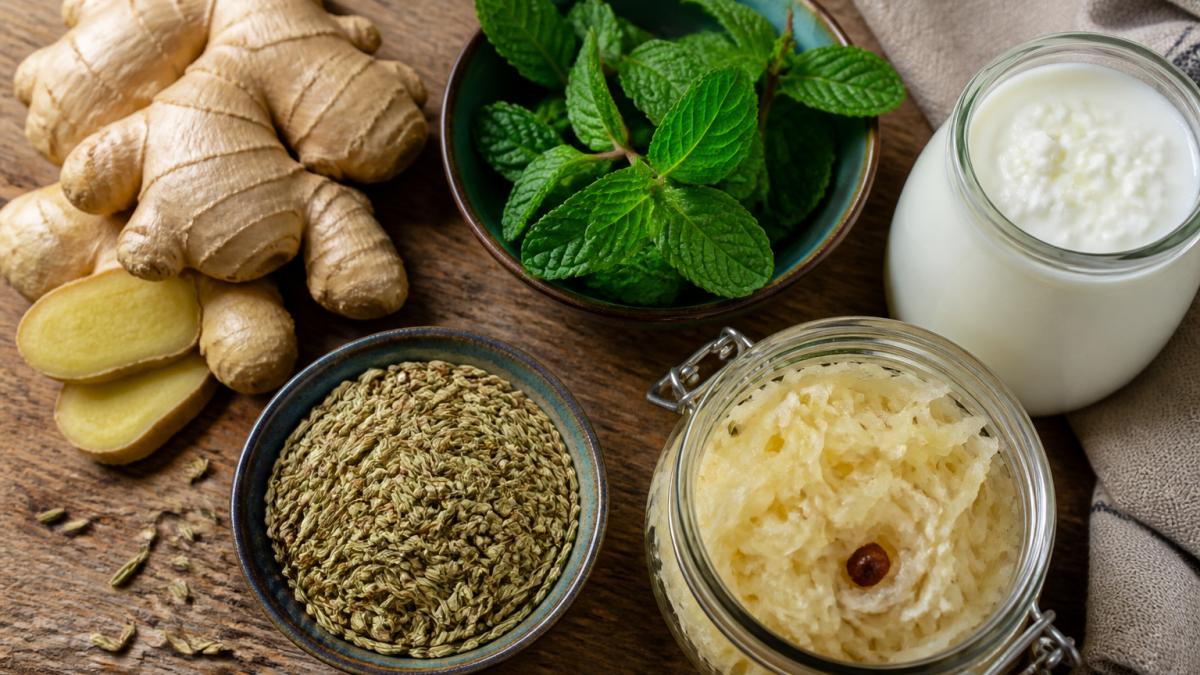
Probiotics and Fermented Foods
Probiotics are live beneficial bacteria that break down food, produce vitamins, and protect your digestive lining. When gut bacteria fall out of balance, digestive discomfort follows, fermented foods restore that balance naturally.
The best fermented food sources include:
- Sauerkraut: Raw and unpasteurized for live cultures
- Kimchi: Spicy fermented vegetables with probiotics and anti-inflammatory compounds
- Kefir: Fermented milk with more probiotic strains than yogurt
- Yogurt: Choose plain, unsweetened varieties with live cultures listed
- Miso: Fermented soybean paste used in soups and dressings
- Kombucha: Fermented tea with probiotics (though check sugar content)
Start small, a few tablespoons of sauerkraut or a small glass of kefir, and increase gradually. Many people notice improved digestion within 1-2 weeks of daily fermented food consumption.
Multi Collagen Peptides w/ Colostrum →
If fermented foods don't appeal to you or you have digestive sensitivities, probiotic supplements offer similar benefits. Healthy Living Proteins' Multi Collagen Peptides with Colostrum includes probiotics chosen to support comfortable gut health, an easy way to add digestive support to your daily routine.

Fiber and Digestive Enzymes
Fiber is essential, but too much too fast causes bloating and gas, increase gradually. Digestive enzymes break food into absorbable nutrients, reducing the fermentation that causes gas and discomfort.
Fiber-rich foods that support digestion:
- Leafy greens: Spinach, kale, and lettuce provide gentle fiber
- Berries: Blueberries and raspberries offer fiber plus anti-inflammatory compounds
- Chia and flax seeds: High in soluble fiber that feeds beneficial bacteria
- Oats: Gentle, easily digestible grain that supports gut health
- Sweet potatoes: Rich in resistant starch that feeds good bacteria
Digestive enzyme sources:
- Papaya: Contains papain, a natural enzyme that breaks down protein
- Pineapple: Contains bromelain, which aids protein digestion
- Raw vegetables: Especially leafy greens and cruciferous vegetables
- Fermented foods: Naturally rich in enzymes from the fermentation process
The mistake most people make is adding too much fiber at once. Increase by one serving per day over a week, and drink plenty of water, fiber without water causes constipation.
How to Improve Digestion Naturally Beyond Remedies
Natural remedies work best paired with lifestyle changes that address root causes.
Eat slowly and chew thoroughly. Eat fast and you swallow large particles your stomach struggles to break down, triggering bloating, gas, and cramping.
Manage stress actively. Stress triggers the "fight or flight" response, which shuts down digestion.
Stay hydrated. Water softens stool, helps fiber move through your system, and dilutes stomach acid.
Move your body. Light exercise after meals, even a short walk, stimulates digestive movement and prevents gas buildup.
Safety, Interactions, and When to Seek Medical Care
Natural remedies are generally safe but not risk-free.
Safety with medications:
Ginger can interact with blood thinners like warfarin, so ask your doctor before regular use if you take anticoagulants.
When to see a doctor:
Discomfort lasting more than two weeks despite home remedies warrants professional evaluation.
If you have a sensitive stomach or IBS, natural remedies work best alongside professional guidance.
Digestive discomfort doesn't have to be a constant battle.
If you're serious about improving your digestive health, start with one or two remedies and add more gradually.
Frequently Asked Questions
What causes digestive discomfort and bloating?
Digestive discomfort and bloating often result from gas buildup in the digestive system, food sensitivities, eating too quickly, or imbalances in your gut microbiome. Stress, insufficient fiber, and certain foods can trigger indigestion and abdominal pain. Identifying your personal dietary triggers, through tracking what you eat and how you feel, helps you avoid future episodes and choose the right natural remedies for relief.
How quickly do natural remedies for bloating work?
Most natural remedies for bloating provide relief within 15 to 45 minutes, depending on the remedy and your individual response. Ginger tea and peppermint typically work faster for cramping and gas. Probiotics and fermented foods take longer, usually 1 to 2 weeks of consistent use, to rebalance your gut microbiome and improve overall digestion. Consistency matters more than speed for lasting digestive support.
Are natural remedies safe if I take medications?
Most herbal remedies are safe, but some can interact with medications. Ginger may thin blood, peppermint can affect certain medications, and high-fiber foods may interfere with absorption of some drugs. If you take blood thinners, diabetes medications, or have a sensitive stomach or IBS, consult your doctor before starting new herbal remedies or significantly increasing your fiber intake to avoid unwanted interactions.
When should I see a doctor for digestive discomfort?
Seek medical care if bloating or digestive discomfort persists for more than two weeks, is severe, or comes with red flags like blood in stool, unexplained weight loss, or persistent nausea. If you have IBS, inflammatory bowel disease, or a sensitive stomach, talk to your doctor before trying new remedies. A healthcare provider can rule out underlying conditions and recommend the best approach for your specific situation.