


Table of Contents
- How Collagen Supports Hair Density and Strength
- Marine vs. Bovine Collagen for Hair: Which Type Absorbs Better
- How Long Does It Take for Collagen to Work for Hair Growth
- Collagen Dosage for Hair Growth: What the Research Shows
- Top Collagen Supplements for Hair Thinning
- Bioavailability and Absorption: Why Hydrolyzed Collagen Works
- Combining Collagen With Other Hair Loss Treatments
- Conclusion
Last Updated: August 14, 2026
How Collagen Supports Hair Density and Strength
Hair thinning occurs when your body can't maintain structural integrity in each strand. Collagen strengthens the hair shaft through amino acids like proline and glycine, supports the dermis layer beneath your scalp to improve blood flow to follicles, and maintains scalp elasticity to prevent premature shedding. Your body uses Type I and Type III collagen to build and repair connective tissue throughout your scalp and hair structure. When you supplement with hydrolyzed collagen peptides, you provide the raw amino acid chains your body needs to synthesize new collagen in hair follicles and surrounding tissue.
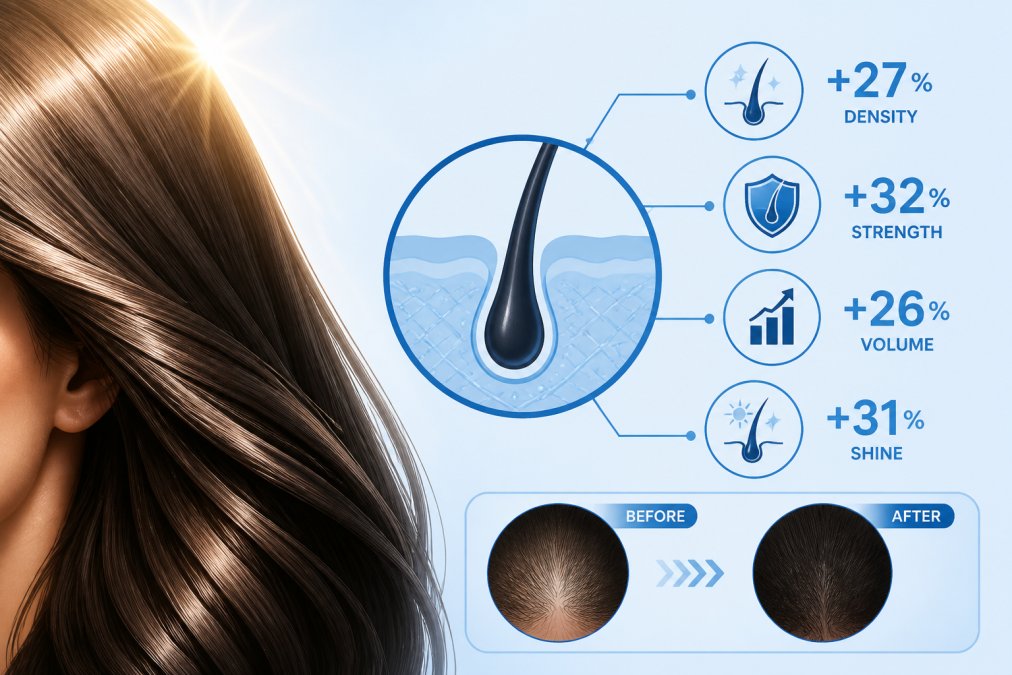
Marine vs. Bovine Collagen for Hair: Which Type Absorbs Better
Marine collagen comes from fish and has smaller peptide chains than bovine collagen, enabling faster absorption (30-60 minutes). It's naturally higher in Type I collagen, which supports skin and hair, but lower in Type III, which supports connective tissue resilience.
Bovine collagen comes from grass-fed cattle with larger peptide chains, slower absorption (60-90 minutes), but a more complete amino acid profile including higher Type III concentrations. For hair specifically, Type III is critical because it appears alongside Type I in the dermis layer and contributes to scalp elasticity and follicle strength.
Faster absorption doesn't automatically mean better results. What matters is whether amino acids get incorporated into hair-supporting tissue. Both marine and bovine collagen achieve this if hydrolyzed.
If you have a sensitive stomach or follow a pescatarian diet, marine collagen is your option. Otherwise, grass-fed bovine delivers the collagen profile your scalp needs. Healthy Living Proteins offers both options separately, and their multi-collagen formula includes both sources, providing absorption speed of marine plus Type III support of bovine in a single serving.

How Long Does It Take for Collagen to Work for Hair Growth
Collagen doesn't make hair grow faster. Your hair growth rate is determined by genetics and hormones, not protein intake. What collagen does is reduce breakage and improve the health of new hair as it emerges from the follicle.
You'll notice reduced breakage and shinier hair within 4-6 weeks. New hair density, thicker strands and fewer visible scalp gaps, takes 8-12 weeks to become noticeable because new hairs must emerge from follicles receiving better structural support and grow long enough to be visible. Significant density improvement typically appears at the 12-16 week mark.
Collagen Dosage for Hair Growth: What the Research Shows
Most collagen supplements recommend 10 grams per day. Studies examining collagen's effect on hair density have used doses ranging from 2.5 to 10 grams daily, with 10 grams producing slightly faster results in the 8-12 week window. More collagen isn't always better; your body can only synthesize so much new collagen at once. A practical range for hair health is 5-10 grams per day, taken consistently.
Timing matters less than consistency. Whether you take collagen in the morning or evening makes minimal difference to absorption. What matters is taking the same dose every day. Sporadic supplementation won't build the cumulative amino acid pool your body needs.
There's no evidence that cycling collagen (taking it for 8 weeks, then stopping for 4 weeks) improves results. Consistent daily supplementation is the approach that works.
Healthy Living Proteins' multi-collagen formula delivers 11 grams of collagen per serving, which is on the higher end of the effective range. Their marine collagen and bovine collagen options deliver 24 grams per serving, which is above the typical dose but still within safe consumption limits.

Top Collagen Supplements for Hair Thinning
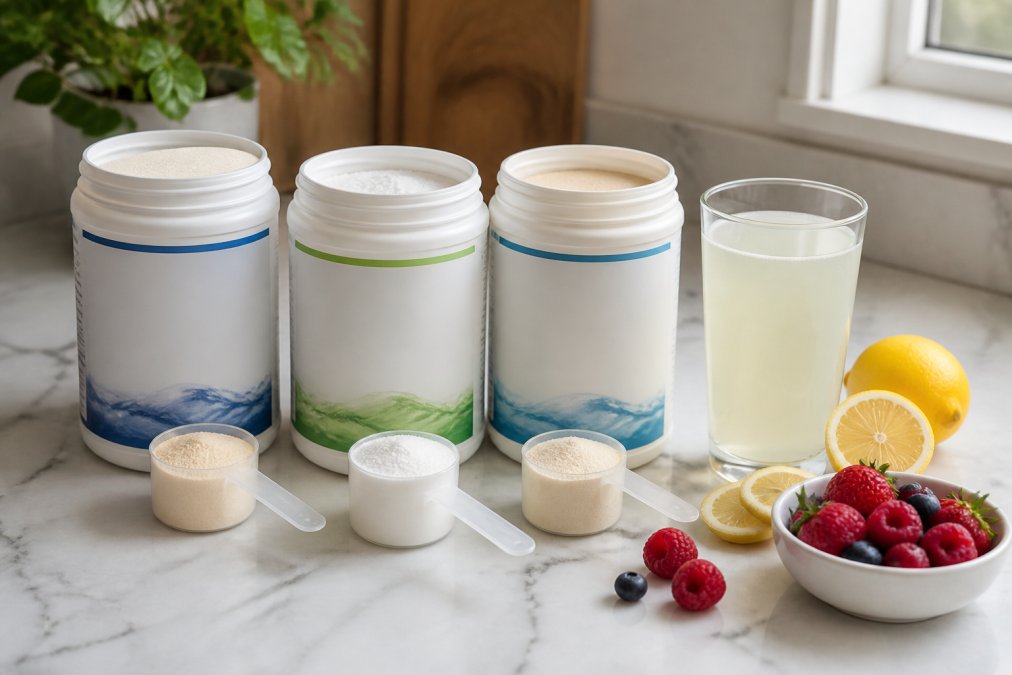
1. Healthy Living Proteins Multi Collagen Peptides, Best Overall for Hair Density
This is the strongest option for anyone specifically targeting hair thinning. Most collagen powders deliver one or two types. This formula includes all five, Types I, II, III, V, and X, sourced from grass-fed bovine, wild-caught marine, and free-range chicken.

The multi-type approach matters for hair because Type I and Type III work synergistically in the dermis layer. Having all five types means you're supporting not just hair strength but also the surrounding connective tissue and immune function.
Each serving delivers 11 grams of hydrolyzed collagen peptides, which sits in the optimal range for hair health. The formula mixes cleanly into coffee, tea, or water with no taste or texture.
At $44.99 per container, this is mid-range pricing for a full-spectrum collagen product. You're paying for the inclusion of all five types rather than a single-source option, which is worth it if hair thinning is your primary concern.
What works: The five-type formula is genuinely differentiated. The grass-fed and wild-caught sourcing is transparent and traceable. The 11-gram dose is substantial without being excessive.
What doesn't: If you're sensitive to bovine products, the inclusion of grass-fed beef collagen might cause digestive upset. The price is higher than single-source alternatives.
Best for: Anyone with thinning hair who wants comprehensive collagen support across all five types without buying multiple supplements.
2. Healthy Living Proteins Wild-Caught Marine Collagen Peptides, Best for Absorption Speed
If you need faster absorption or follow a pescatarian diet, marine collagen is your choice. This formula uses wild-caught red snapper from a sustainable, traceable supply chain. Marine collagen absorbs in roughly 30-60 minutes versus 60-90 minutes for beef sources.
For hair, the trade-off is that marine collagen is naturally higher in Type I but lower in Type III. You're getting amino acids needed to strengthen hair shafts, but missing some connective tissue support that Type III provides.
At $39.99 per container, this is the most affordable single-source option. Each serving delivers 24 grams of marine collagen peptides, which is above the typical dose but appropriate if using marine as your sole source.
What works: Fastest absorption rate. Pescatarian-friendly. Transparent sourcing from wild-caught, sustainable fisheries. No taste or texture issues.
What doesn't: Lower Type III concentration means less scalp elasticity support compared to bovine or multi-type formulas. The 24-gram dose may feel wasteful if you're budget-conscious.
Best for: Pescatarians, people with bovine sensitivities, and anyone who prioritizes absorption speed over comprehensive collagen type coverage.
3. Healthy Living Proteins Multi Collagen Peptides Types (I, II, III, V, X), Best Value for Comprehensive Support
This five-type formula supports hair, skin, joints, and connective tissue simultaneously. The formula dissolves cleanly and mixes into any beverage. The unflavored approach means zero flavor interference.
At $44.99, the price is reasonable for a full-spectrum product. You're getting 11 grams of collagen per serving, which is the sweet spot for hair health.
What works: Five-type coverage is rare at this price point. The sourcing is traceable and transparent.
What doesn't: If you're looking for a single-type, high-dose formula, this isn't it. The formula includes bovine, so it's not suitable for vegans.
Best for: Anyone wanting comprehensive collagen support for hair, skin, and joints without overpaying for specialty formulations.
4. Healthy Living Proteins Multi Collagen Peptides & Creatine, Best for Active Individuals
This formula combines 11 grams of multi-type collagen (Types I, II, III, V, X) with 5 grams of creatine monohydrate. Creatine supports muscle protein synthesis, which indirectly supports collagen synthesis pathways. If you're already taking creatine separately, this eliminates the need for two supplements.
At $59.99, this is the most expensive option in the Healthy Living Proteins lineup, but you're buying two supplements in one.
What works: Combines two effective supplements in one serving. Eliminates the need to mix multiple powders. The 11-gram collagen dose is appropriate for hair health.
What doesn't: The creatine addition adds $15 to the price compared to the standard multi-collagen formula. If you're not an athlete, you're paying for a feature you don't need.
Best for: Active individuals over 25 who want collagen for hair and skin but also need joint and muscle recovery support.
5. Healthy Living Proteins Multi Collagen Peptides & Colostrum, Best for Gut Health and Bioavailability
This formula combines 11 grams of multi-type collagen with 5 grams of grass-fed colostrum, plus vitamin C and probiotics. Colostrum contains immunoglobulins and growth factors that support gut barrier integrity. Healthy gut bacteria influence inflammation levels, immune function, and nutrient absorption. Together, collagen plus colostrum plus probiotics create a synergistic effect where each component improves the absorption and efficacy of the others.
At $49.99, you're paying for the colostrum, probiotics, and vitamin C additions, not just the collagen.
What works: The gut-health angle is genuinely differentiated. The formula addresses a real bottleneck: if your gut isn't healthy, collagen supplementation is less effective.
What doesn't: If your gut is already healthy, the colostrum and probiotics are nice-to-haves rather than necessities. The price premium is significant compared to the standard multi-collagen formula.
Best for: Anyone with a history of digestive issues, IBS, or leaky gut who wants to maximize collagen absorption. People who've tried collagen before and didn't see results.
Bioavailability and Absorption: Why Hydrolyzed Collagen Works
Raw collagen is a massive protein with a molecular weight around 300,000 Daltons. Your digestive system can't absorb it. Hydrolyzed collagen, also called collagen peptides, is broken down into chains of 2,000-5,000 Daltons, which your intestines can absorb.
Bioavailability refers to the percentage of collagen you consume that actually gets absorbed into your bloodstream. Most hydrolyzed collagen powders achieve 90%+ bioavailability when taken with adequate water and on a reasonably healthy digestive system.
The speed of absorption varies by source. Marine collagen absorbs faster (30-60 minutes) because peptide chains are naturally smaller. Bovine collagen absorbs more slowly (60-90 minutes) but delivers a more complete amino acid profile. Multi-source formulas split the difference.
Your body doesn't store excess collagen. What isn't used within 24-48 hours is metabolized like any other protein. This is why consistency matters more than dosage. Taking 10 grams daily for 12 weeks is more effective than taking 30 grams once a week.
Vitamin C enhances collagen synthesis because your body uses it as a cofactor in enzymatic reactions that convert amino acids into new collagen.
Combining Collagen With Other Hair Loss Treatments
If you're already using a hair loss treatment like minoxidil (Rogaine) or finasteride (Propecia), collagen supplementation works alongside these drugs rather than competing with them.
Minoxidil increases blood flow to hair follicles and extends the anagen (growth) phase. Collagen supports the structural integrity of the hair that minoxidil helps grow. Together, they're complementary.
Finasteride blocks DHT, the hormone that miniaturizes follicles in genetically predisposed individuals. Collagen doesn't affect DHT levels, so there's no interaction. Again, they're complementary.
If you're starting both collagen and a pharmaceutical treatment simultaneously, you won't know which one is responsible for improvements. Most practitioners recommend starting the pharmaceutical treatment first, waiting 3-4 months to see results, then adding collagen if you want to accelerate density improvements.
Biotin and zinc are common hair health supplements. Biotin supports keratin production, and zinc supports hair growth cycle regulation. Collagen works at a different level, supporting the structural tissue around the follicle. Taking all three together is safe and potentially additive.
Hair thinning responds to a multi-pronged approach. Collagen addresses the structural integrity of your hair and scalp, but it works best when combined with consistent supplementation, adequate water intake, and stress management. Healthy Living Proteins' multi-collagen formulas deliver all five collagen types in bioavailable, hydrolyzed form, with options ranging from single-source marine or bovine to comprehensive five-type blends. If you're noticing hair thinning and want to support hair density from the inside, start with their Multi Collagen Peptides formula, which covers all the collagen types your body needs for hair strength and scalp health. The 30-day money-back guarantee means you can test whether collagen is the missing piece for your hair without financial risk.
Frequently Asked Questions
Does collagen actually help with hair thinning?
Collagen provides amino acids and peptide chains that support the structure of hair shafts and promote scalp elasticity. Type I and III collagen specifically strengthen the dermis layer where hair follicles anchor. While individual results vary, consistent supplementation combined with adequate vitamin C, zinc, and biotin can support hair density and reduce breakage over time. Consult a healthcare provider if hair loss persists.
How long does it take for collagen to work for hair growth?
Most users report noticeable improvements in hair texture and reduced breakage within 8-12 weeks of daily supplementation. Hair growth cycles (the anagen phase) span 2-6 years, so visible density changes typically emerge after 3-6 months of consistent use. Bioavailability matters: hydrolyzed collagen peptides absorb faster than non-hydrolyzed forms, potentially accelerating results. Individual timelines depend on age, diet, stress levels, and baseline collagen production.
What dosage of collagen should I take for hair growth?
Clinical research suggests 2.5-10 grams daily for skin and hair support, with most studies using 10 grams per day over 8-12 weeks. Hydrolyzed collagen peptides absorb more efficiently than whole collagen, meaning smaller doses can be effective. Start with 5-10 grams daily mixed into coffee, smoothies, or water. Consistency matters more than exceeding recommended doses. If you have digestive sensitivity, begin with 2.5 grams and increase gradually.
Is marine or bovine collagen better for thinning hair?
Marine collagen (Type I) absorbs 1.5x faster than bovine due to smaller peptide chains, making it ideal if you want quicker bioavailability. Bovine collagen (Types I and III) provides more total collagen per serving and costs less. For hair specifically, Type I dominates the hair shaft and dermis, so marine excels. However, multi-type formulas containing all five collagen types offer comprehensive support for hair, scalp elasticity, and connective tissue strength.
Can I take collagen if I'm already using hair loss treatments?
Collagen supplementation is generally compatible with topical or oral hair loss treatments. It works through a different mechanism: collagen strengthens existing hair and supports scalp health, while medical treatments address follicle miniaturization. Combining approaches can amplify results. Always inform your healthcare provider about all supplements you're taking, especially if you use prescription medications, to rule out interactions.
This article was written using GrandRanker