


Table of Contents
- Why Absorption Matters More Than Collagen Type
- Signs of Poor Supplement Absorption
- Benefits of Multi-Collagen Complexes
- Comparison Table: Hydrolyzed Collagen Options for Better Absorption
- Top Picks for Better Absorption (Pros & Cons)
- How to Choose the Right Supplement for Better Absorption
- Cost-Per-Dose Analysis: Getting the Most Value
- Conclusion: Making an Informed Switch
- Frequently Asked Questions
Last Updated: October 3, 2026
Why Absorption Matters More Than Collagen Type
If you are hunting for a Codeage alternative for better absorption, the delivery system matters more than the label.
At Healthy Living Proteins, we hear the same frustration constantly: "I took collagen for months and saw nothing." Usually the problem is not the collagen itself, but how much of it made it through the digestive tract intact.
The Science of Bioavailability of Hydrolyzed Collagen
The bioavailability of hydrolyzed collagen is the proportion of a dose that reaches your bloodstream in a usable form.
Molecular weight drives this: smaller peptides cross the intestinal wall faster, while large molecules stall in transit. That is why a hydrolyzed powder beats a standard gelatin capsule almost every time.
Signs of Poor Supplement Absorption
The clearest sign of poor supplement absorption is results that never arrive: you take the powder daily for months, and your skin, hair, nails, and joints look exactly the same. But "it didn't work" is a symptom, not a diagnosis. The useful question is why the dose never reached your bloodstream, and the answer varies from person to person.
The Symptoms Worth Tracking
Watch for these signals, and note how many apply to you at once:
- Brittle nails that keep splitting despite consistent use
- Hair that still sheds more than you would expect
- Digestive discomfort, bloating, or loose stools after dosing
A common mistake is blaming the nutrient when the format is the problem. If a powder upsets your stomach, your gut may be moving it through too quickly for nutrient uptake, but that is only one of several mechanisms.
Why Absorption Fails: Four Mechanisms
Most absorption problems trace back to one of four things:
- Molecular size. Intact collagen is a large protein your body must break down before it can use it. Hydrolysis pre-cuts it into short peptides that cross the intestinal wall more readily. A non-hydrolyzed product can be perfectly pure and still absorb poorly.
- Gut lining integrity. The cells lining your small intestine do the actual absorbing. When that lining is inflamed or compromised, uptake drops regardless of how good the formula is.
- Stomach acid and enzyme output. Protein digestion starts in the stomach. Lower acid or enzyme output slows the breakdown step, so more of the dose passes through unused.
- Transit speed. If material moves through too fast, common with a sensitive gut, there is less contact time for absorption.
The Variable Competitors Ignore: It Is Not the Same for Everyone
This is where most buying guides stop, and where the real answer starts. Absorption is not a fixed property of a product, it is an interaction between the product and your body, shaped by factors no label can capture:
- Age. Digestive enzyme output and stomach acid decline with age, which is one reason the same powder can work at 25 and seem to do nothing at 55.
- Gut health status. Anyone managing IBS, reflux, or a recent course of antibiotics starts from a different baseline.
- Medications. Acid-reducing drugs, certain antibiotics, and some diabetes medications can change nutrient absorption. Discuss this with your pharmacist or physician, not a supplement label.
A Practical Self-Test
Before you switch brands, run a two-week baseline:
- Take the same dose at the same time each day
- Log digestive symptoms, energy, and any skin or joint changes
- Note whether you take it with or without food
If nothing changes after 8 to 12 weeks of consistent use, change the format, not the ingredient. That is the logic behind a hydrolyzed peptide product: it removes the molecular-size variable so you can isolate the rest.
Benefits of Multi-Collagen Complexes
The benefits of multi-collagen complexes come down to coverage. Your body uses five main collagen types, each supporting different tissue: Type I and III favor skin and hair, Type II supports cartilage, and Types V and X play roles in bone and connective tissue.
A single-type powder only feeds part of that system. A full-spectrum formula supplies all five, so you are not guessing which one your body needed.
Comparison Table: Hydrolyzed Collagen Options for Better Absorption
Here is how our hydrolyzed collagen options stack up. Every pick below is hydrolyzed for better absorption, so the difference comes down to format and focus.
| Product | Price | Collagen Types | Key Addition | Best For |
|---|---|---|---|---|
| Multi Collagen Peptides w/ Colostrum | $49.99 | I, II, III, V, X | Colostrum, vitamin C, probiotics | Gut, immunity, and skin together |
| Multi Collagen Peptides Types (I, II, III, V, X) | $44.99 | I, II, III, V, X | Grass-fed, marine, and chicken sources | Full-spectrum daily support |
| Grass-Fed Bovine Collagen Peptides Unflavored | $41.99 | I, III | None | Simple, additive-free routine |
| Wild-Caught Marine Collagen Peptides | $39.99 | I, III | None | Fast absorption, pescatarian diets |
Top Picks for Better Absorption (Pros & Cons)
Every option below is hydrolyzed for better absorption, but they suit different routines. We ranked them by how well each fits a real daily habit, not by marketing claims.

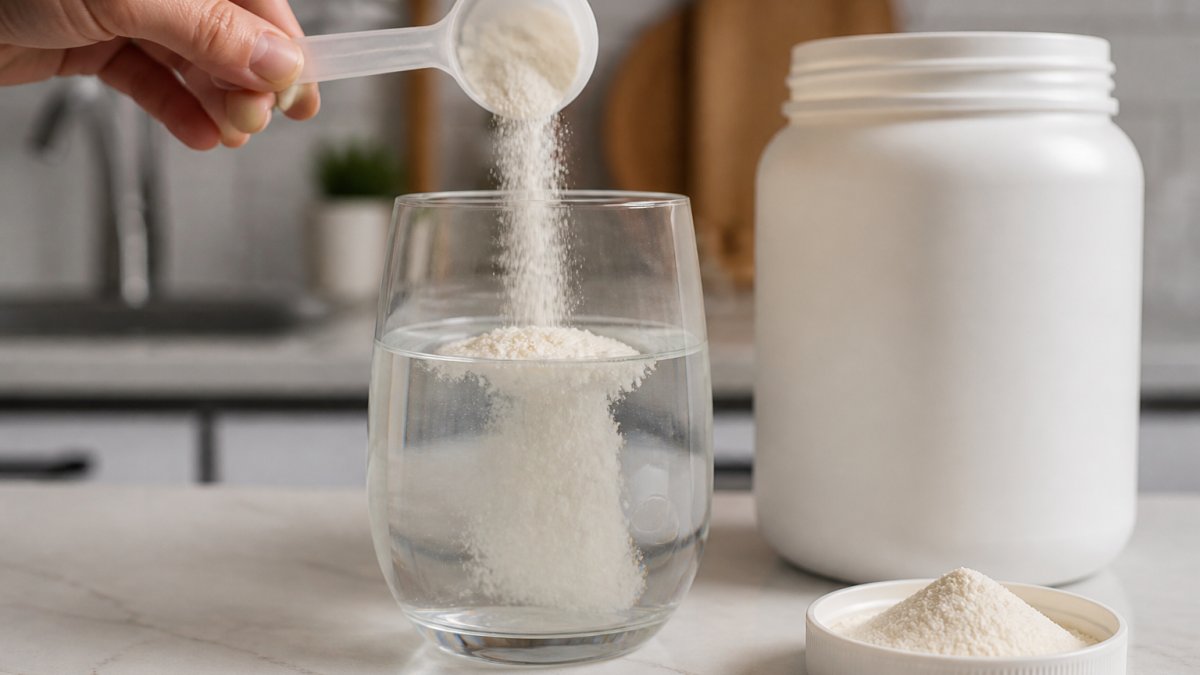
Wild-Caught Marine Collagen Peptides
Marine collagen absorbs faster than bovine, making it a smart pick if speed matters. It is sourced from wild-caught red snapper through a sustainable, traceable supply chain, and it is odorless and flavorless.
Pros: Pescatarian-friendly, keto and paleo approved, mixes cleanly into hot or cold drinks. Cons: Type I and III only, so it covers skin, hair, and nails rather than joints. (Source: National Institutes of Health (NIH))
Multi Collagen Peptides w/ Colostrum
Beauty from the inside starts in the gut, and this blend is built around that idea. It pairs all five hydrolyzed collagen types with grass-fed colostrum, vitamin C, and probiotics, delivering 11g of collagen and 5g of colostrum per serving.
Pros: Supports gut health and immunity alongside skin, unflavored and clean-mixing. Cons: The highest price in the lineup, and colostrum is not for everyone.
Grass-Fed Bovine Collagen Peptides Unflavored
This is the stripped-down option: pure hydrolyzed bovine peptides from grass-fed, pasture-raised cattle, with no additives. Tasteless and dissolves in any liquid.
Wild-Caught Marine Collagen Peptides →
Pros: Simplest formula, easy to add to coffee or smoothies, full supply-chain traceability. Cons: Only Types I and III, so it skips joint-specific Type II.
Multi Collagen Peptides Types (I, II, III, V, X)
Most powders give you one or two collagen types. Your body uses five. This full-spectrum blend covers all of them, hydrolyzed for absorption and sourced from grass-fed bovine, wild-caught marine, and free-range chicken.
Pros: Broadest coverage across skin, joints, gut, and bone, dissolves with no taste or clumping. Cons: A blend means you cannot dial up one specific type on its own.
How to Choose the Right Supplement for Better Absorption
Start with your goal, then work backward to the format. That order prevents the most common buying mistake: picking a trendy ingredient before checking whether your body can absorb it.
Run through this checklist:
- Confirm the label says "hydrolyzed" or "peptides"
- Match collagen types to your goal (skin and hair need I and III; joints need II)
- Check for added probiotics or colostrum if digestion is a concern
Cost-Per-Dose Analysis: Getting the Most Value
Cost per dose tells you more than the sticker price, but only if you adjust for how much of that dose your body can actually use. A cheap tub of non-hydrolyzed collagen is no bargain if most of it passes through unused. That is the value question most buying guides skip.
Step 1: Calculate Raw Cost Per Serving
Divide the container price by the number of servings, not the number of scoops you think you'll take.
| Product | Price | Servings | Cost Per Serving |
|---|---|---|---|
| Multi Collagen Peptides w/ Colostrum | $49.99 | 38 | ~$1.32 |
| Multi Collagen Peptides Types (I, II, III, V, X) | $44.99 | 38 | ~$1.18 |
| Grass-Fed Bovine Collagen Peptides Unflavored | $41.99 | 38 | ~$1.11 |
| Wild-Caught Marine Collagen Peptides | $39.99 | 38 | ~$1.05 |
A cheaper tub with fewer servings can cost more per day than a larger one. Always check the serving count before you compare prices.

Step 2: Adjust for Absorption
Raw cost per serving assumes every gram is absorbed equally. It is not. Two adjustments matter:
- Hydrolyzed vs. intact. Hydrolyzed peptides are pre-cut into short chains that absorb more readily than intact protein. If a cheaper product is not hydrolyzed, its effective cost per absorbed gram is higher than the label suggests.
- Delivery format. Liposomal and sublingual formats improve uptake of certain nutrients but carry a real premium. For collagen peptides, hydrolysis is the primary lever; for fat-soluble vitamins and some minerals, liposomal delivery matters more. Pay for the technology that addresses your absorption bottleneck, not the best marketing.
Step 3: Factor in What You Get Beyond Collagen
Per-serving cost alone hides formulation differences. The colostrum blend at ~$1.32 per serving includes 11g of collagen plus 5g of colostrum, vitamin C, and probiotics. If you would otherwise buy a separate probiotic, that premium may be smaller than it looks; if not, it is pure added cost.
Step 4: The Subscription Trap
Subscriptions lower the per-serving price but lock you into a format before you know it works. A common pattern is buying three containers to save 15%, then abandoning the third. The cheapest per-serving price you never finish is the most expensive option here.
The Bottom Line on Value
The lowest cost per serving here is the Wild-Caught Marine at roughly $1.05; the highest is the colostrum blend at roughly $1.32. The gap is about 27 cents a day, under $10 a month. Choose based on which formula fits your goal and your gut, then confirm the math works for your budget.
Conclusion: Making an Informed Switch
The right Codeage alternative for better absorption is the one your gut can actually use, starting with hydrolyzed peptides and a format that fits your day.
Healthy Living Proteins builds every formula around that principle, with all five collagen types, hydrolyzed for absorption, plus colostrum and probiotics in our multi-collagen blend.
Get started with Healthy Living Proteins and give your daily routine a format your body can put to work.
Frequently Asked Questions
Are Codeage supplements high quality?
Codeage is a well-known brand in the supplement market, often recognized for its liposomal delivery technology. However, quality can vary by product, and some users may find that certain formulations do not provide the expected results for better absorption. When evaluating any brand, look for third-party testing, transparent ingredient sourcing, and clinical efficacy data. If you are not seeing results, it may be worth exploring alternatives that focus specifically on hydrolyzed peptides and synergistic nutrient pairing to enhance nutrient uptake.
How do hydrolyzed collagen peptides compare to standard collagen?
Hydrolyzed collagen peptides are broken down into smaller molecular weights, which typically allows for faster gastrointestinal transit and improved absorption rate compared to standard collagen. Standard collagen has a larger molecular structure that can be harder for the body to break down. For better absorption, look for products that specify hydrolyzed peptides, as these are designed to enter the bloodstream more efficiently and support skin, hair, and joint health.
What factors influence the bioavailability of collagen supplements?
Several factors affect the bioavailability of collagen, including molecular weight, the presence of digestive enzymes, and individual metabolic variability. Smaller peptides are absorbed more readily. Additionally, pairing collagen with vitamin C or probiotics, as seen in multi-collagen complexes with colostrum, can support gut microbiome health and nutrient synergy. Always check the label for hydrolyzed peptides and consider how the delivery mechanism aligns with your digestive health.
How can I tell if my body is absorbing my daily supplements?
Signs of poor supplement absorption include digestive discomfort, changes in stool consistency, or a lack of noticeable improvement in skin, hair, and nails after several weeks. If you are taking a supplement for better absorption but still experience these issues, your body may not be breaking down the product effectively. Switching to a hydrolyzed form or a formula with probiotics and colostrum can help support gastrointestinal transit and cellular absorption.
Do probiotics improve the absorption of collagen and colostrum?
Probiotics can support a healthy gut microbiome, which plays a role in breaking down nutrients and supporting nutrient uptake. When combined with colostrum, probiotics may help maintain the gut lining and improve the absorption rate of collagen peptides. Formulas that include both ingredients, such as multi-collagen complexes with colostrum, are designed to address digestive health and enhance the bioavailability of the active compounds.