


Table of Contents
- What Collagen Peptides Are and How They Work
- Can Collagen Peptides Heal Your Gut?
- Collagen Peptides Dosage: How Much and How Long
- Collagen Peptides Side Effects and Safety
- Collagen with Probiotics for Gut Health
- Collagen Peptides vs. Gelatin: Key Differences
- Product Selection: Bovine, Marine, and Multi-Type Options
- What to Ignore: Common Myths About Collagen and Gut Repair
- Frequently Asked Questions
Last Updated: October 4, 2026
What Collagen Peptides Are and How They Work
Collagen peptides are short-chain amino acids derived from collagen protein, broken down through hydrolysis to improve absorption in your digestive system, making them effective for collagen peptides gut repair.

Your body naturally produces collagen, but production slows with age. Collagen peptides replenish what you're losing. They're flavorless, dissolve easily in coffee, tea, or water, and contain the amino acids your gut lining, skin, joints, and connective tissue depend on.
The difference between collagen peptides and gelatin matters. Gelatin is partially hydrolyzed collagen, it gels when cooled. Collagen peptides are fully hydrolyzed, so they stay dissolved and mix seamlessly into any beverage.
Most collagen powders contain only one or two types of collagen. Your body uses five: Type I (skin, tendons, bones), Type II (cartilage), Type III (skin, blood vessels), Type V (hair, nails), and Type X (bone formation).
Can Collagen Peptides Heal Your Gut?
This is where claims often exceed evidence. Let's separate what research actually shows from what people hope is true.
What gut repair means
"Gut repair" is marketing shorthand for several distinct processes. The intestinal wall is a single layer of cells held together by tight junctions (The intestinal barrier: a fundamental role in health and disease). When these junctions loosen, larger food particles and bacterial fragments can cross into the bloodstream, a state often called "leaky gut," though that term isn't standardized in medical literature.
Collagen peptides contain amino acids like glycine, proline, and hydroxyproline (Hydrolyzed Collagen, Sources and Applications). These amino acids are structural components of the intestinal lining. The theory is straightforward: supply the building blocks, and the gut repairs itself. The practice is more complicated.

What the research shows
Studies on collagen for digestive health are limited and mostly small. Some research suggests that gelatin and collagen hydrolysates may reduce intestinal permeability in animal models, but human trials are sparse.
The honest assessment: collagen peptides likely support gut health as a protein source and amino acid supplier, but claims that they "heal" or "seal" a leaky gut lack strong clinical evidence in humans. What we know is that your intestinal lining does require amino acids to maintain itself. Collagen peptides provide those amino acids.
Many people report improved digestion after starting collagen peptides, but personal experience isn't the same as clinical proof. Placebo effect, concurrent dietary changes, and reduced stress all influence digestive comfort.
Collagen Peptides Dosage: How Much and How Long
Common dosing ranges from 10 to 20 grams daily, taken consistently. Most studies showing benefit used 10-15 grams per day for 8-12 weeks minimum.
Duration matters more than people expect. Collagen turnover in your body takes time. If you're testing whether collagen peptides work for you, commit to at least 30 days at a consistent dose before evaluating results. Skin and hair changes typically take 60-90 days to become noticeable.
Taking more than 20 grams daily doesn't accelerate results. Your body can only synthesize collagen at a certain rate. Excess amino acids get metabolized or excreted.
The best time to take collagen peptides is morning or with a meal. Taking it with vitamin C enhances collagen synthesis, your body needs vitamin C to cross-link collagen molecules into stable structures.
| Dosage Level | Daily Amount | Best For | Timeline to Results |
|---|---|---|---|
| Maintenance | 10g | General wellness | 60+ days |
| Standard | 15g | Skin, hair, nails | 30-90 days |
| Therapeutic | 20g | Joint comfort, gut support | 8-12 weeks |
Collagen Peptides Side Effects and Safety
Collagen peptides are generally well-tolerated. The most common side effects are mild and digestive in nature: bloating, mild constipation, or a sense of fullness. These typically resolve within a few days as your system adjusts.
Allergies are rare but possible. If you're allergic to beef or fish, verify the source of your collagen peptides. Bovine collagen comes from cattle; marine collagen from fish.
People with sensitive stomachs sometimes experience temporary digestive changes when starting collagen. This isn't necessarily harmful, it's your gut adjusting to increased protein intake.
Collagen peptides are high in glycine and proline, amino acids that some people metabolize differently. If you have a history of gout or kidney issues, discuss collagen supplementation with your healthcare provider.
Pregnant and breastfeeding individuals should consult their healthcare provider before starting any new supplement, including collagen peptides.
Collagen with Probiotics for Gut Health
Combining collagen peptides with probiotics is a logical pairing, but they work through different mechanisms. Probiotics introduce beneficial bacteria; collagen supplies amino acids for intestinal structure. They complement each other rather than amplify each other's effects.
The research on combined collagen-probiotic formulas is minimal. Most studies examine probiotics alone or collagen alone. In theory, a healthy gut lining (supported by collagen amino acids) may provide a better environment for probiotics to colonize, but this remains untested in humans.
If you're choosing a combined formula, verify the probiotic strain count and CFU (colony-forming units). Many collagen-probiotic blends contain probiotics in amounts too small to deliver measurable benefit. Look for at least 5-10 billion CFU from well-studied strains like Lactobacillus and Bifidobacterium.
Collagen Peptides vs. Gelatin: Key Differences
The distinction is processing depth. Gelatin is collagen that's been partially hydrolyzed, heated and broken down but not completely. Collagen peptides are fully hydrolyzed into small peptide chains.
Gelatin: Gels when cooled, requires heat to dissolve, contains intact collagen triple helix structures. Better for traditional cooking and desserts. Less bioavailable than peptides because larger molecules are harder to absorb.
Multi Collagen Peptides w/ Colostrum →
Collagen peptides: Stay dissolved at room temperature, mix instantly into cold or warm beverages, fully broken into dipeptides and tripeptides. Higher bioavailability. Better for supplementation and daily wellness routines.
For gut support, collagen peptides have a theoretical advantage, smaller molecules may cross the intestinal barrier more readily. For joint support, some research suggests gelatin's larger structures may provide different benefits, but the evidence is weak.
Most modern supplements use collagen peptides because they're more versatile and easier to consume consistently.
Product Selection: Bovine, Marine, and Multi-Type Options
Your choice depends on your primary goal and dietary restrictions.
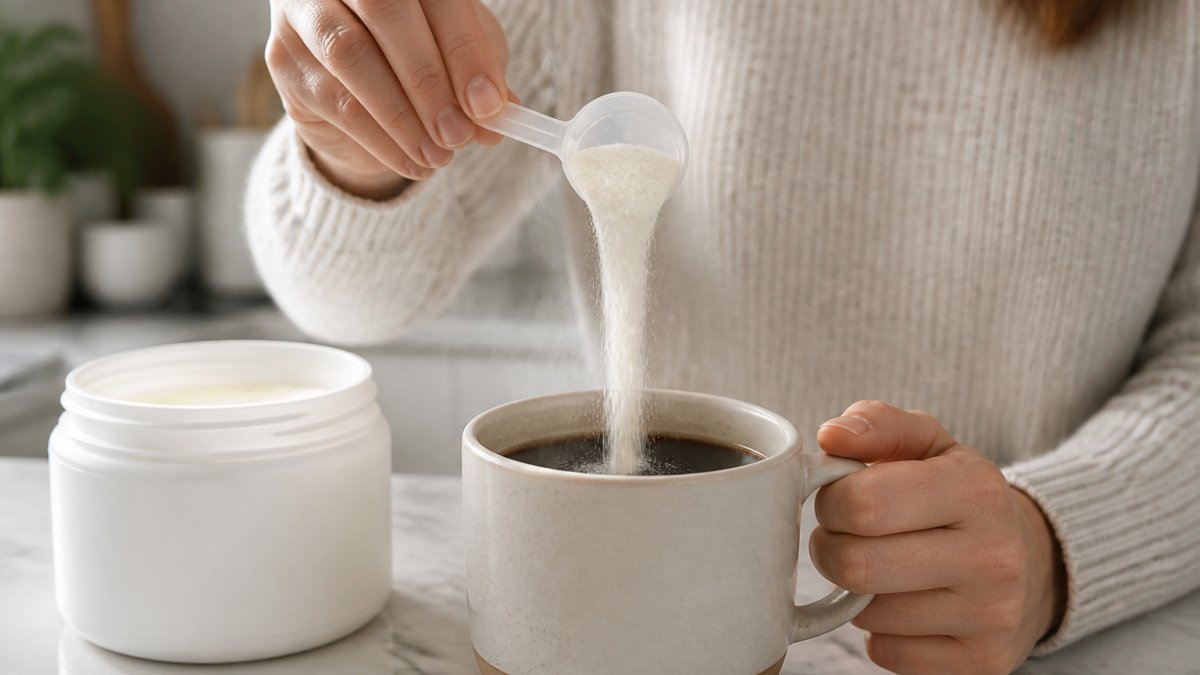
Grass-Fed Bovine Collagen Peptides deliver Types I and III collagen, the primary types in skin and connective tissue. Our Grass-Fed Bovine Collagen Peptides Unflavored at $41.99 provides pure, sourced-transparent collagen with no additives.
Marine collagen comes from fish skin and scales. It contains primarily Type I collagen, the same as bovine, but some research suggests marine sources may have slightly higher bioavailability due to smaller peptide size.
Multi-type collagen blends all five types your body uses. Our Multi Collagen Peptides Types (I, II, III, V, X) at $44.99 combines grass-fed bovine, wild-caught marine, and free-range chicken sources in one powder.
Multi Collagen Peptides w/ Colostrum
This is our top recommendation for gut health specifically. The Multi Collagen Peptides w/ Colostrum at $49.99 combines 11g of all five collagen types with 5g of grass-fed bovine colostrum, vitamin C, and probiotics per serving.
Colostrum is the nutrient-dense first milk produced by mammals. It contains immunoglobulins (IgG), lactoferrin, and growth factors that support immune function and intestinal barrier integrity. The addition of vitamin C enhances collagen synthesis. The probiotics introduce beneficial bacteria. For someone prioritizing gut repair and immune support alongside general wellness, this formula addresses multiple pathways simultaneously.
At 38 servings per container, the cost per serving is roughly $1.31, reasonable for a multi-component formula. The 30-day money-back guarantee lets you test it risk-free.
Grass-Fed Bovine Colostrum and Multi Collagen with Creatine
Our Grass-Fed Bovine Colostrum (30% IgG) at $69.99 is pure colostrum with no collagen added. At 170 servings per 12oz pouch, it's the most cost-effective colostrum option, roughly $0.41 per serving. Best for: people who want colostrum as their primary supplement and prefer to buy collagen separately.

The Multi Collagen Peptides & Creatine for Muscle & Joint Support at $49.99 bundles 11g of multi-type collagen with 5g of creatine monohydrate. This is purpose-built for active individuals seeking joint recovery and muscle performance. Creatine supports ATP energy production in muscle cells and may enhance strength and recovery. Best for: athletes, gym-goers, and people managing joint stiffness alongside active training.
What to Ignore: Common Myths About Collagen and Gut Repair
Myth: "Collagen heals leaky gut in 2 weeks." Reality: Intestinal lining turnover takes 3-5 days per cell, but complete structural repair takes weeks to months. Anyone claiming rapid healing is overselling.
Myth: "All collagen peptides are identical." Reality: Source matters. Grass-fed bovine, wild-caught marine, and grain-fed bovine collagen have different amino acid profiles and sustainability implications. Processing methods vary.
Myth: "You need 50+ grams daily for results." Reality: More isn't better.
Myth: "Collagen works instantly." Reality: Skin changes take 60-90 days. Joint comfort may improve in 2-4 weeks. Digestive changes vary widely.
Myth: "Vegan collagen is the same as animal collagen." Reality: No plant produces true collagen. "Vegan collagen" is typically amino acid blends designed to mimic collagen's composition.
The question isn't whether collagen peptides work, it's whether they work for your specific goal and situation.
At Healthy Living Proteins, we back our products with a 30-day money-back guarantee. If you try our Multi Collagen Peptides w/ Colostrum and don't notice improvement in digestive comfort or overall vitality, you get your money back.
Frequently Asked Questions
Can collagen peptides actually heal your gut, or is it just marketing?
Collagen peptides contain amino acids like glycine and glutamine that support intestinal wall structure. The intestinal lining contains collagen, and hydrolyzed collagen is broken into small peptides and dipeptides that your digestive system can absorb. Research shows mixed results: some studies suggest collagen may support gut barrier function, but evidence specifically proving gut repair in humans remains limited. Results vary by individual, dosage, and product quality. A 30-day trial lets you assess whether you notice improvement in digestion or sensitivity.
What is the right dosage of collagen peptides for gut health?
Most research uses 10-20 grams daily, divided into one or two servings. Healthy Living Proteins' Multi Collagen Peptides w/ Colostrum provides 11 grams per serving, which fits this range. Start with one serving daily for 4-8 weeks to assess tolerance and effects. If you have a sensitive stomach, begin with half a serving mixed into warm liquid and increase gradually. Consistency matters more than exceeding recommended amounts. If symptoms worsen, reduce dose or discontinue and consult a healthcare provider.
Will collagen peptides cause bloating or digestive discomfort?
Most people tolerate hydrolyzed collagen well because it is broken into small peptides that are easy to absorb. However, some individuals report temporary bloating, especially if they increase dose too quickly or have sensitive digestion. Colostrum and probiotics, often added to collagen formulas, can also affect digestion initially as your gut adjusts. If you experience discomfort, reduce the serving size, mix it into warm liquid rather than cold, and increase gradually over 1-2 weeks. Discontinue if symptoms persist and speak with a doctor.
How is hydrolyzed collagen different from regular collagen or gelatin?
Hydrolyzed collagen (collagen peptides) is broken down into short chains of amino acids and dipeptides, making it much easier for your digestive system to absorb. Gelatin is partially hydrolyzed and requires more digestion. Regular collagen is intact protein and is harder to break down. Because hydrolyzed collagen has higher bioavailability, your body can use more of it. This matters for gut repair, since better absorption means more amino acids reach your intestinal lining where they're needed.
What should I look for when choosing a collagen supplement for gut repair?
Look for hydrolyzed collagen (also called collagen peptides) from grass-fed or wild-caught sources for quality and traceability. Products with multiple collagen types (I, II, III, V, X) support different tissues including the gut. Check that the product includes vitamin C, which your body needs to use collagen effectively. Probiotics and colostrum are bonuses if you're targeting gut health specifically. Avoid products with artificial sweeteners or fillers. Healthy Living Proteins' Multi Collagen Peptides w/ Colostrum at $49.99 includes all five types plus probiotics and colostrum, making it a comprehensive option.