


Table of Contents
- What Is Hydrolyzed Collagen and How Does It Work in Your Body
- The Clinical Evidence Behind Hydrolyzed Collagen Supplements
- How Long Does It Take for Collagen to Work: Realistic Timelines
- Best Type of Collagen for Skin: Which Form Delivers Results
- Collagen Supplement Side Effects: What You Should Know
- Bioavailability and Absorption: Why Hydrolyzed Collagen Matters
- Conclusion
Last Updated: August 11, 2026
What Is Hydrolyzed Collagen and How Does It Work in Your Body
Hydrolyzed collagen is collagen protein that has been broken down into smaller amino acid chains through enzymatic hydrolysis. This process reduces the molecular weight of collagen molecules, making them small enough for your digestive system to absorb directly into the bloodstream. Your body then uses these amino acids to rebuild and repair connective tissues throughout your skin, joints, hair, nails, and gut lining.
The science behind how it works is straightforward. When you consume hydrolyzed collagen peptides, your digestive system breaks them down further into individual amino acids and di-peptides. These building blocks circulate through your bloodstream and accumulate in tissues where collagen naturally exists. The amino acids proline, glycine, and hydroxyproline, which make up roughly 50% of collagen's composition, signal fibroblasts in your skin's dermal matrix to increase collagen synthesis. This is why does hydrolyzed collagen really work depends partly on whether your body has the raw materials it needs to rebuild collagen structures that naturally degrade with age.
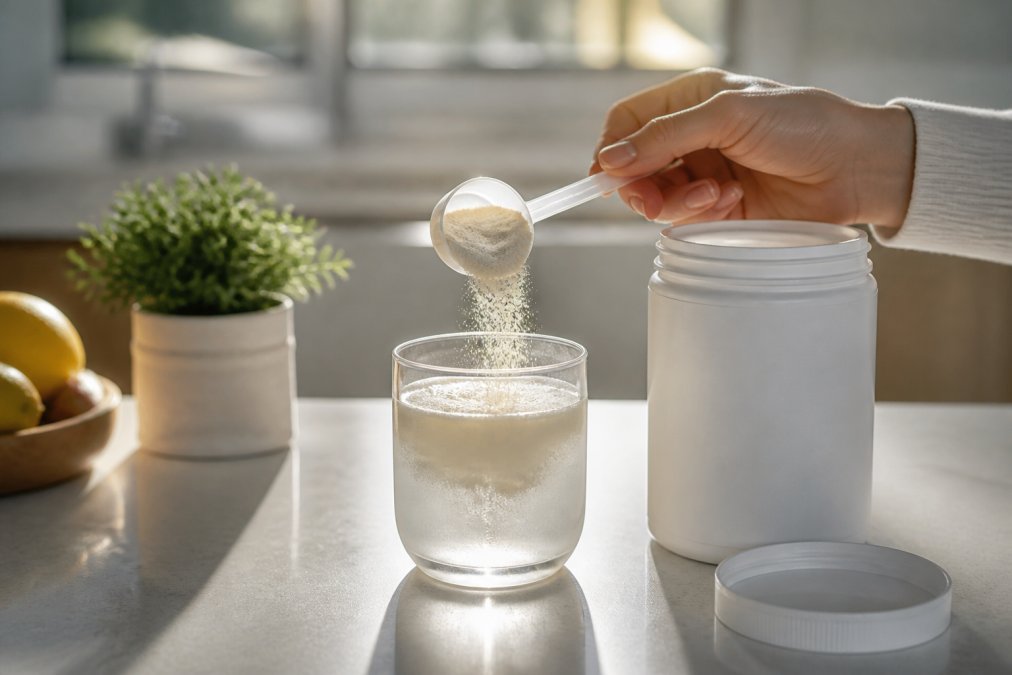
The reason hydrolyzed collagen matters more than regular collagen powder is bioavailability. Non-hydrolyzed collagen has a molecular weight around 300,000 Daltons, far too large for your intestinal lining to absorb. Hydrolyzed collagen peptides are reduced to 2,000-5,000 Daltons, which means they can pass through the intestinal barrier intact. This is why the hydrolyzed form is what appears in supplement formulas and why it's the focus of absorption studies.
Healthy Living Proteins formulates their collagen products using this hydrolyzed peptide approach, specifically delivering all five collagen types your body uses. Type I and III support skin elasticity and firmness. Type II targets joint cartilage and mobility. Type V appears in hair and nails. Type X is found in bone. Most single-source collagen supplements give you only one or two types, your body needs all five for comprehensive support.

The Clinical Evidence Behind Hydrolyzed Collagen Supplements
Does hydrolyzed collagen really work according to research? The short answer is yes, but with important nuances. Multiple placebo-controlled studies have demonstrated measurable improvements in skin elasticity, skin hydration, and wrinkle depth among participants taking collagen peptides consistently over 8-12 weeks.
Research examining skin biomarkers shows that collagen supplementation increases skin elasticity and reduces transepidermal water loss, a direct measure of skin hydration. Studies measuring skin firmness through ultrasound imaging found statistically significant improvements in the dermal matrix thickness of supplemented groups versus placebo. A systematic review examining multiple clinical trials found consistent evidence that oral collagen peptides improve skin hydration and elasticity, though effect sizes vary depending on baseline skin condition and age of participants.
The mechanism is supported by evidence showing that ingested collagen peptides do accumulate in skin tissue. Research using radioactively labeled collagen peptides traced where these amino acids end up after ingestion, confirming they reach dermal tissues and integrate into the collagen matrix. This validates the theoretical pathway, you're not just consuming random amino acids; the specific peptides from collagen supplementation preferentially accumulate in collagen-rich tissues.
However, the evidence is clearest for skin-specific outcomes. Joint health studies show more mixed results, with some showing modest improvements in joint pain and mobility while others show no significant difference from placebo. The variability likely reflects differences in study duration, dosage, collagen type used, and baseline joint condition of participants.
One factor the research emphasizes is that collagen supplementation works best when combined with adequate protein intake overall, sufficient vitamin C, and adequate sleep, all of which support collagen synthesis. A supplement alone cannot overcome poor lifestyle factors that accelerate collagen degradation.
How Long Does It Take for Collagen to Work: Realistic Timelines
The timeline for how long does it take for collagen to work depends on what you're measuring. Skin hydration improvements typically appear first, often within 2-4 weeks of consistent daily supplementation. You may notice skin feeling smoother or less dry before you see visible changes in wrinkles or firmness.
Visible improvements in skin elasticity and firmness take longer, typically 8-12 weeks at standard dosages. This is the timeframe most clinical studies used, and it's where statistically significant changes in skin texture became measurable. Hair and nail improvements follow a similar timeline, though nail changes may take slightly longer since nails grow slowly and only show changes as new nail grows in after supplementation begins.
Joint mobility and flexibility improvements, when they occur, typically require 12-16 weeks of consistent supplementation. This longer timeline reflects the slower remodeling of cartilage and connective tissue compared to skin.
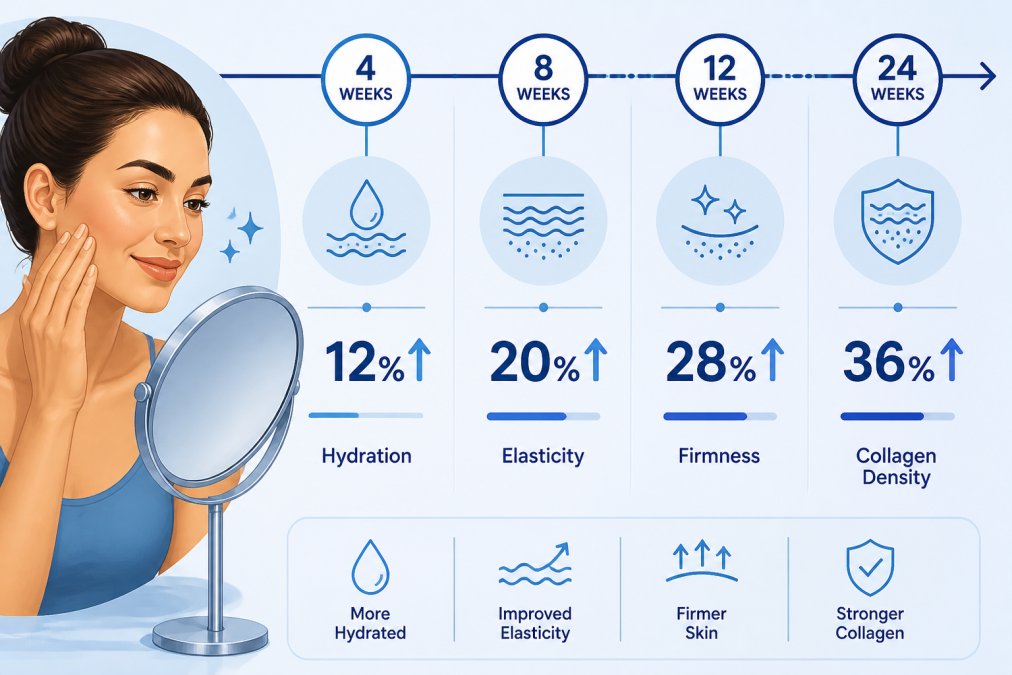
The reason timelines vary is that collagen degradation is ongoing. Your body breaks down roughly 1-1.5% of your total collagen per year after age 25, accelerating after 40. A supplement replaces some of what's lost, but the process of rebuilding visible improvements takes time. You're not adding collagen directly, you're providing amino acids that allow your fibroblasts to synthesize new collagen faster than it degrades.
Dosage affects timeline too. Studies using 10 grams daily of hydrolyzed collagen peptides showed results within the 8-12 week window. Lower doses may extend this timeline. Healthy Living Proteins' Multi Collagen Peptides delivers a therapeutic dose designed to support measurable changes within this realistic window.
One common mistake is expecting results before 6 weeks. If you stop supplementing after 3 or 4 weeks without seeing changes, you've likely stopped just before your body would have shown visible improvements. The clinical evidence consistently shows the 8-12 week mark as when improvements become noticeable to most people.
Best Type of Collagen for Skin: Which Form Delivers Results
When asking which is the best type of collagen for skin, the answer is Type I collagen, which comprises roughly 70% of your skin's dry weight. Type III collagen makes up another 15-20% and works synergistically with Type I to support skin elasticity and firmness.
However, the most effective approach isn't choosing a single type, it's getting multiple types. Your skin, hair, nails, joints, and gut all use different collagen types. Type I and III are abundant in skin. Type II is concentrated in cartilage. Type V appears in hair and nails. Type X supports bone and connective tissue structure. A supplement containing only Type I might improve skin, but you're missing support for other tissues that also affect your overall appearance and mobility.
This is why Healthy Living Proteins formulates their Multi Collagen Peptides with all five types. Rather than optimizing for skin alone, this approach supports comprehensive tissue repair across the areas most people care about, skin, hair, nails, joints, and digestive lining.
The form also matters. Hydrolyzed collagen peptides are superior to collagen powder or collagen in gelatin form because of bioavailability. Gelatin is partially hydrolyzed but has larger molecular weight than fully hydrolyzed peptides. Collagen powder that isn't hydrolyzed has very low absorption rates. The hydrolyzed peptide form is what clinical studies used, and it's what delivers measurable results.
Marine collagen (from wild-caught fish) has slightly higher bioavailability than bovine collagen because fish collagen has a lower melting point and smaller molecular weight. However, both forms work. The difference is modest, perhaps 10-15% better absorption with marine, but it's measurable. Bovine collagen from grass-fed cattle is more sustainable and cost-effective for most people.
Collagen Supplement Side Effects: What You Should Know
Collagen supplement side effects are generally mild and uncommon, but they're worth understanding before you start. The most frequently reported side effects are digestive in nature, mild bloating, nausea, or a feeling of fullness after taking the supplement.
These effects typically occur because collagen peptides are high in protein, and your digestive system may need time to adjust to increased protein intake. Starting with a lower dose and gradually increasing to the full recommended amount over a week or two minimizes this risk. Taking the supplement with food rather than on an empty stomach also reduces digestive discomfort.
Some people report a slightly unpleasant taste or aftertaste with unflavored collagen peptides. This is a sensory issue rather than a safety concern, and flavored versions or mixing with juice or smoothies resolves it.
Allergic reactions to collagen are rare but possible, particularly if you have a known allergy to the source animal (beef or fish). If you experience itching, swelling, or difficulty breathing after taking collagen, stop immediately and seek medical attention.
For people with sensitive digestive systems or IBS, the addition of probiotics and colostrum in formulas like Healthy Living Proteins' blends can actually support gut health rather than worsen it. Colostrum contains immunoglobulins and growth factors that support intestinal lining integrity, while probiotics promote beneficial bacteria. However, if you have severe IBS, introduce any new supplement slowly and monitor your response. A 30-day money-back guarantee, like the one Healthy Living Proteins offers, allows you to test whether a formula works for your specific digestive system without financial risk.
People taking blood thinners or with bleeding disorders should consult their healthcare provider before starting collagen supplements, as some research suggests collagen may have mild anticoagulant properties. This is a precaution rather than a common problem, but it's worth discussing with your doctor if you're on relevant medications.
Bioavailability and Absorption: Why Hydrolyzed Collagen Matters
The reason hydrolyzed collagen dominates the supplement market is bioavailability, the percentage of what you consume that your body actually absorbs and uses. Non-hydrolyzed collagen has bioavailability below 5%, meaning your body absorbs almost none of it. Hydrolyzed collagen peptides have bioavailability around 90%, meaning most of what you consume reaches your bloodstream.
This difference is why does hydrolyzed collagen really work hinges on the hydrolyzed form specifically. You could consume regular collagen powder all day, but if your intestines can't absorb it, it passes through your digestive system unused.
The absorption mechanism works through two pathways. First, small peptides (di-peptides and tri-peptides) are absorbed directly through the intestinal lining via specific amino acid transporters. Second, these peptides bypass first-pass liver metabolism and circulate directly to tissues where they're needed. This is different from how most amino acids are processed, collagen peptides take a more direct route to collagen-rich tissues.
Research measuring peptide accumulation in skin tissue confirms this pathway works. When participants consumed radiolabeled collagen peptides, researchers could trace these specific amino acids reaching skin tissue within hours. The peptides don't just become generic amino acids that your body uses for anything, they preferentially accumulate in collagen-rich areas.
Molecular weight determines absorption rate. Collagen peptides in the 2,000-5,000 Dalton range absorb most efficiently. Larger peptides (10,000+ Daltons) have lower absorption. This is why supplement quality matters, not all hydrolyzed collagen is equally hydrolyzed. Brands vary in their hydrolysis process, affecting final molecular weight and absorption.
Lifestyle factors also affect how well your body uses collagen. Vitamin C is essential for collagen cross-linking, without it, your body can synthesize new collagen but can't properly stabilize it. Sleep deprivation reduces collagen synthesis rates. Chronic stress elevates cortisol, which accelerates collagen degradation. High sun exposure without protection damages existing collagen through UV-induced matrix metalloproteinase activation. A supplement works best when combined with lifestyle factors that support collagen health.
Does hydrolyzed collagen really work? The evidence says yes, when you choose the right form, take it consistently for 8-12 weeks, and support it with adequate vitamin C, sleep, and sun protection. Hydrolyzed collagen peptides deliver measurable improvements in skin elasticity, hydration, and firmness for most people who use them properly. Healthy Living Proteins' formulation with all five collagen types, plus probiotics and colostrum for digestive support, addresses the common objections people raise about collagen effectiveness. Their 30-day money-back guarantee removes the financial risk of testing whether it works for your specific needs. Start with their Multi Collagen Peptides or marine option, take it daily, and reassess after 8 weeks, that's when clinical improvements typically become visible.
Frequently Asked Questions
Is hydrolyzed collagen worth taking?
Hydrolyzed collagen shows promise for skin elasticity and hydration based on clinical studies, though results vary by individual. The key factor is consistency, most people who see noticeable improvements take it daily for at least 8-12 weeks. If you're experiencing signs of aging like dull skin, thinning hair, or brittle nails, it may be worth trying, especially with a money-back guarantee so you can test it without financial risk.
How long does it take for hydrolyzed collagen to work?
Most people begin noticing improvements in skin hydration and firmness within 4-6 weeks of daily supplementation. Hair and nail strength typically take 8-12 weeks to show visible changes because these structures grow slowly. Visible wrinkle reduction and more dramatic skin elasticity improvements may take 12-16 weeks or longer. Consistency matters, skipping doses delays results.
Does hydrolyzed collagen actually reach the skin?
Yes, hydrolyzed collagen peptides are broken down into smaller amino acids and dipeptides during digestion, allowing absorption through the intestinal wall into the bloodstream. Once absorbed, these amino acids, particularly proline, glycine, and hydroxyproline, accumulate in the dermal matrix where fibroblasts use them to synthesize new collagen. This process supports skin elasticity and firmness, though not every absorbed amino acid becomes skin collagen.
What are the side effects of hydrolyzed collagen?
Hydrolyzed collagen is generally well-tolerated, but some people experience mild digestive discomfort, bloating, or a slight aftertaste. Those with sensitive stomachs may benefit from formulas that include probiotics and colostrum for digestive support. Rare allergic reactions can occur, particularly with marine collagen in people with shellfish allergies. Start with a smaller dose and increase gradually if you have a sensitive digestive system.
This article was written using GrandRanker