


Table of Contents
- Why Skin Loses Elasticity in Your 30s
- Step 1: Understand Collagen Benefits for Skin
- Step 2: Build the Best Skincare Routine for Your 30s
- Step 3: Eat Foods That Improve Skin Elasticity
- Step 4: Protect Your Skin From Sun Damage
- Step 5: Support Elasticity From Within With Collagen Supplements
- Step 6: Address Lifestyle Factors That Affect Skin
- When to Consider Professional Treatments
- Frequently Asked Questions
Last Updated: September 27, 2026
Why Skin Loses Elasticity in Your 30s
In your 30s, collagen and elastin, the structural proteins that keep skin firm, begin to decline noticeably.
Collagen provides strength and structure; elastin allows skin to stretch and snap back, creating a plump, youthful appearance.
By your 30s, declining collagen production becomes visible as fine lines, loss of firmness, and dullness, accelerated by sun exposure, stress, sleep deprivation, and poor nutrition.
You can slow this process by targeting collagen production directly, protecting existing collagen, and supporting skin from within. At Healthy Living Proteins, we've helped over 15,000 customers enhance their natural well-being with premium hydrolyzed collagen and colostrum supplements, expertly formulated for superior absorption and featuring all five collagen types, probiotics, and a 30-day money-back guarantee.

Step 1: Understand Collagen Benefits for Skin
Collagen comprises roughly 70% of skin by dry weight. When levels drop, skin loses firmness and sags.
Collagen maintains skin structure, supports hydration, reduces fine lines by plumping skin from underneath, and improves elasticity by working with elastin.
Topical collagen doesn't penetrate skin effectively due to large molecule size. Hydrolyzed collagen supplements break the protein into smaller peptides your body can absorb.
Your digestive system breaks hydrolyzed collagen into amino acids used to synthesize new collagen in skin. Many people notice improved skin firmness, hydration, and texture within 4-8 weeks of consistent use. Visible improvements in fine lines and elasticity typically appear at 8-12 weeks with consistent daily use.
Step 2: Build the Best Skincare Routine for Your 30s
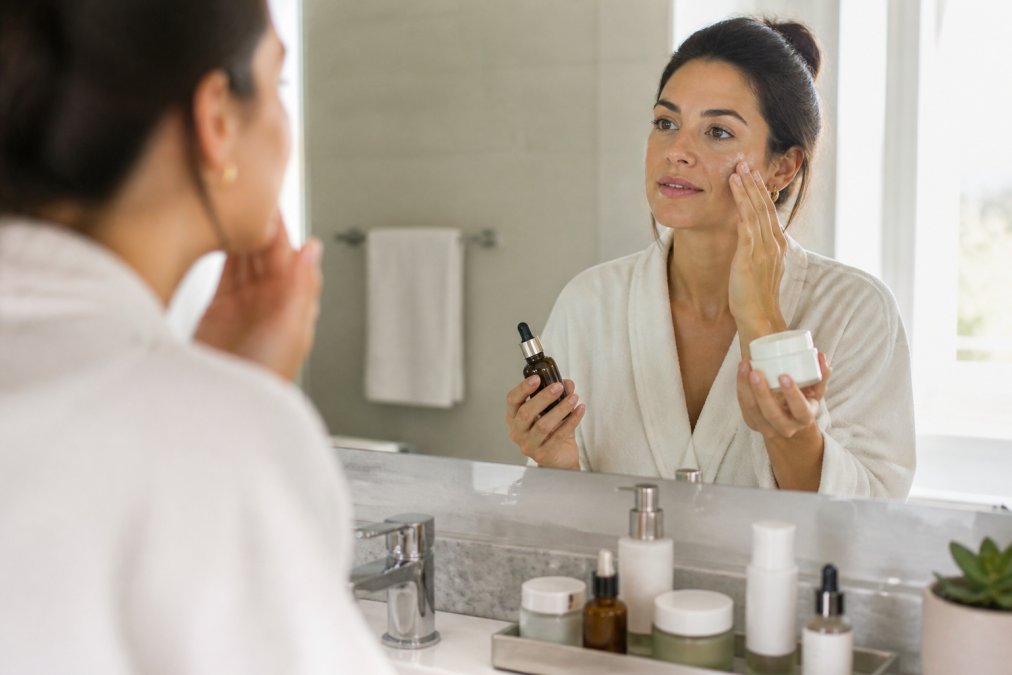
Focus your 30s skincare routine on stimulating collagen production, protecting existing collagen, and maintaining hydration. Ingredients matter more than product count.
Add Retinoids to Boost Cellular Turnover
Retinoids are vitamin A derivatives that bind to skin cell receptors, signaling increased cellular turnover and collagen production.
Start with a low concentration retinol product (the mildest form) used 2-3 times per week. After 4-6 weeks, increase to every other night. Once your skin adapts, move to stronger options like retinaldehyde or prescription retinoids (tretinoin, adapalene, tazarotene).
Apply retinoids at night only, they increase sun sensitivity. Always use sunscreen the next day.
Realistic expectations: Retinoids take 8-12 weeks to show visible improvements. Temporary redness, peeling, or dryness in the first 2-4 weeks is normal; if irritation persists beyond 4 weeks, reduce frequency or switch to a milder retinoid.
Use Vitamin C and Antioxidants Daily
Vitamin C protects skin from free radicals that damage collagen and elastin, and stimulates collagen synthesis. Studies show topical vitamin C improves skin firmness over 8-12 weeks of consistent use.
Apply vitamin C serum in the morning before sunscreen. Use 10-20% L-ascorbic acid, the most stable and effective form. Stabilized forms are less irritating but less potent.
Other antioxidants worth adding: resveratrol, green tea extract, niacinamide, and genistein. These work synergistically to neutralize oxidative stress and protect collagen.
Realistic expectations: Antioxidants prevent future damage more than reverse existing damage. Over 8-12 weeks, skin tone evens out and fine lines appear less pronounced.
Prioritize Hydration and Moisturizers
Apply humectants like hyaluronic acid to damp skin, then seal with a moisturizer containing occlusives. Hyaluronic acid can hold up to 1,000 times its weight in water.
Look for moisturizers containing ceramides, peptides, squalane, and glycerin. Apply twice daily, even oily skin needs moisturizer, as dehydration triggers excess oil production.
Realistic expectations: Hydration improvements are visible within 1-2 weeks, but this is temporary, maintain daily hydration to sustain benefits.
Wild-Caught Marine Collagen Peptides →
Critical Ingredient Interactions: What NOT to Combine
Retinoids + Vitamin C: Use vitamin C in the morning and retinoids at night. If combining, wait at least 20 minutes between applications and start with lower concentrations.
Retinoids + AHAs/BHAs: Both increase cell turnover. Use retinoids on some nights and chemical exfoliants on others, not the same night. Retinoids are the primary exfoliant in your 30s.
Vitamin C + Niacinamide: Once thought to conflict, research now shows they work well together. This combination is safe and effective.
Retinoids + Benzoyl Peroxide: Benzoyl peroxide can oxidize and degrade retinoids, reducing their effectiveness.
Budget-Friendly vs. Clinical-Grade Routines
Budget-Friendly Routine (~$50-80/month): Cetaphil cleanser, The Ordinary Retinol 0.2%, The Ordinary Vitamin C Suspension 23%, CeraVe Moisturizing Cream, and Neutrogena Ultra Sheer Sunscreen SPF 30.
Step 3: Eat Foods That Improve Skin Elasticity
Foods that boost collagen production include bone broth (collagen and amino acids), citrus fruits (vitamin C), berries (antioxidants), fatty fish (omega-3s), leafy greens (vitamins and minerals), egg whites (proline), tomatoes (lycopene), and red bell peppers (vitamin C and capsaicin).
Step 4: Protect Your Skin From Sun Damage
Sun exposure is the single biggest accelerator of skin aging. UV radiation generates free radicals that damage collagen and elastin fibers (photoaging). By your 30s, years of unprotected sun exposure have already degraded your collagen reserves.
Step 5: Support Elasticity From Within With Collagen Supplements
Collagen supplements work from inside out. When you consume hydrolyzed collagen peptides, your body breaks them down into amino acids used to synthesize new collagen in your skin, joints, and gut.
| Collagen Type | Best For | Food Sources |
|---|---|---|
| Type I | Skin, hair, nails | Bone broth, fish skin |
| Type II | Cartilage, joints | Chicken bone broth |
| Type III | Skin elasticity | Beef and fish |
| Type V | Tissue repair | Organ meats, fish |
| Type X | Bone health | Bone broth |
Step 6: Address Lifestyle Factors That Affect Skin
Your daily habits either accelerate or slow skin aging. But in your 30s, lifestyle factors become more critical because your body is undergoing hormonal shifts that amplify their effects.
Hormonal Changes in Your 30s and Skin Impact
Estrogen decline: Estrogen levels begin declining in the early 30s, supporting collagen synthesis and skin hydration. As levels drop, skin loses firmness faster and becomes drier, explaining the sudden texture shift many women notice between their late 20s and early 30s.
Sleep and Collagen Synthesis
Collagen is synthesized during deep sleep (stages 3 and 4 of non-REM sleep). Aim for 7-9 hours nightly. In your 30s, sleep quality often declines due to stress and hormonal shifts. Poor sleep increases cortisol, which breaks down collagen, making sleep-deprived skin look noticeably worse than in your 20s.
Stress Management and Cortisol Control
Chronic stress elevates cortisol, which suppresses collagen production, increases inflammation, and impairs skin barrier function. In your 30s, stress often peaks due to career advancement, relationship changes, or family planning. Find stress-reduction practices that fit your life: Meditation (10 minutes daily), yoga (especially yin or restorative), 150 minutes of moderate cardio weekly plus 2 days of strength training, time in nature (20-30 minutes), and social connection all reduce cortisol.
Smoking and Collagen Breakdown
Smoking accelerates collagen breakdown by generating free radicals and impairing lysyl oxidase, which cross-links collagen and elastin. Smokers in their 30s often have skin 10+ years older than non-smokers. Quitting is the single most impactful anti-aging step, skin texture improves within 3 months and collagen production rebounds within 1 year.
Alcohol, Hydration, and Skin Barrier Function
Alcohol dehydrates skin and increases inflammation. In your 30s, barrier function weakens, so alcohol's effects linger longer. Limit alcohol to 1 drink per day for women, 2 for men, and drink extra water to offset dehydration. Drink enough water to keep urine pale yellow, most adults need 8-10 glasses daily.
Exercise and Nutrient Delivery to Skin
Exercise increases blood flow to skin, improves nutrient delivery, reduces cortisol, and improves sleep quality. Aim for 150 minutes of moderate cardio weekly, 2 days of strength training, and flexibility work 2-3 times weekly. Consistency matters more than intensity.
When to Consider Professional Treatments
Professional treatments accelerate collagen remodeling when at-home routines plateau. Chemical peels, laser resurfacing, microneedling, injectable fillers, and radiofrequency treatments all stimulate collagen production. They work best combined with at-home skincare and collagen supplementation but don't replace the fundamentals.
Frequently Asked Questions
Does collagen supplementation help with skin elasticity?
Collagen supplements provide amino acids that your body uses to support skin structure. Hydrolyzed collagen peptides are broken down into smaller molecules for faster absorption. Many people notice improved skin firmness, hydration, and texture within 4-8 weeks of consistent use. Results vary based on age, diet, sun exposure, and overall skin health. Collagen works best when paired with sunscreen, retinoids, and adequate hydration.
Is 30 too late to start improving skin elasticity?
No. Your skin continues to produce collagen and elastin throughout your life, though at a slower rate after 30. Starting a targeted routine now prevents further loss and can restore some firmness. Retinoids boost cellular turnover, antioxidants reduce free radicals, and hydration plumps the dermis. Combined with collagen supplements and sun protection, these steps deliver visible improvements in fine lines and skin texture within 8-12 weeks.
What's the difference between collagen types, and why does it matter for skin?
Type I collagen is the most abundant in skin and provides structure and firmness. Type III supports skin elasticity. Type II is primarily in cartilage, Type V in connective tissue, and Type X in bone. Supplements with all five types support your entire body, not just skin. Single-type collagen products miss the full spectrum your skin needs. Multi-collagen formulas deliver comprehensive support for elasticity, hydration, and overall skin resilience.
How long before I see results from collagen supplements?
Most users report noticing improved skin hydration and subtle firmness within 4 weeks. Visible improvements in fine lines and elasticity typically appear at 8-12 weeks with consistent daily use. Results depend on your starting point, age, diet, sleep, and sun protection habits. Collagen works cumulatively, so patience is important. Healthy Living Proteins offers a 30-day money-back guarantee, so you can try it risk-free and assess results for yourself.