


Table of Contents
- What Collagen and Colostrum Do for Gut Health
- Collagen Powder for Gut Health: Why Type Matters
- Colostrum for Gut Health: Growth Factors and Immune Support
- Can Collagen Help With IBS and Digestive Sensitivity
- How to Take Collagen and Colostrum for Best Results
- Common Mistakes and Safety Considerations
- Evaluating Quality and Getting Started
- Frequently Asked Questions
Last Updated: October 10, 2026
What Collagen and Colostrum Do for Gut Health
When your intestinal barrier weakens, bloating, food sensitivity, fatigue, and skin issues follow. Understanding how gut health collagen colostrum work together is the first step to rebuilding your digestive foundation.
Collagen provides structural building blocks for your gut lining, while colostrum delivers immune factors and growth compounds that accelerate healing. Together they address gut health from two angles: repair and protection.
How Collagen Supports Your Intestinal Barrier
Your intestinal barrier is a single layer of cells controlling what enters your bloodstream. When weakened, larger particles slip through (intestinal permeability). Collagen is the primary structural protein in your gut lining, making up about 70% of your intestinal wall's dry weight.
Type I and Type III collagen form the connective tissue scaffold holding your gut barrier intact. When you consume hydrolyzed collagen peptides, your body breaks them into amino acids like glycine and proline, which rebuild and reinforce your intestinal lining.

Most people need consistent daily intake for 4-12 weeks before noticing meaningful improvements. Consistency matters more than high doses.
How Colostrum Strengthens Immunity and Digestion
Colostrum is the nutrient-dense fluid mammals produce in the first days after birth, packed with immunoglobulins (antibodies), lactoferrin, and growth factors that actively work in your gut.
Immunoglobulin A (IgA) coats your intestinal lining and prevents harmful bacteria from attaching. Lactoferrin binds iron, feeding beneficial bacteria while starving pathogens. Growth factors like IGF-1 and TGF-β signal your gut cells to repair and regenerate.
Grass-fed bovine colostrum contains similar compounds to human colostrum. When consumed, these bioactive compounds survive digestion and interact with your gut-associated immune system. Processing and sourcing determine how many active compounds reach your intestines.
Collagen Powder for Gut Health: Why Type Matters
Not all collagen is the same. Your body uses five different types of collagen, and each plays a distinct role in gut health.
Type I collagen is the most abundant in your intestinal wall. It provides tensile strength and structural integrity. If your goal is to support intestinal barrier function, Type I should be your priority.
Type III collagen works alongside Type I. It's especially important in younger, more elastic tissue. Many people find that combining Types I and III produces better results than Type I alone.
Type II collagen supports cartilage and is less relevant for gut health. Type V and X collagen play supporting roles in connective tissue and bone but aren't primary for intestinal barrier repair.
Most single-source collagen powders give you just one or two types. Your gut needs the full spectrum. Healthy Living Proteins' Multi Collagen Peptides includes all five types, sourced from grass-fed bovine, wild-caught marine, and free-range chicken.

Hydrolyzed collagen (collagen peptides) is broken down into smaller molecules during processing, making it more efficiently absorbed than intact collagen. Look for products that specify "hydrolyzed" or "peptides."
Colostrum for Gut Health: Growth Factors and Immune Support
Colostrum's power lies in its concentration of growth factors and immune compounds.
Growth factors signal your gut cells to divide and repair. IGF-1 stimulates cell regeneration throughout your intestinal lining, while TGF-β reduces inflammation and promotes tissue healing.
Immunoglobulins, especially IgG, are antibodies that coat your intestinal lining and create a protective barrier against pathogens and food particles. IgG support can help if you have food sensitivities or react to foods you used to tolerate.
Lactoferrin is an iron-binding protein that modulates your gut microbiome. It feeds good bacteria while limiting bad ones. This shift in microbial balance often leads to reduced bloating and more stable digestion.
Grass-fed bovine colostrum contains higher concentrations of bioactive compounds than grain-fed alternatives. Look for products that specify IgG percentage, higher is better. Healthy Living Proteins' Grass-Fed Bovine Colostrum contains 30% IgG per serving.

Can Collagen Help With IBS and Digestive Sensitivity
IBS has multiple causes: food sensitivities, stress, dysbiosis (microbial imbalance), and intestinal permeability. Collagen powder for gut health can address some factors, but it's not a cure-all.
Collagen helps most when intestinal permeability is part of your problem. If you react to foods you used to tolerate, or if your symptoms improve when you avoid certain triggers, your gut lining may be compromised. Collagen provides the amino acids needed to rebuild it.
Collagen alone won't fix dysbiosis or stress-related IBS. Dysbiosis requires probiotics and prebiotic fiber; stress-related IBS requires stress management alongside supplementation.
Many people see the best results with gut health collagen colostrum combinations that work synergistically. Colostrum's immune factors and growth compounds accelerate healing while collagen provides structural support. This combination addresses multiple mechanisms at once.
Expect a 4-8 week timeline before significant improvement. Some people notice changes in bloating within 2-3 weeks, but meaningful barrier repair takes longer. Consistency is non-negotiable.
How to Take Collagen and Colostrum for Best Results
The most common mistake is taking supplements sporadically. Collagen and colostrum work through consistent daily intake that allows your body to accumulate and use these compounds.
Daily Dosage and Serving Recommendations
Research on collagen and gut health uses daily doses between 10-20 grams of hydrolyzed collagen.
For collagen peptides: Start with 10 grams daily. If you're over 200 pounds or have significant digestive issues, 15 grams daily may be more effective. Don't exceed 20 grams unless directed by a practitioner.
For colostrum: Therapeutic doses range from 5-10 grams daily. Most colostrum powders are concentrated, so a single scoop delivers meaningful amounts. More isn't better, consistency matters more than quantity.
Multi Collagen Peptides w/ Colostrum →
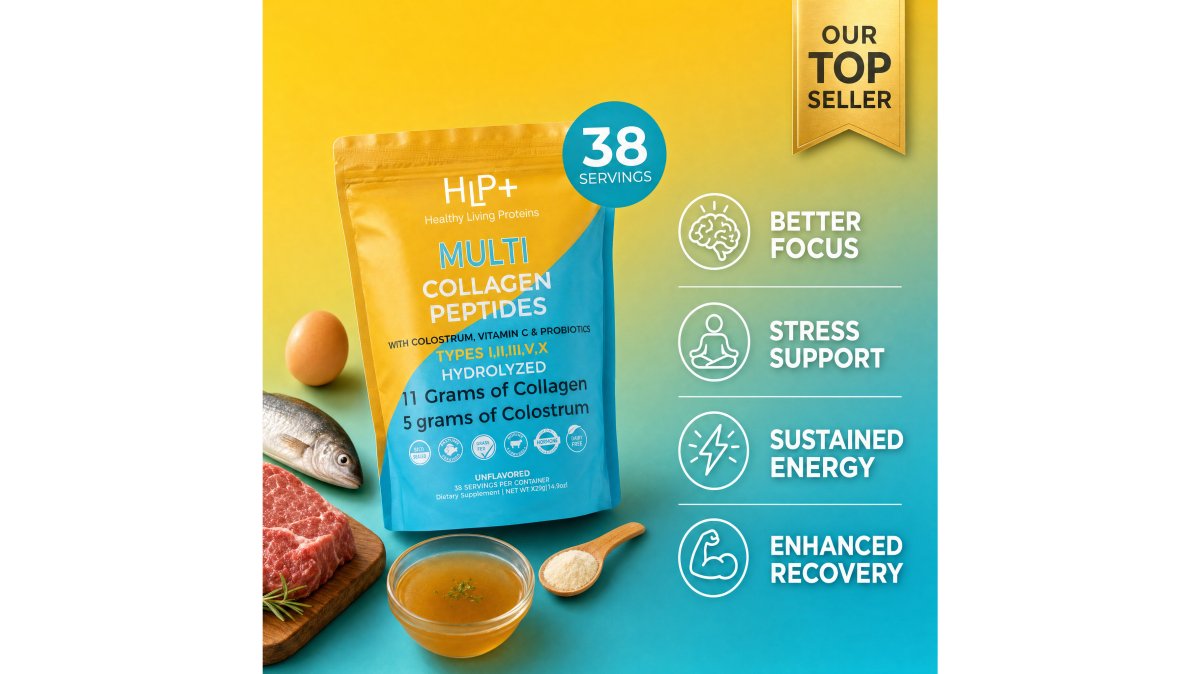
Combined approach: Aim for 10 grams collagen + 5 grams colostrum daily. Healthy Living Proteins' Multi Collagen Peptides with Colostrum delivers both in one serving.
The key is daily consistency.
Timing, Consistency, and What to Expect
When to take it: Morning is ideal for absorption on an empty stomach or with light food. Mix into coffee, tea, or a smoothie. Collagen peptides are unflavored and dissolve cleanly.
Consistency timeline:
- Weeks 1-2: Improved digestion or reduced bloating as your microbiome responds to colostrum's immune factors.
- Weeks 3-6: Intestinal barrier repair accelerates. Food sensitivities may improve. Energy increases as nutrient absorption improves.
- Weeks 7-12: Meaningful structural changes in your gut lining. Sustained improvements in digestion, bloating, and food tolerance.
Don't judge results before week 4. Your body needs time to accumulate amino acids and respond to growth factors.
What to expect: Better digestion, reduced bloating, and improved energy are common. Some notice skin improvements because a healthier gut absorbs nutrients more efficiently.
What you shouldn't expect: Collagen and colostrum won't eliminate IBS overnight. They won't fix dysbiosis without dietary changes. They won't resolve stress-related digestive issues without stress management. They work best as part of a broader approach to gut health.
Common Mistakes and Safety Considerations
Starting too high: Taking 20+ grams on day one causes digestive upset. Start at 10 grams and increase gradually to prevent bloating and allow your system to adjust.
Inconsistency: Taking collagen three days a week won't work. Your gut cells need daily signals to repair and regenerate. Consistency beats quantity every time.
Ignoring sourcing: Grass-fed collagen and colostrum contain higher concentrations of bioactive compounds than conventional alternatives. Cheaper products often use processing methods that destroy these compounds.
Forgetting fiber and hydration: Collagen and colostrum work best with adequate fiber and water. Aim for 25-30 grams of fiber daily and half your body weight in ounces of water.
Not addressing root causes: Supplements alone won't fix IBS driven by food sensitivities, stress, or dysbiosis. Identify triggers, manage stress, and consider a food elimination diet or work with a practitioner.
Mixing with hot water above 160°F: High heat denatures collagen peptides. Mix into warm water or cooled coffee to preserve peptide structure.
Lactose concerns: Pure colostrum powder contains minimal lactose. If you have severe lactose intolerance, start with a small dose to test tolerance.
Evaluating Quality and Getting Started
Not all collagen and colostrum products are equal. Processing, sourcing, and third-party testing separate effective products from expensive placebos.
What to look for in collagen:
- Hydrolyzed (peptides, not whole collagen)
- Multiple types (all five is ideal; at minimum, Types I and III)
- Grass-fed bovine sourcing (higher amino acid concentration)
- Third-party tested (NSF, Informed Choice, or similar certification)
- No additives, fillers, or artificial sweeteners
What to look for in colostrum:
- Grass-fed sourcing
- IgG percentage listed (30% or higher is therapeutic)
- Minimal processing to preserve bioactive compounds
- Third-party tested
- No added sugars or unnecessary ingredients
Sourcing matters: Grass-fed animals produce collagen and colostrum with higher concentrations of omega-3 fatty acids and conjugated linoleic acid (CLA). These compounds amplify the anti-inflammatory benefits. It costs more, but you're getting a more potent product.
Processing matters: Some manufacturers use heat or chemical extraction methods that damage bioactive compounds. Cold processing preserves more of colostrum's growth factors and antibodies.
Testing matters: Third-party testing verifies that the product contains what the label claims and is free from contaminants. If a product isn't tested, you don't actually know what you're buying.
Healthy Living Proteins' Multi Collagen Peptides with Colostrum combines all five collagen types with grass-fed colostrum, probiotics, and vitamin C in a single serving. It's designed specifically for gut health, not just skin or joints.
For those who want to customize their approach, Healthy Living Proteins also offers standalone products: Grass-Fed Bovine Collagen Peptides for pure collagen support, and Grass-Fed Bovine Colostrum for concentrated immune and growth factor support.
Improving your gut health with collagen and colostrum requires consistency and the right products. Your intestinal barrier doesn't repair overnight, but with daily intake of high-quality, properly sourced supplements, you can rebuild digestive comfort and strengthen your immune foundation.
Frequently Asked Questions
How long does it take to notice results from collagen and colostrum for gut health?
Most people report initial improvements in digestion and energy within 2-4 weeks of consistent daily use, though meaningful changes to intestinal barrier function typically take 8-12 weeks. Skin and hair results often appear later, around 8-12 weeks. Consistency matters more than speed, collagen and colostrum work by gradually rebuilding tissue and supporting your microbiome, not providing immediate relief. Keep a simple log of digestive comfort and energy levels to track your own progress.
Can collagen help with IBS symptoms like bloating and cramping?
Collagen may help reduce IBS symptoms by supporting intestinal barrier integrity and reducing inflammation, though research is still emerging. The amino acids in collagen (especially glycine and proline) help repair the gut lining, which can reduce permeability and associated bloating. Colostrum's immunoglobulins and growth factors work similarly. However, IBS varies widely between individuals, some people respond well, others see no change. Start with a lower dose (5g daily) and increase gradually to assess your tolerance, as rapid increases can temporarily worsen bloating in sensitive individuals.
Can you take collagen and colostrum together, and is it safe to add probiotics?
Yes, collagen and colostrum work synergistically and are safe to take together. Colostrum's antibodies and growth factors complement collagen's structural support for the gut lining. Adding probiotics is also safe and often beneficial, probiotics improve nutrient absorption and support the microbiome, while collagen and colostrum provide the structural and immune foundation those bacteria need to thrive. Many people find the combination addresses multiple aspects of digestive wellness simultaneously. If you have a milk allergy or severe lactose sensitivity, consult your doctor before starting colostrum.
What should I look for when choosing a collagen and colostrum supplement?
Prioritize grass-fed or wild-caught sourcing, hydrolyzed collagen (easier to absorb), and full-spectrum formulas containing all five collagen types (I, II, III, V, X). For colostrum, look for 30% IgG or higher, which indicates immunoglobulin concentration. Check for third-party testing and clean labels, avoid artificial sweeteners, fillers, and unnecessary additives. Transparency about sourcing and processing is a sign of quality. Many lower-priced alternatives may use only one or two collagen types.