


Table of Contents
- 1. Sudden or Rapid Hair Loss
- 2. Patchy Bald Spots and Exclamation Point Hairs
- 3. Widening Part or Receding Hairline
- 4. Scalp Symptoms: Itching, Burning, Redness, or Sores
- 5. Causes of Sudden Hair Loss and When They Signal a Medical Issue
- 6. Systemic Symptoms That Point to an Underlying Condition
- 7. Dermatologist Hair Loss Treatment Options: What to Expect at Your Appointment
- 8. Collagen Supplements for Hair Health: Where They Fit in Your Routine
- Frequently Asked Questions
Last Updated: September 29, 2026
1. Sudden or Rapid Hair Loss
Sudden or rapid hair loss is one of the clearest signs you need to see a dermatologist for hair loss. Most people shed 50 to 100 strands a day; clumps on your pillow or in the shower drain over days or weeks point to something beyond normal shedding ([the American Academy of Dermatology](https://www.aad.org/public/diseases/hair-loss/insider/shedding)).
2. Patchy Bald Spots and Exclamation Point Hairs
Patchy bald spots are smooth, round areas of missing hair that appear without warning on the scalp, beard, or eyebrows. Normal-looking skin with soft edges is a classic reason to see a dermatologist for hair loss.
3. Widening Part or Receding Hairline
A widening part or receding hairline usually signals androgenetic alopecia, the most common form of progressive thinning. It affects both sexes, though men often notice a receding hairline first while women see their part widen.
4. Scalp Symptoms: Itching, Burning, Redness, or Sores
Scalp symptoms that accompany hair loss, itching, burning, redness, or sores, point to inflammation needing clinical evaluation. An itchy scalp alone is common; an itchy, red, scaly scalp with hair falling out is not.
5. Causes of Sudden Hair Loss and When They Signal a Medical Issue
The causes of sudden hair loss range from stress and illness to medication side effects and nutritional gaps. Telogen effluvium is most common: it pushes many follicles into the resting phase at once, with shedding two to three months later.
Common triggers include:
- Major physical stress, such as surgery or a severe illness
- Emotional stress or a significant life change
- Rapid weight loss or restrictive dieting
- Thyroid disorders and other hormone imbalances
- Vitamin deficiency, especially low iron, vitamin D, or zinc
- New medications, including some antidepressants and blood pressure drugs
6. Systemic Symptoms That Point to an Underlying Condition
Systemic symptoms alongside hair loss, fatigue, weight change, feeling cold, suggest the scalp is not the real problem. Hair is often the first visible sign that something inside the body has shifted, because follicles are metabolically active and sensitive to hormone, nutrient, and immune changes.
Symptom clusters and what they can point to
| Cluster | Possible Underlying Cause | Why Hair Is Affected |
|---|---|---|
| Fatigue, cold intolerance, weight gain, dry skin | Hypothyroidism | Thyroid hormone drives follicle cycling; low levels push hairs into the resting phase |
| Palpitations, weight loss, heat intolerance, anxiety | Hyperthyroidism | Excess thyroid hormone disrupts the normal growth-to-rest transition |
| Fatigue, pale skin, shortness of breath, brittle nails | Iron deficiency anemia | Iron is needed for follicle cell division; low ferritin stalls growth |
| Irregular periods, acne, unwanted facial hair | PCOS or other hormone imbalance | Androgen excess shrinks follicles in a patterned distribution |
| Joint pain, rash, mouth sores, fatigue | Autoimmune conditions such as lupus | Immune activity can attack follicles or cause scarring inflammation |
| Unexplained weight loss, night sweats, fevers | Systemic illness | The body diverts resources away from non-essential functions like hair growth |
Temporary shedding vs. permanent loss, the distinction that matters most
Two patterns look similar in the shower drain but behave very differently:
- Telogen effluvium (temporary). A trigger, illness, surgery, major stress, rapid weight loss, a new medication, pushes a large number of follicles into the resting phase at once. Shedding starts roughly 2 to 3 months later, is diffuse across the scalp, and typically resolves within 6 to 12 months once the trigger is removed. Follicles are not destroyed.
- Androgenetic alopecia (progressive). Driven by genetics and sensitivity to dihydrotestosterone, this thins the part or hairline gradually over years. It does not resolve on its own, but it can be slowed or partially reversed with treatment.
- Scarring alopecia (permanent). Inflammation destroys the follicle and replaces it with scar tissue. Once a follicle scars over, it cannot produce hair again. This is why redness, pain, scaling, or a shiny, smooth bald patch needs prompt evaluation rather than watchful waiting.
When systemic symptoms change the urgency
Hair loss alone is rarely an emergency. Hair loss plus any of the following warrants a prompt appointment:
- Unexplained fatigue that does not improve with rest
- Weight change without a change in diet or activity
- Irregular periods or new hormonal symptoms
- Joint pain, rash, or mouth sores
- A shiny, smooth bald patch with redness, scaling, or pain
7. Dermatologist Hair Loss Treatment Options: What to Expect at Your Appointment
Dermatologist hair loss treatment options depend on the diagnosis, but the appointment follows a predictable path. Knowing what to expect, how to prepare, and what it may cost removes most of the anxiety.
What actually happens during the visit
A typical consultation runs 30 to 45 minutes through four stages:
Multi Collagen Peptides & Creatine for →
- History. The dermatologist asks when shedding started, whether it is diffuse or patchy, what medications and supplements you take, recent illnesses or surgeries, diet and weight changes, menstrual history, and family history of hair loss.
- Visual scalp exam. They assess hair density, the pattern of loss, and the condition of the scalp itself, looking for redness, scaling, pustules, or scarring.
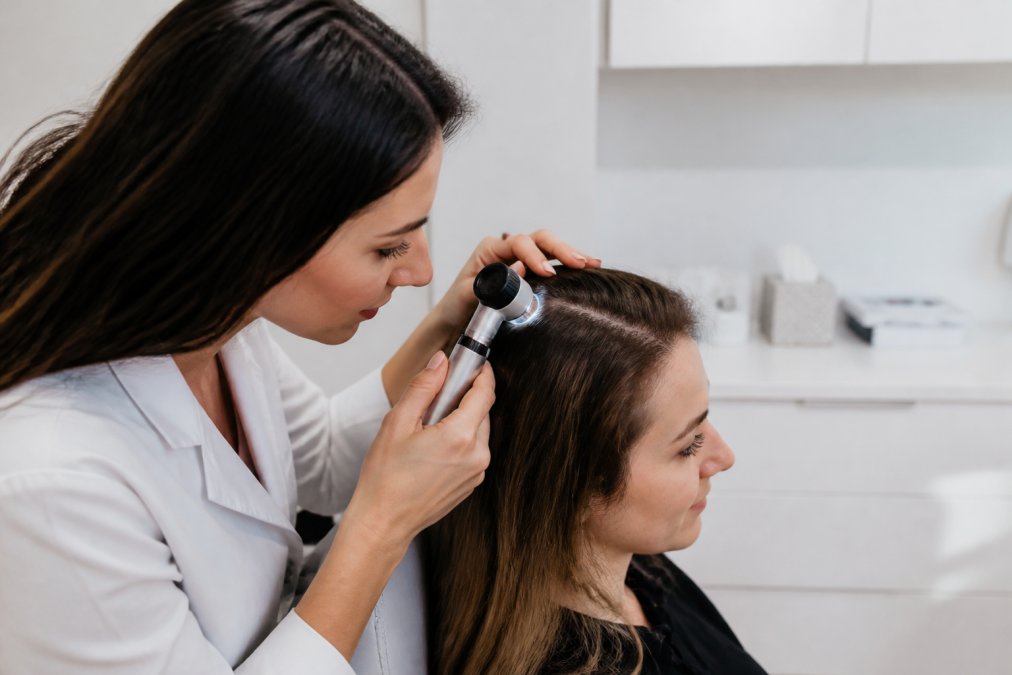
- Dermoscopy (trichoscopy). A dermatoscope, a lighted magnifier placed against the scalp, lets them see follicle openings, hair shaft diameter variation, and signs like exclamation point hairs or loss of follicular openings. This is often what separates a scarring from a non-scarring diagnosis.
- The pull test and, when needed, a scalp biopsy. A gentle pull test estimates how many hairs are actively shedding. If the cause is still unclear, a small scalp biopsy (usually 4 mm) can confirm scarring alopecia or alopecia areata.
Tests a dermatologist may order
Blood work is common and typically includes a complete blood count, ferritin (stored iron), thyroid-stimulating hormone, vitamin D, and sometimes zinc or a hormone panel. Ferritin and thyroid results explain many diffuse shedding cases. Results return within days to two weeks, with a follow-up visit or portal message covering the plan.
Treatment options by diagnosis
| Diagnosis | Typical Treatment | What It Does |
|---|---|---|
| Androgenetic alopecia | Topical minoxidil, oral medication | Slows thinning, supports regrowth |
| Telogen effluvium | Trigger removal, nutrient correction | Lets the hair cycle reset |
| Alopecia areata | Topical or injected steroids | Calms the immune response |
| Scarring alopecia | Anti-inflammatory therapy | Limits permanent follicle damage |
| Nutritional deficiency | Targeted supplementation | Restores the building blocks for hair |
How to prepare for your appointment
- Bring a list of all medications and supplements you take, with doses
- Note when the shedding started and roughly how much you see daily
- Take photos over several weeks under the same lighting to show the pattern
- List any recent illness, surgery, major stress, or rapid weight change
- Write down your family history of hair loss on both sides
- Bring prior lab results if you have them
- Write down your top two or three questions so you do not leave without answers
Photograph your scalp in the same spot, same lighting, once a month. A dated photo series is often more useful to a dermatologist than a verbal description of "it seems thinner."
Cost and insurance: what to check before you book
Coverage varies by plan and diagnosis. A medical cause, thyroid disease, anemia, an autoimmune condition, or scarring alopecia, is generally covered. Treatment framed as cosmetic (for example, minoxidil for early pattern thinning with no underlying disease) often is not.
Before your visit:
- Call your insurance plan and ask whether a dermatology consultation for hair loss is covered and what your specialist copay is.
- Ask the dermatologist's office whether they bill the visit under a medical or cosmetic diagnosis code.
- Request a written estimate for any in-office procedures, such as steroid injections or a biopsy.
- Ask about follow-up cadence, many treatment plans need a recheck at 3 to 6 months to judge response.
What follow-up usually looks like
Most treatment plans are judged at the 3- to 6-month mark, because hair grows roughly half an inch per month. A dermatologist will compare new photos to your baseline, adjust the plan if shedding has not slowed, and decide whether to continue, switch, or add a treatment. Expect at least one follow-up; a single visit rarely settles a chronic diagnosis.
8. Collagen Supplements for Hair Health: Where They Fit in Your Routine
Collagen supplements for hair health support the hair follicle's structure, but they are not a treatment for medical hair loss. Hair is largely keratin, and collagen provides amino acids and scalp support, nutrition, not medicine.
Frequently Asked Questions
Is it worth going to a dermatologist for hair loss?
Yes, if you notice sudden shedding, patchy bald spots, scalp pain, or hair loss alongside fatigue or weight changes. A dermatologist can run bloodwork, perform a scalp biopsy, and identify whether the cause is telogen effluvium, androgenetic alopecia, or something else. Early intervention often makes treatment more effective, and a clinical evaluation gives you a clear diagnosis instead of guesswork.
What bloodwork should I get for hair loss?
A dermatologist typically orders a complete blood count, ferritin, thyroid panel, vitamin D, and zinc. These tests help rule out vitamin deficiency, thyroid disorders, and hormone imbalance, all of which can trigger excessive hair loss. Bring a list of medications and your medical history to the appointment so the dermatologist can interpret results in context.
Can a dermatologist stop hair loss?
In many cases, yes. Treatment depends on the cause. If a vitamin deficiency or thyroid issue is behind the shedding, correcting it often slows or reverses loss. For androgenetic alopecia, prescription treatments can reduce further thinning and support regrowth. Scarring alopecia needs earlier, more aggressive care. A dermatologist will build a treatment plan based on your specific diagnosis and hair loss pattern.
Do collagen supplements for hair health actually help?
Collagen supports the structural proteins in hair, skin, and nails, and many adults use it as part of a broader routine. It is not a replacement for a medical diagnosis or prescription treatment. If you are already working with a dermatologist, a daily collagen supplement like Healthy Living Proteins Multi Collagen Peptides can complement your plan by supporting overall hair and scalp health.