


Table of Contents
- Why Collagen Matters for Women Over 50
- Understanding Collagen Types and What Each Does
- How to Stop Hair Thinning and Support Skin with Collagen
- Collagen and Joint Health After 50
- Hydrolyzed Collagen Absorption: What the Science Shows
- Dosage, Safety, and What to Expect
- Choosing the Right Collagen Supplement
- Maximizing Collagen Results: Synergy and Absorption Inhibitors
Last Updated: August 18, 2026
Why Collagen Matters for Women Over 50
After 50, your body produces less collagen, the protein responsible for skin elasticity, joint mobility, and connective tissue strength. This decline accelerates during and after menopause, when hormonal shifts further reduce collagen synthesis. Collagen makes up roughly 30 percent of total body protein and 70 percent of your skin's dry weight. When collagen degrades faster than your body can rebuild it, your skin loses firmness, fine lines deepen, and joints feel the strain of reduced cartilage cushioning.

Hydrolyzed collagen peptides, the form used in most supplements, are broken down into smaller amino acids and dipeptides that your digestive system can absorb readily. This bioavailability is why oral supplementation works: the amino acids (particularly glycine, proline, and hydroxyproline) reach your bloodstream and can be incorporated back into collagen synthesis.
At Healthy Living Proteins, we focus on delivering all five collagen types in one formula because your body needs all of them. Type I supports skin and hair. Type II cushions joints. Types IV and V strengthen bone and connective tissue.

Understanding Collagen Types and What Each Does
Your body uses five distinct collagen types, each with a specific structural role.
Type I and III: Skin, Hair, and Nails
Type I collagen comprises 80 to 90 percent of your skin's collagen content and provides tensile strength and elasticity. Type III collagen works alongside Type I, adding flexibility and supporting skin's ability to stretch without tearing.
When these decline, your skin becomes thinner and loses elasticity. Fine lines appear and deepen into wrinkles. Hair becomes thinner because the collagen in hair follicles weakens, reducing the follicle's ability to produce thick strands. Nails become brittle for the same reason.
Hydrolyzed collagen peptides containing Type I and III directly address these tissues. The amino acids circulate to skin, hair, and nails, where they're reincorporated into new collagen fibers. Expect 8 to 12 weeks for visible skin changes.
Type II: Joint and Cartilage Support
Type II collagen is the primary structural protein in cartilage, providing shock absorption and smooth movement. After 50, Type II collagen degrades faster than your body replaces it, causing cartilage to thin and joints to stiffen.
Supplementing with Type II collagen peptides supplies the amino acids your body uses to rebuild cartilage. Combined with movement and adequate vitamin C, this slows cartilage degradation and can improve mobility within 8 to 12 weeks.
Types IV and V: Bone and Connective Tissue
Type IV collagen forms the basement membrane beneath your skin and throughout your body. Type V collagen strengthens connective tissue, tendons, and ligaments.
These types matter for bone density and connective tissue resilience. After 50, particularly post-menopause, bone density declines because estrogen, which supports collagen synthesis in bone, drops. Type I and IV collagen in bone provide the structural matrix that holds minerals.
How to Stop Hair Thinning and Support Skin with Collagen
Hair thinning accelerates after 50 because collagen in hair follicles declines. The follicle becomes smaller and produces thinner strands. Collagen peptides supply the amino acids follicles need to maintain their structure.
For skin, collagen peptides increase hydration by supporting the extracellular matrix that holds water. They also stimulate your fibroblasts to increase collagen synthesis. Expect 8 to 12 weeks of consistent supplementation before you notice tighter, more hydrated skin.
A common mistake is expecting results in 2 to 3 weeks. Skin cell turnover takes 28 to 40 days, and collagen remodeling takes longer. The best approach combines supplementation with sun protection and adequate vitamin C intake. Collagen peptides work best when your body has the cofactors it needs to synthesize new collagen.
Collagen and Joint Health After 50
Joint stiffness is one of the most common complaints women report after 50. Cartilage is avascular, it has no blood supply, so it relies on movement and nutrient diffusion to stay healthy. After 50, collagen in cartilage declines, and the cartilage becomes thinner and less resilient.
Type II collagen peptides address this directly by supplying glycine and proline, the amino acids cartilage needs to rebuild itself. When combined with regular movement, supplementation can improve joint mobility and reduce stiffness within 8 to 12 weeks.
Research shows consistent results: people who supplement with hydrolyzed collagen peptides report improved mobility and reduced joint discomfort. The effect is modest, but meaningful for age-related stiffness. Consistency matters, daily supplementation is the standard approach.
Hydrolyzed Collagen Absorption: What the Science Shows
Hydrolyzed collagen works better than intact collagen because of bioavailability. Hydrolyzed collagen has been broken down into smaller peptides and amino acids that your intestines can absorb directly.
Intact collagen molecules are too large to cross the intestinal barrier efficiently. Hydrolyzed collagen peptides skip that step, they're already small enough to absorb. Once absorbed, these peptides circulate in your bloodstream and are incorporated into collagen structures or broken down into amino acids for other protein synthesis needs.
Molecular weight matters. Collagen peptides with lower molecular weight (typically 2,000 to 5,000 Daltons) absorb better than higher molecular weight peptides. When evaluating a collagen product, look for hydrolyzed peptides with molecular weight in this range.
Dosage, Safety, and What to Expect
Recommended Daily Dosage for Women Over 50
The typical effective dose for collagen peptides is 10 to 20 grams per day. For women over 50, 15 grams daily is a practical target. Consistency matters more than dose, taking 15 grams every day beats taking 30 grams sporadically.

Timing doesn't matter as much as many supplements claim. Taking collagen with vitamin C and a protein-containing meal optimizes synthesis, so morning with breakfast is reasonable.
Timeline for Visible Results
Expect 8 to 12 weeks of consistent supplementation before visible skin changes. Hair thickness improvements take similar timelines. Joint mobility improvements can appear within 4 to 8 weeks with regular movement.
The most common reason people stop supplementing is expecting results too quickly. Collagen remodeling is a slow biological process. Consistency through 12 weeks is the standard for meaningful results.
Safety and Potential Side Effects
Collagen peptides are generally well-tolerated and derived from food sources (bovine, marine, or chicken collagen). Some people report mild digestive effects when first starting supplementation, which typically resolves within a few days. Starting with a lower dose (5 to 10 grams) and increasing gradually can minimize this.
If you have a shellfish allergy, marine collagen is not appropriate. If you have a beef allergy, bovine collagen should be avoided. Collagen peptides are high in amino acids but don't contain complete micronutrient profiles. Taking them alongside a balanced diet ensures you're getting the cofactors (vitamin C, copper, zinc) your body needs for collagen synthesis.
Choosing the Right Collagen Supplement
Most collagen supplements fall into two categories: marine or bovine sourced, and powder or capsule form.
Marine vs. Bovine Collagen
Marine collagen is sourced from fish and absorbs slightly faster than bovine collagen because it has a lower molecular weight. Bovine collagen is sourced from grass-fed cattle and tends to be less expensive. Both work equally well for collagen synthesis, the speed difference is marginal. For most people, bovine is the practical choice because it costs less and delivers the same long-term results.
| Collagen Type | Absorption Speed | Cost | Best For |
|---|---|---|---|
| Marine | Slightly faster | Higher | Budget-flexible; prefer non-beef sources |
| Bovine | Standard | Lower | Cost-conscious; no preference on source |
Powder vs. Capsules
Collagen powder is mixed into beverages or food and is flavorless. Capsules are pre-portioned and convenient for travel. Powder is more cost-effective per serving and allows you to control the dose precisely. Capsules typically contain 1 to 2 grams each, so you'd need 8 to 15 capsules daily, which is inconvenient and expensive.
Powder is also easier to combine with other supplements in a single drink. For daily consistency, powder is superior because it's easier to measure correctly and less expensive.
Third-Party Testing and Quality Transparency
Quality varies significantly across collagen brands. Third-party testing, where an independent lab verifies the product's contents, is a quality signal.
Look for brands that disclose:
- Molecular weight of peptides (should be 2,000 to 5,000 Daltons)
- Source of collagen (grass-fed bovine, wild-caught marine, etc.)
- Hydrolysis method (enzymatic hydrolysis is standard)
- Third-party testing results
Healthy Living Proteins provides all of this information. The Multi Collagen Peptides formula delivers all five collagen types, is hydrolyzed for absorption, and uses grass-fed bovine and wild-caught marine sources at $44.99.
Maximizing Collagen Results: Synergy and Absorption Inhibitors
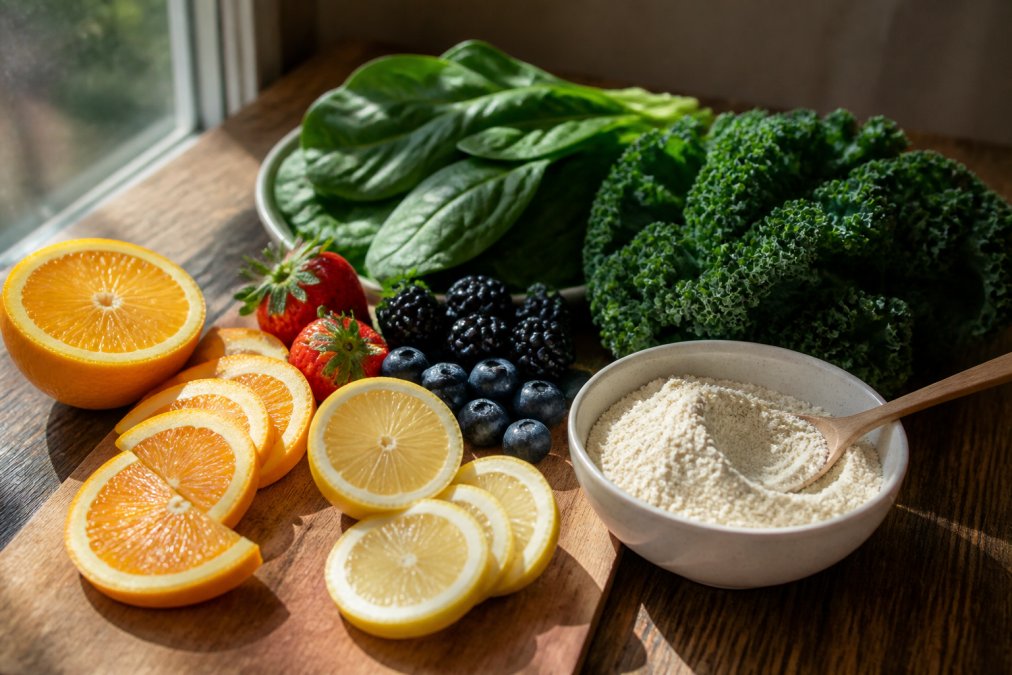
Collagen supplementation works best when your body has the nutrients it needs to synthesize new collagen. Vitamin C is non-negotiable, your body cannot cross-link collagen fibers without it. Amino acids from protein are essential. Copper and zinc support collagen synthesis enzymes.
Dietary Synergy: Vitamin C and Amino Acids
Vitamin C is a cofactor for collagen cross-linking enzymes. Without adequate vitamin C, your body can synthesize collagen amino acids but can't stabilize them into functional collagen structures. Aim for 200 to 500 milligrams of vitamin C daily when supplementing with collagen.
Amino acids from protein amplify collagen synthesis. Aim for at least 1.2 grams of protein per kilogram of body weight daily. Copper and zinc also matter as cofactors for collagen-synthesizing enzymes. Most people get adequate amounts from food, but a basic mineral panel can clarify whether you need additional supplementation.
What Blocks Absorption and Collagen Synthesis
High-dose calcium taken simultaneously with collagen peptides can reduce absorption. If you take a calcium supplement, separate it from collagen by at least 2 to 3 hours.
Polyphenols in tea, coffee, red wine, and dark chocolate also reduce collagen absorption when consumed simultaneously. Space them: take collagen in the morning, enjoy coffee or tea an hour later.
Excess alcohol inhibits collagen synthesis at the cellular level. Smoking inhibits collagen synthesis directly and accelerates collagen degradation. Sun exposure without protection degrades collagen in skin faster than supplementation can rebuild it. Sunscreen (SPF 30 or higher) protects existing collagen and allows supplementation to build net gains.
Collagen for women over 50 addresses a real physiological need: your body produces less collagen, and visible aging accelerates as a result. Hydrolyzed collagen peptides replenish the amino acids your body uses to rebuild skin, hair, nails, joints, and bone. Results take 8 to 12 weeks of consistent supplementation, but they're meaningful and measurable.
The most effective approach combines daily supplementation with vitamin C, adequate protein, sun protection, and regular movement. Healthy Living Proteins' Multi Collagen Peptides formula includes all five collagen types, comes hydrolyzed for absorption, and includes a 30-day money-back guarantee. Start with 15 grams daily, pair it with vitamin C, and give yourself 12 weeks to assess results.
Frequently Asked Questions
How long does it take to see results from collagen for women over 50?
Most women notice initial changes in skin hydration and hair texture within 4-8 weeks of consistent collagen supplementation. More visible improvements in skin elasticity, nail strength, and joint comfort typically appear after 8-12 weeks. Results depend on dosage, baseline collagen levels, diet, and overall health. Consistency matters more than immediate results; collagen works best as part of a sustained routine rather than a quick fix.
What is the best collagen supplement for women over 50?
The best choice depends on your primary concern. For skin, hair, and nails, look for hydrolyzed collagen containing Types I and III. For joint and bone support, ensure Type II is included. Multi-collagen peptides that contain all five types offer comprehensive support. Healthy Living Proteins' Multi Collagen Peptides ($44.99) includes all five types, hydrolyzed for absorption. If you also want gut and immune support, their Multi Collagen Peptides with Colostrum ($49.99) adds probiotics and colostrum for digestive and immune benefits.
Is collagen supplementation actually absorbed, or does it just pass through the body?
Hydrolyzed collagen peptides are specifically broken down into smaller amino acid chains (glycine, proline, hydroxyproline) that the digestive system can absorb. Clinical research shows these amino acids enter the bloodstream and accumulate in skin and connective tissue. Bioavailability improves when collagen is taken with vitamin C and consumed consistently. However, absorption varies by individual factors like age, digestive health, and whether you take it with food. Pairing collagen with a meal containing vitamin C enhances synthesis in your body.
Can collagen supplements interact with medications like citalopram or other common drugs?
Collagen peptides are amino acids and do not typically interact with medications. However, if you take medications that affect digestion, nutrient absorption, or blood clotting, consult your doctor before starting any supplement. Colostrum-based collagen blends may affect how your body processes certain medications. Always disclose all supplements to your healthcare provider, especially if you take prescription medications or have digestive conditions like IBS. They can assess whether a specific collagen product is appropriate for your situation.
How does hormonal change after menopause affect collagen production?
Estrogen plays a key role in collagen synthesis and skin hydration. After menopause, estrogen levels drop significantly, leading to reduced collagen production, thinner skin, and weaker connective tissue in joints and bones. This is why women over 50 often notice accelerated skin aging, hair thinning, and joint stiffness. Collagen supplementation helps replenish what your body stops producing naturally. Combined with vitamin C and consistent intake, oral collagen can offset some of this decline and support skin elasticity and joint mobility during post-menopausal years.
What makes hydrolyzed collagen different from regular collagen, and why does it matter?
Hydrolyzed collagen has been broken down into smaller peptide molecules through enzymatic processing, making it easier for your digestive system to absorb. Regular collagen (like from bone broth) remains in larger chains and is harder to break down and absorb efficiently. Hydrolyzed collagen has superior bioavailability, meaning more of what you consume actually reaches your bloodstream and tissues. This is why hydrolyzed collagen peptides are the standard in supplements and why they show measurable results in clinical studies on skin elasticity and joint support.
Are there specific collagen types I should focus on for aging skin?
Type I collagen is the primary structural protein in skin and is most important for skin elasticity and wrinkle reduction. Type III collagen works alongside Type I to maintain skin firmness and hydration. Together, Types I and III account for about 80% of skin collagen. Many single-source collagen supplements (like pure bovine or marine) focus on these types, which is effective for skin-specific goals. However, multi-collagen formulas that include all five types provide broader support for skin, hair, nails, joints, and bones simultaneously, which is especially beneficial for women over 50.
I have a sensitive stomach and IBS. Will collagen with probiotics and colostrum help or make things worse?
Collagen peptides themselves are generally well-tolerated by sensitive digestive systems because they are hydrolyzed and easy to absorb. Colostrum and probiotics are designed to support gut health and may help settle digestion over time. However, if you have active IBS, start with a smaller dose (5g instead of the full serving) to assess tolerance. Colostrum can be soothing for the gut lining, while probiotics support beneficial bacteria. If you experience bloating or discomfort, reduce the dose or try a plain collagen peptide product first, then add colostrum-based formulas later. Consult your doctor if symptoms persist.
This article was written using GrandRanker