


Table of Contents
- Why You Might Need a Codeage Alternative
- Best Collagen Supplements for Skin: What Sets Them Apart
- Collagen vs Colostrum for Skin: Which Works Better
- How to Choose a Skin Supplement: Key Criteria
- Top Codeage Alternatives for Skin Health
- What to Avoid When Comparing Skin Supplements
- Conclusion
Last Updated: August 21, 2026
Why You Might Need a Codeage Alternative
When shopping for skin supplements, Codeage has serious market presence. But "works for many" doesn't mean it works for you. A Codeage alternative might be exactly what you need if you're looking for different sourcing practices, a different ingredient mix, better bioavailability, or pricing that fits your budget.
The collagen supplement market has exploded in recent years. Multiple brands now offer hydrolyzed collagen with all five types, combined with complementary ingredients like colostrum and probiotics. Some focus on marine sources for faster absorption; others emphasize grass-fed bovine for joint support. The real question is which alternative matches what your skin actually needs.
At Healthy Living Proteins, we've spent years analyzing what makes one collagen supplement outperform another. The difference rarely comes down to marketing, it comes down to bioavailability, ingredient sourcing, and whether the formula addresses your specific skin concerns.
Best Collagen Supplements for Skin: What Sets Them Apart
The best collagen supplements for skin share three core characteristics: they're hydrolyzed for absorption, they source from quality animals raised in traceable conditions, and they include complementary ingredients that support skin health from the inside out.
Hydrolyzed collagen matters because your digestive system can't absorb intact collagen molecules, they're too large. When hydrolyzed, collagen breaks into peptides small enough to cross the intestinal barrier and reach your bloodstream (peer-reviewed research). This bioavailability, the percentage of the supplement your body can actually use, is what separates effective products from decorative ones.
Beyond hydrolyzation, collagen source shapes what your body gets. Marine collagen provides Types I and III, which dominate your skin and connective tissue. Bovine collagen includes Types I and III plus Type II, which supports cartilage and joint flexibility. The best formulas combine multiple sources to give you all five types your body uses.
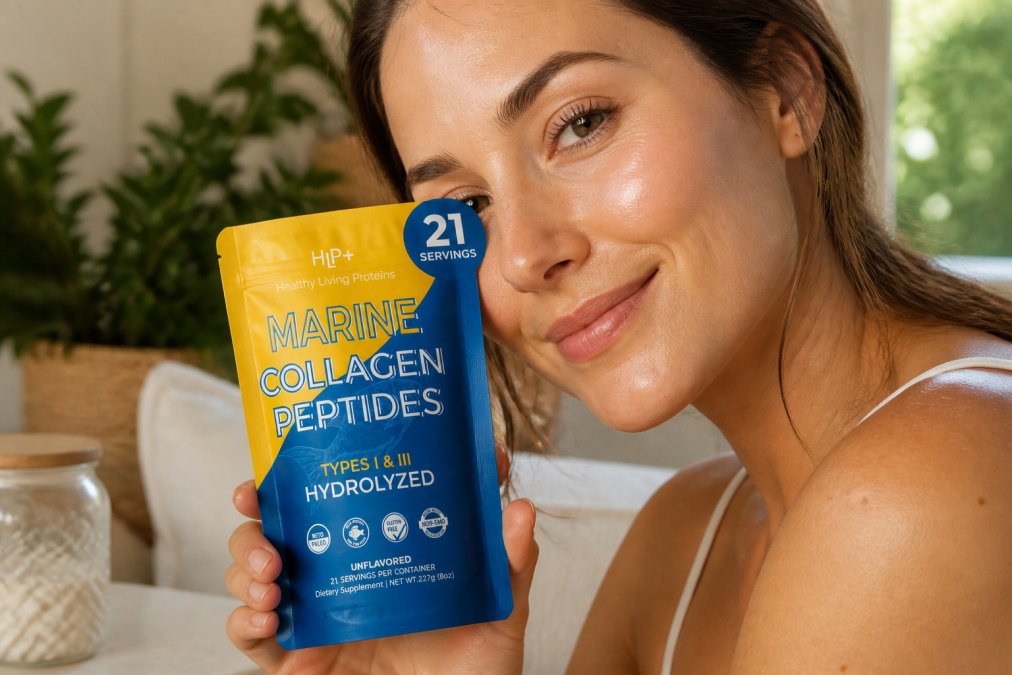
The third piece is complementary ingredients. Collagen rebuilds structure, but skin hydration and elasticity come from supporting your skin barrier, the lipid layer that holds moisture in. Ingredients like ceramides, hyaluronic acid, and colostrum become critical. Colostrum contains immunoglobulins and growth factors that support gut health, which directly influences skin health through the gut-to-skin axis.
Marine vs. Bovine Collagen for Skin Elasticity
Marine collagen absorbs faster than bovine due to smaller peptide size.
Bovine collagen takes slightly longer to absorb but provides more total collagen per serving and includes joint-supporting types that marine alone doesn't offer. For pure skin focus, marine wins on speed. For balancing skin, hair, nails, and joint health, bovine provides broader coverage.
If you're 25-35 and focused on preventive skin health, marine collagen is ideal. If you're 35-50 noticing joint stiffness alongside skin concerns, bovine gives more comprehensive support. For maximum coverage across all five types and all four concerns, you need a multi-type formula including both marine and bovine sources.
The Role of Hydrolyzed Collagen in Bioavailability
Hydrolyzed collagen is enzymatically broken down into peptides. Smaller peptides (under 3,000 Daltons) cross the intestinal barrier efficiently; larger peptides get partially absorbed or pass through undigested (peer-reviewed research).
When a label says "hydrolyzed collagen peptides," the manufacturer has already done this work. Your digestive system can absorb it directly. This is why hydrolyzed collagen works, and why non-hydrolyzed collagen powders waste money.
Bioavailability also depends on what you take collagen with. Taking it with vitamin C increases absorption and supports collagen synthesis in your skin. Taking it with fat improves peptide absorption. Taking it on an empty stomach reduces bioavailability.
Collagen vs Colostrum for Skin: Which Works Better
This is a false choice. They work differently, and the best approach uses both.
Collagen rebuilds skin structure, the protein framework that gives skin firmness and elasticity. When collagen levels drop after age 25, skin loses structural support and begins to sag and wrinkle.
Colostrum supports the gut lining and immune function through immunoglobulins, lactoferrin, and growth factors. A damaged gut lining allows inflammatory compounds into your bloodstream, triggering inflammatory skin conditions. A healthy gut lining keeps inflammation contained, reducing acne, rosacea, and general inflammation on your face.
The best formula combines both: collagen for structural rebuilding, colostrum for inflammation reduction. Healthy Living Proteins' Multi Collagen Peptides with Colostrum pairs 11 grams of all five collagen types with 5 grams of grass-fed colostrum per serving, delivering both direct skin-rebuilding and indirect anti-inflammatory benefits.
How to Choose a Skin Supplement: Key Criteria
Choosing between collagen supplements comes down to five non-negotiable criteria:
1. Hydrolyzation status. Is it hydrolyzed? If the label doesn't explicitly say "hydrolyzed collagen peptides," skip it.
2. Collagen types included. Does it include all five types (I, II, III, V, X)? Single-type or dual-type formulas leave gaps.
3. Source traceability. Can you trace where the collagen comes from? Grass-fed bovine is superior to grain-fed. Wild-caught marine is superior to farmed.
4. Additional ingredients. Does it include complementary ingredients like vitamin C, ceramides, or colostrum? Collagen plus supporting ingredients is exponentially more effective.
5. Third-party testing. Has the product been tested by an independent lab for purity and potency?
Checking for All Five Collagen Types
Most collagen supplements include only one or two types, a cost-cutting move. Including all five costs more but is the only way to support skin, hair, nails, and joints.
Type I dominates your skin and connective tissue. Type II is the primary component of cartilage. Type III supports skin elasticity and hair strength. Type V is found in corneas, tooth enamel, and bone matrix. Type X supports bone mineralization and joint cartilage.
A true multi-type formula lists all five on the label. Healthy Living Proteins' Multi Collagen Peptides includes all five, sourced from grass-fed bovine, wild-caught marine, and free-range chicken.
Dietary Restrictions and Ingredient Compatibility
Your collagen supplement needs to fit your actual diet.
If you're vegan, you need marine collagen or plant-based alternatives. Bovine and chicken collagen are off the table.
If you're keto, you need a collagen supplement with zero carbs and no sugar additives. Unflavored collagen peptides are keto-friendly; flavored versions often aren't.
If you have a dairy sensitivity, colostrum-containing supplements might trigger a reaction. Test with a small amount first.
If you have a shellfish allergy, marine collagen sourced from fish is safe, but collagen sourced from shellfish shells isn't.
Healthy Living Proteins' Wild-Caught Marine Collagen Peptides is pescatarian-friendly, keto-approved, and gluten-free. The Multi Collagen Peptides is also keto and gluten-free but includes bovine and chicken sources, so it's not suitable for vegans. The Multi Collagen with Colostrum includes colostrum, so it's not appropriate for dairy-sensitive individuals.

Top Codeage Alternatives for Skin Health
Wild-Caught Marine Collagen for Fast Absorption
Marine collagen is your fastest path to visible skin improvements. Type I and Type III collagen peptides from wild-caught fish absorb quickly and start rebuilding skin structure within weeks.
Healthy Living Proteins' Wild-Caught Marine Collagen Peptides ($39.99) is sourced from sustainable, traceable wild-caught red snapper. It's hydrolyzed for absorption, unflavored so it mixes into any beverage, and keto-friendly with zero carbs.
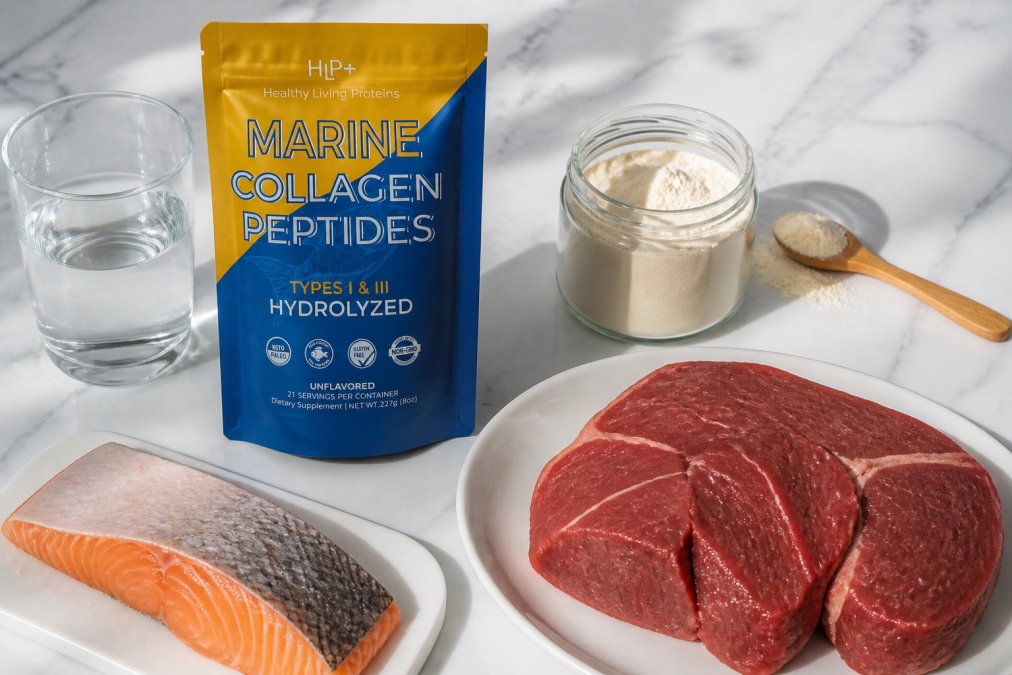
Marine collagen works best if you're 25-40 and focused on preventive skin health, or if you have sensitive skin that reacts to bovine products. The downside: it provides less total collagen per serving than bovine and doesn't include Type II collagen for joint support.
Multi-Type Collagen for Comprehensive Skin Support
If you want one product covering skin, hair, nails, and joint health, a multi-type collagen formula is essential.
Healthy Living Proteins' Multi Collagen Peptides ($44.99) includes all five types from grass-fed bovine, wild-caught marine, and free-range chicken. This combination gives you 11 grams of collagen per serving with complete coverage across all four benefit areas. It's unflavored and mixes cleanly into coffee, smoothies, or water.

Multi-type collagen is your best choice if you're over 35 dealing with multiple aging concerns simultaneously: thinning hair, brittle nails, joint stiffness, and skin texture changes. It's also ideal if you want to prevent future problems across all four areas rather than targeting one specific concern.
Collagen with Colostrum for Gut-to-Skin Benefits
If your skin issues are tied to digestive discomfort or inflammation, collagen plus colostrum is your formula.
Healthy Living Proteins' Multi Collagen Peptides with Colostrum ($49.99) pairs 11 grams of all five collagen types with 5 grams of grass-fed bovine colostrum, plus vitamin C and probiotics. This addresses both sides of the gut-to-skin axis: collagen rebuilds skin structure while colostrum heals the gut lining and reduces inflammatory compounds reaching your bloodstream.
This formula works best if you have IBS, sensitive digestion, or visible skin inflammation (rosacea, acne, general redness).
What to Avoid When Comparing Skin Supplements
When evaluating a Codeage alternative, watch out for these red flags.
Unfounded claims. If a supplement claims to "eliminate wrinkles" or "reverse aging," it's lying. Collagen improves elasticity and reduces the appearance of fine lines but doesn't eliminate deep wrinkles. Real claims are modest: "improves skin texture," "increases hydration," "supports elasticity."
Non-hydrolyzed collagen. If the label says "collagen" without "hydrolyzed," your body won't absorb it efficiently. Hydrolyzed is non-negotiable.
Single-source collagen. A supplement with only Type I collagen covers skin but misses everything else. You need at least three types, ideally all five.
No sourcing information. If the label doesn't specify where collagen comes from, the brand is hiding something. Transparency about sourcing signals a brand that stands behind its product.
Artificial sweeteners and fillers. Unflavored collagen is pure collagen. Flavored versions almost always contain sweeteners and additives that reduce bioavailability.
No money-back guarantee. Healthy Living Proteins offers a 30-day money-back guarantee because we're confident the product works. If a brand won't guarantee its product, that's a warning sign.
Finding the right Codeage alternative for skin health means moving beyond brand recognition and focusing on what actually rebuilds skin structure. The collagen supplement market now offers real options: marine collagen for speed, multi-type formulas for comprehensiveness, and collagen with colostrum for inflammation-driven skin issues. Healthy Living Proteins delivers all three approaches with hydrolyzed collagen from traceable sources, complete collagen type coverage, and a 30-day guarantee backing every claim. Your skin deserves a supplement formulated for actual results, not just marketing appeal.

Frequently Asked Questions
Q: What makes a Codeage alternative worth trying for skin health?
A: A strong Codeage alternative should contain hydrolyzed collagen peptides for superior absorption, include multiple collagen types (ideally all five), and feature supporting ingredients like vitamin C or probiotics. Look for third-party testing, transparent sourcing, and customer testimonials showing visible skin improvements. Many alternatives offer better value, dietary flexibility, or added benefits like colostrum for gut-to-skin support without compromising on quality or efficacy.
Q: How long does it typically take to see results from collagen supplements for skin?
A: Most people report initial improvements in skin hydration and texture within 4-8 weeks of consistent use. More noticeable changes in skin firmness, elasticity, and wrinkle reduction typically appear after 8-12 weeks. Results depend on dosage, collagen type, bioavailability, and individual factors like age and baseline skin condition. Consistency matters more than brand, daily supplementation with a quality product delivers better outcomes than sporadic use.
Q: What's the difference between collagen and colostrum for skin health?
A: Collagen provides amino acids that directly support dermal elasticity, skin texture, and moisture retention through collagen synthesis. Colostrum strengthens the lipid barrier and supports skin health indirectly by improving gut health and immune function, which enhances overall skin appearance. Many skin supplements now combine both: collagen handles structural skin support while colostrum addresses foundational gut and immune factors that affect skin clarity and hydration.
Q: Is hydrolyzed collagen really better absorbed than other forms?
A: Yes. Hydrolyzed collagen peptides have a molecular weight of 2,000-5,000 Daltons, making them small enough for the small intestine to absorb directly. Non-hydrolyzed gelatin is larger and less bioavailable. Hydrolyzed forms circulate in the bloodstream as dipeptides and tripeptides, reaching skin tissue where they stimulate collagen synthesis. This is why hydrolyzed collagen shows measurable improvements in skin hydration and elasticity, the amino acids actually reach target tissues.
This article was written using GrandRanker