


Table of Contents
- What Is Collagen and Why Your Body Needs It
- Why Whole Collagen Cannot Be Absorbed
- How Hydrolyzed Collagen Bioavailability Works
- The Journey From Ingestion to Bloodstream
- Collagen Types 1-5 Explained
- How Long to See Collagen Results
- Factors That Boost Collagen Absorption
- Conclusion
Last Updated: August 23, 2026
What Is Collagen and Why Your Body Needs It
Collagen is the most abundant protein in your body, comprising roughly 30% of your total protein content (peer-reviewed research). It's the structural foundation holding your skin, joints, bones, tendons, and connective tissues together. Without adequate collagen, your skin loses elasticity, joints become stiff, hair thins, and nails become brittle.
Your body produces collagen naturally, but production declines significantly after age 25 (peer-reviewed research). By your 50s, you're producing roughly half the collagen you did in your 20s. At Healthy Living Proteins, we help adults over 25 address this decline through premium hydrolyzed collagen supplementation. Collagen supports multiple systems simultaneously: your skin depends on it for hydration and firmness, your joints rely on it for cushioning and flexibility, your gut lining uses it to maintain barrier function, and your immune system benefits from the amino acids it provides.
Why Whole Collagen Cannot Be Absorbed
Your digestive system cannot absorb whole collagen protein. Collagen molecules are enormous, with single peptide chains containing hundreds of amino acids linked in a triple-helix structure. When you consume whole collagen, your gastrointestinal tract encounters a protein too large to pass through the gut barrier into your bloodstream.
Your digestive enzymes, primarily pepsin and trypsin, work to break down proteins into smaller units. But collagen's triple-helix structure resists enzymatic breakdown far more effectively than other proteins. The result: most whole collagen passes through your digestive system largely unabsorbed. The processing method matters far more than the source, whether it's Type I from bone broth, Type II from cartilage, or Type III from connective tissue, the type doesn't matter if the molecule can't cross your gut barrier.
How Hydrolyzed Collagen Bioavailability Works
Hydrolyzed collagen solves the absorption problem through enzymatic hydrolysis, a process that breaks collagen's triple-helix structure into much smaller peptide chains.
Enzymatic Hydrolysis and Peptide Chains
Enzymatic hydrolysis uses specific enzymes, typically protease and collagenase, to systematically break collagen's peptide bonds into di-peptides (two amino acids linked together) and tri-peptides (three amino acids linked together). These smaller units are small enough to cross your intestinal wall.
Manufacturers use precise enzymatic conditions to create peptides within a target molecular weight range, typically between 2,000 and 5,000 daltons, the sweet spot for gastrointestinal absorption. Hydrolyzed collagen bioavailability typically ranges from 90-95%, meaning nearly all of what you consume reaches your systemic circulation (peer-reviewed research).
Molecular Weight and Absorption Rate
Molecular weight measured in daltons directly determines how quickly collagen peptides cross your gut barrier. Lower molecular weight hydrolyzed collagen (around 2,000 daltons) absorbs fastest, typically within 30 minutes of ingestion. Higher molecular weight peptides (4,000-5,000 daltons) absorb more slowly but retain more bioactive amino acid sequences. Most premium hydrolyzed collagen products target the 2,000-3,000 dalton range as the practical optimum.

The Journey From Ingestion to Bloodstream
When you consume hydrolyzed collagen, a specific sequence of events determines whether those peptides reach your cells or pass through your system unused.
Digestion and Di-Peptides
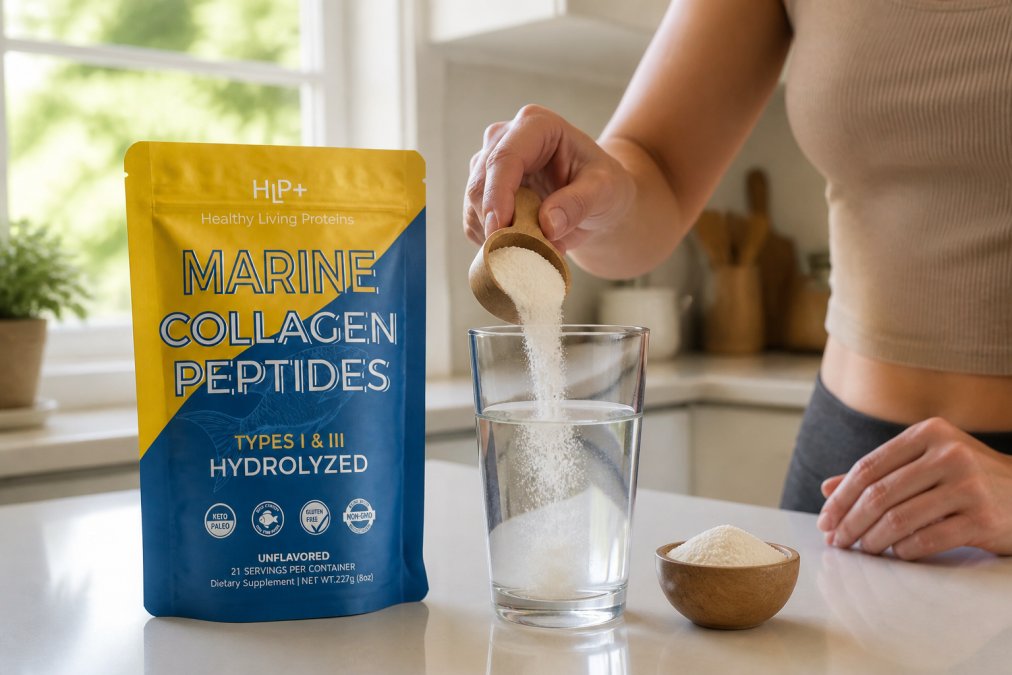
Hydrolyzed collagen enters your stomach where pepsin begins further breakdown. Unlike whole collagen, hydrolyzed peptides are already small enough that pepsin can process them within 1-2 hours. In the small intestine, di-peptides and tri-peptides become the primary form of collagen peptides, the ideal size for intestinal absorption. Your small intestine contains specific peptide transporters designed to move these small molecules across the intestinal epithelium into the bloodstream. Whole collagen molecules are too large to use these transporters; hydrolyzed collagen peptides fit perfectly.
The Gut Barrier and Systemic Circulation
Your gut barrier is a selective filter allowing small, processed molecules through while blocking larger, undigested proteins. Hydrolyzed collagen peptides pass through this barrier efficiently because they're the right size and because your intestinal cells have specific transport mechanisms for them.
Once in your bloodstream, collagen peptides circulate throughout your body. Research suggests that specific di-peptides and tri-peptides from collagen, particularly hydroxylysine and hydroxyproline sequences, travel to areas where collagen is being synthesized. Your skin, joints, and connective tissues take up these peptides and incorporate them into new collagen synthesis. The entire journey from ingestion to bloodstream typically takes 2-4 hours for hydrolyzed collagen, compared to 6-8 hours or longer for whole protein, with most whole collagen never completing the journey at all.
Collagen Types 1-5 Explained
Your body uses five different types of collagen, each with distinct structural roles. Most collagen supplements contain only Type I or Type I and Type III, missing comprehensive support your entire body needs.
Type I collagen comprises roughly 90% of your skin, bones, and tendons, providing tensile strength and structural integrity. Type II collagen is the primary structural component of cartilage, providing cushioning in your joints. Type III collagen works alongside Type I in skin, blood vessels, and your gut lining, providing elasticity and flexibility. Type V collagen is found in hair, nails, and the corneas of your eyes. Type X collagen supports bone mineralization and cartilage calcification.
A comprehensive collagen supplement contains all five types because your body doesn't compartmentalize its collagen needs. Healthy Living Proteins' Multi Collagen Peptides formula delivers all five types in hydrolyzed form, ensuring your entire collagen system receives the support it needs.
How Long to See Collagen Results
Collagen doesn't work like a medication producing effects within days. Results follow a timeline based on your body's natural protein synthesis cycle, typically requiring 4-12 weeks to produce visible changes.
Most people notice initial improvements in skin hydration and texture within 4-6 weeks of consistent supplementation. Joint mobility and flexibility improvements typically emerge around 6-8 weeks. Hair thickness and nail strength changes usually become apparent around 8-12 weeks, since hair growth cycles and nail growth (roughly 3mm per month) require several cycles to show visible improvements.
The timeline varies based on several factors. Your age matters, younger adults often see results faster than those in their 50s or 60s. Your baseline collagen levels matter. Your consistency matters absolutely; daily consistent intake drives results forward. Dosage also influences timing. Higher daily intakes of hydrolyzed collagen (10-20 grams daily) typically produce faster results than lower doses (5 grams daily).
Factors That Boost Collagen Absorption
Multiple factors either enhance or inhibit how effectively your body absorbs and utilizes collagen peptides.
Co-Factors for Absorption
Vitamin C is the most critical co-factor for collagen synthesis. Your body cannot build new collagen without adequate vitamin C, it's enzymatically required. Copper supports collagen cross-linking, the process that gives collagen its structural strength. Lysine and proline are the amino acids collagen is built from; hydrolyzed collagen provides these amino acids directly. Hydration influences collagen absorption; your gastrointestinal tract needs adequate water to dissolve hydrolyzed collagen peptides and transport them across the intestinal barrier.
Age-Related Absorption Decline
Collagen absorption efficiency declines with age, parallel to collagen production decline. Your stomach produces less pepsin, your small intestine produces lower levels of peptide transporters, and your digestive system becomes less efficient at breaking down proteins generally. This means older adults may require higher daily collagen doses to achieve similar systemic collagen levels as younger adults.
Stomach acid production also declines with age. Some older adults benefit from consuming hydrolyzed collagen with a small amount of acidic food or beverage like lemon juice, vinegar, or citrus to optimize the initial digestive phase. These age-related changes explain why collagen supplementation becomes more valuable as you age, your body's natural collagen production declines, your absorption efficiency declines, and your collagen synthesis capacity declines.
Conclusion
Collagen absorption science reveals why most people don't see results from basic collagen supplements: they're consuming collagen their body cannot actually absorb. Hydrolyzed collagen solves this problem through enzymatic processing that breaks collagen into peptides small enough to cross your gut barrier and enter your bloodstream.
Your body needs hydrolyzed collagen peptides in the optimal molecular weight range, consumed consistently at adequate daily doses, supported by co-factors like vitamin C, and timed appropriately for your age and baseline collagen status. Results typically emerge within 4-12 weeks, with skin hydration appearing first, followed by joint mobility, then hair and nail improvements.
Healthy Living Proteins' Multi Collagen Peptides formula delivers all five collagen types in hydrolyzed form, includes the co-factors your body needs for effective synthesis, and provides the consistent daily dosage that drives measurable results. With a 30-day money-back guarantee, you can test whether comprehensive collagen supplementation delivers the skin, hair, nail, joint, and immune support you're seeking. Get started with Healthy Living Proteins and experience the difference of collagen absorption science applied to premium supplementation.
=== FAQ ANSWERS (audit these too, same rules) ===
[1] Q: Do you actually absorb collagen from supplements? A: Yes, but only if it's hydrolyzed. Your digestive system breaks hydrolyzed collagen peptides into smaller di-peptides and tri-peptides small enough to cross the gut barrier and enter the bloodstream. Whole collagen protein is too large and passes through unabsorbed. Clinical research confirms that hydrolyzed collagen peptides reach systemic circulation at measurable levels, where your body uses the amino acids and peptides for collagen synthesis in skin, joints, and connective tissue.
[2] Q: Does hydrolyzed collagen absorb better than regular collagen? A: Hydrolyzed collagen has dramatically higher bioavailability. Hydrolysis breaks the protein into peptides with a molecular weight of 2,000-5,000 daltons, small enough for absorption in the gastrointestinal tract. Regular whole collagen protein has a molecular weight of 300,000+ daltons and cannot cross the gut barrier intact. This is why hydrolyzed forms are used in clinical trials studying collagen efficacy, the peptide form is what your body can actually use.
[3] Q: How long does it take to see results from collagen supplements? A: Most users report noticing changes in skin hydration and hair texture within 4-12 weeks of consistent daily use. Joint comfort and mobility improvements typically appear around 8-12 weeks. Visible changes in skin firmness and nail strength often take 12 weeks or longer. Results depend on age, baseline collagen levels, diet, hydration, and whether you're taking a multi-type collagen formula with all five types your body needs, like Healthy Living Proteins' Multi Collagen Peptides.
[4] Q: What factors help your body absorb collagen better? A: Vitamin C, copper, and zinc are essential co-factors for collagen synthesis after peptides are absorbed. Consuming collagen with vitamin C sources (citrus, berries) or a meal containing these minerals improves utilization. Adequate hydration supports gut barrier function and nutrient transport. Digestive health matters, probiotics and colostrum can strengthen the gut lining and improve overall absorption efficiency. Age also affects absorption; adults over 40 may benefit from consistent supplementation and these co-factors to offset natural declines in collagen production and absorption efficiency.
Frequently Asked Questions
Do you actually absorb collagen from supplements?
Yes, but only if it's hydrolyzed. Your digestive system breaks hydrolyzed collagen peptides into smaller di-peptides and tri-peptides small enough to cross the gut barrier and enter the bloodstream. Whole collagen protein is too large and passes through unabsorbed. Clinical research confirms that hydrolyzed collagen peptides reach systemic circulation at measurable levels, where your body uses the amino acids and peptides for collagen synthesis in skin, joints, and connective tissue.
Does hydrolyzed collagen absorb better than regular collagen?
Hydrolyzed collagen has dramatically higher bioavailability. Hydrolysis breaks the protein into peptides with a molecular weight of 2,000-5,000 daltons, small enough for absorption in the gastrointestinal tract. Regular whole collagen protein has a molecular weight of 300,000+ daltons and cannot cross the gut barrier intact. This is why hydrolyzed forms are used in clinical trials studying collagen efficacy, the peptide form is what your body can actually use.
How long does it take to see results from collagen supplements?
Most users report noticing changes in skin hydration and hair texture within 4-12 weeks of consistent daily use. Joint comfort and mobility improvements typically appear around 8-12 weeks. Visible changes in skin firmness and nail strength often take 12 weeks or longer. Results depend on age, baseline collagen levels, diet, hydration, and whether you're taking a multi-type collagen formula with all five types your body needs, like Healthy Living Proteins' Multi Collagen Peptides.
What factors help your body absorb collagen better?
Vitamin C, copper, and zinc are essential co-factors for collagen synthesis after peptides are absorbed. Consuming collagen with vitamin C sources (citrus, berries) or a meal containing these minerals improves utilization. Adequate hydration supports gut barrier function and nutrient transport. Digestive health matters, probiotics and colostrum can strengthen the gut lining and improve overall absorption efficiency. Age also affects absorption; adults over 40 may benefit from consistent supplementation and these co-factors to offset natural declines in collagen production and absorption efficiency.
This article was written using GrandRanker